

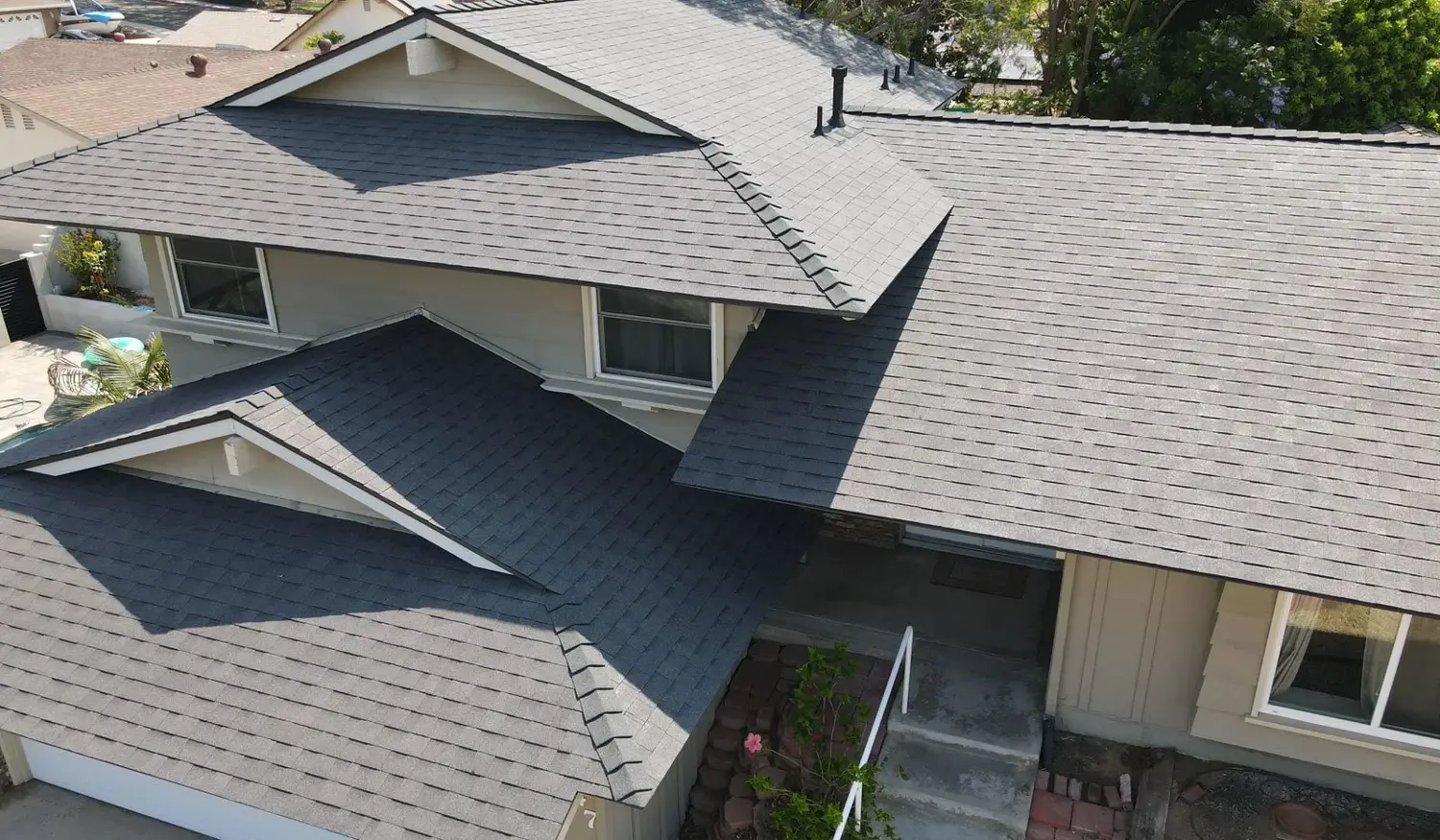
How Texas Heat Can Affect Asphalt Shingles Over Time
Hail gets the headlines, but the sun works on a Texas roof every single day. Heat does not break a roof in one afternoon. It ages it, year after year, until the shingles can no longer do their job.
Schedule Your Roofing Inspection Today
Fill out the information below and we’ll reach out to complete your estimate as soon as possible!
What heat actually does to a shingle
An asphalt shingle is a fiberglass mat soaked in asphalt and covered with ceramic granules. The asphalt is what makes the shingle waterproof and flexible. The granules shield that asphalt from ultraviolet light. Heat and sun attack both.
Asphalt contains oils that keep it pliable. Under constant sun and high temperatures those oils slowly break down and evaporate. The asphalt hardens and becomes brittle, the same way an old rubber band cracks when you stretch it. A brittle shingle cracks more easily in wind, under foot traffic and when hail hits it.
A roof surface also gets much hotter than the air on a summer afternoon, then cools quickly when a storm rolls in or the sun goes down. That daily swing makes the shingles expand and contract over and over. Over the years, the movement loosens granules, stresses the seal strips and opens small cracks.
Not every slope ages at the same pace. South and west facing slopes take the most direct afternoon sun and usually show wear first, while slopes shaded by trees or a second story can look years younger. That uneven pattern is normal, and it is one way an inspector tells heat wear apart from storm damage, which follows the direction of the storm instead of the sun.
Six signs of heat wear on asphalt shingles
Granule loss
Bare or patchy areas, and granules collecting in gutters. Once granules go, the asphalt underneath ages much faster.
Curling edges
Shingle edges that turn up or corners that lift. Heat and a hot attic below can both drive it. Our guide on why shingles curl, crack or fall off covers the causes.
Cracking
Fine cracks across the shingle as the asphalt dries out and loses flexibility.
Blistering
Small raised bubbles that pop and leave pits, usually from heat and trapped moisture in the shingle.
Fading and uneven color
Sun-facing slopes that look lighter or patchier than shaded ones.
Brittle seal strips
Shingles that lift easily in wind because the sealant has dried and let go.
Why the attic matters as much as the sun
Shingles take heat from both sides. The sun bakes them from above, and a hot attic cooks them from below. When an attic cannot vent its heat, the deck and the shingles on top of it stay hot well into the night, which shortens their life.
Good ventilation lets cooler air in at the soffits and hot air out near the ridge. It keeps the deck closer to outdoor temperature and helps control moisture, which matters in humid parts of the state. Many shingle warranties also expect proper ventilation. Our page on roof ventilation explains what a balanced system includes.
Signs of a hot or poorly vented attic include very high temperatures when you open the hatch in summer, shingles that age faster on some slopes than others, and rusted nails or damp spots from condensation in cooler months.
Older homes feel it most
Heat wear is slow, so age tells you a lot. Half of the homes in San Antonio were built before 1985, and half of the homes in Austin were built before 1994, according to the U.S. Census Bureau's American Community Survey 2020-2024. Many of those houses are on their second or third roof, and some original attic ventilation was never designed for today's insulation levels.
Asphalt shingles typically last somewhere around 20 to 30 years under good conditions. In strong sun, with a hot attic and frequent storms, a roof can reach the end of that range sooner. Our article on how long roofing materials last in Texas compares the main options.
Newer homes are not exempt. A roof installed on a house with a dark shingle, little shade and a tight attic can show heat wear years earlier than a similar roof on a well vented home. Age is the first clue, but the attic, the color and the exposure decide how fast the clock runs.
How to slow heat damage down
Check attic ventilation
Make sure soffit vents are not blocked by insulation and that exhaust vents near the ridge are clear and working.
Keep gutters clean
Granules and debris that sit in gutters hold moisture and hide how much granule loss the roof has. Clean them so you can see the trend.
Fix small issues early
Replace cracked or missing shingles and failing pipe boots before sun and rain reach the layers below.
Schedule periodic inspections
A roof inspection every few years, and after major storms, tracks how fast the roof is aging.
Choose well at replacement time
Lighter colors, shingles designed for solar reflectance and a balanced ventilation system all reduce heat load on the new roof.
Questions to ask when you replace a heat-worn roof
How will the attic be ventilated, and is intake balanced with exhaust?
Which shingle lines are available in lighter or reflective colors?
What underlayment goes under the shingles, and why?
Will damaged decking be replaced, and how is that priced in the estimate?
What does the manufacturer require for its warranty to apply?
How will the crew protect the shingles from damage while they work in the heat?
When heat wear means it is time to act
A few curled shingles on an otherwise healthy roof can often be repaired. Widespread granule loss, cracking across several slopes or a roof that is near the end of its typical life usually points to roof replacement, especially if leaks have started. A heat-weakened roof is also more vulnerable to hail and wind, so the next storm tends to do more damage than it would on a newer one.
Heat wear also changes the math on storm repairs. Patching a few new shingles into a brittle roof is harder, because the old shingles around them can crack when they are lifted to slide the new ones in. If your roof is already showing heat wear, our article on what happens if you wait too long to replace a roof explains what delay tends to cost.
GemSco is a family owned, fully licensed and insured roofing company and an elite contractor for Owens Corning and GAF, with more than 20 years of experience. We inspect the roof and attic, document what we find with photos and give you a written estimate for repair or asphalt shingle roofing replacement. Financing is available. We serve San Antonio, Austin, Houston and DFW. Request a free estimate or call (844) 980-5506.
Frequently Asked Questions
Does Texas heat void my shingle warranty?
Heat by itself does not, but many manufacturer warranties require proper attic ventilation and correct installation. If the attic overheats because ventilation is inadequate, a warranty claim can be harder. Ask your contractor to explain the ventilation plan and what the manufacturer requires before the new roof goes on.
Are light colored shingles better in Texas?
Lighter colors and shingles designed for solar reflectance absorb less heat, which can reduce roof temperature and attic heat. The difference depends on the product and the home. Color also affects curb appeal, so weigh both. Our guide on choosing shingle color covers the design side.
Is granule loss always a sign of heat damage?
No. Some granule loss is normal, especially in the first months after installation and on older roofs. Hail can also knock granules loose, usually in random round spots. Heat wear tends to be more uniform and worse on the sunniest slopes. An inspection can tell which you are looking at.
Can a hot attic damage my roof?
Yes. A poorly vented attic traps heat under the deck, so the shingles are heated from both sides. That speeds up drying and cracking. It can also cause condensation in cooler months, which wets the deck and rusts nails. Balanced ventilation helps control both problems.
We’re Here to Help!
GemSco Roofing & Solar serves Houston, DFW, Austin, San Antonio and surrounding areas. We’re family owned and fully licensed and insured.