

Emergency Roof Repair
Water is coming in, a section of the roof is gone, or a tree limb went through the deck. Here is what to do in the next hour and how GemSco handles the repair.
Schedule Your Roofing Inspection Today
Fill out the information below and we’ll reach out to complete your estimate as soon as possible!


What to do right now
Get people and pets away from any sagging ceiling. A bulging spot full of water can drop without warning.
Turn off power to rooms where water is near lights, outlets or ceiling fans.
Catch the water with buckets and move furniture, rugs and electronics out of the way.
If a ceiling is bulging, a small hole at the lowest point lets the water drain into a bucket instead of spreading.
Take photos and video of the damage inside and outside before anything is moved or cleaned up.
Stay off the roof. Wet shingles, loose debris and weakened decking cause falls every storm season.
What counts as a roofing emergency
Any opening that lets rain into the house is an emergency, because the damage keeps growing with every hour of water. Wet insulation loses its value, drywall softens, and mold can start inside walls and attic spaces that nobody sees. A slow drip during one storm usually turns into a wider stain, then a soft spot in the decking.
Typical causes in Texas are wind that lifts or tears shingles off, hail that cracks or punctures the roof covering, falling limbs, and flashing that pulls away around chimneys, vents and skylights. If the cause is clearly a storm, see our storm damage page for how that damage is assessed and documented.
How GemSco handles an emergency repair
Call and describe the damage
Call (844) 980-5506 and tell us where water is entering, what you see from the ground and whether anything fell on the roof.
Inspection
We inspect the roof and the attic to find where water is actually getting in. The leak inside is often several feet from the opening on the roof.
Photos
We photograph the damage so you have a clear record for your own files and, if you choose to file, for your insurance company.
Written estimate
You get a written estimate that separates what must be done now to stop the water from what can wait for a permanent repair.
Repair and cleanup
We complete the agreed work and remove debris, old materials and nails from the property.
Temporary fix or permanent repair
Temporary protection
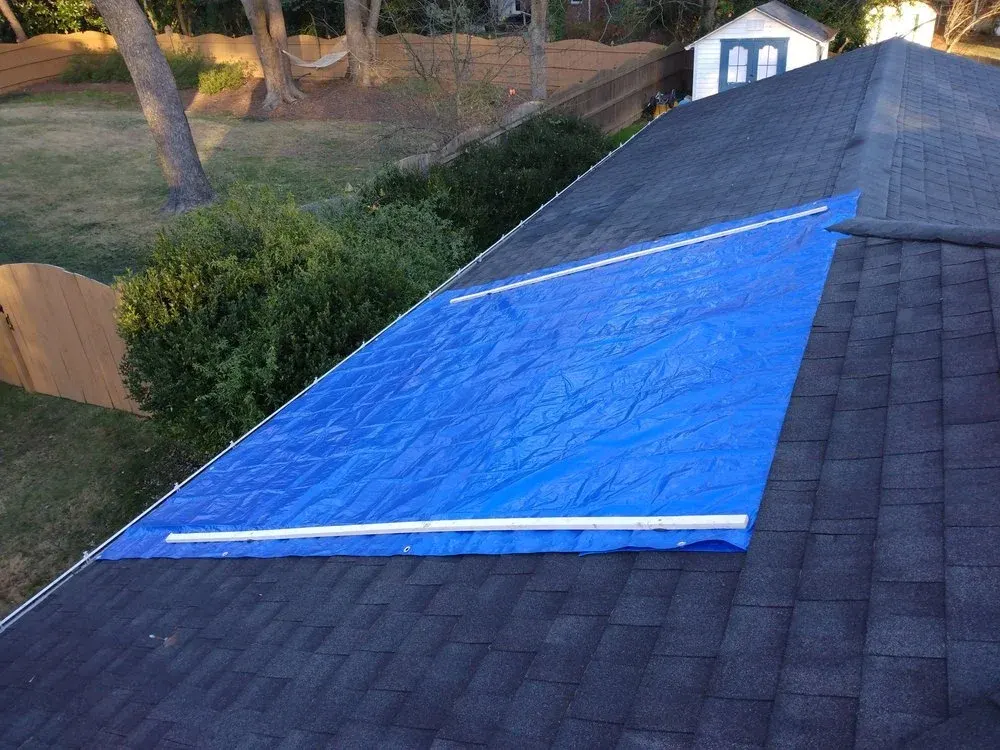
A tarp or temporary patch only buys time. It keeps rain out until the roof can be repaired properly, and it is not meant to stay up for months.
Permanent repair
Replacing the damaged shingles, underlayment, flashing or decking so the roof sheds water again. See our roof repair service for the details.
Replacement
When the damage is widespread or the roof was already near the end of its life, patching again rarely makes sense. Our roof replacement page explains that decision.
Interior damage
Stopping the water is the first job. Drying out insulation, drywall and flooring is a separate step you should plan for as soon as the roof is closed.
If you plan to involve your insurance company
Coverage depends on your policy and on the insurance company's decision, not on the contractor. What you can control is the record: photos from the day of the damage, the date of the storm, and a written estimate. Most policies also expect you to take reasonable steps to prevent further damage, so keep receipts for anything you do to protect the home.
GemSco inspects, documents the damage with photos and gives you a written estimate. Our insurance claims page explains the general process and the terms you will hear, such as deductible and depreciation.
Who you are calling
GemSco is family owned, fully licensed and insured, with more than 20 years of experience and elite contractor status with Owens Corning and GAF. We work on homes and commercial buildings across Houston, DFW, Austin, San Antonio and surrounding areas, including Houston and Dallas. We repair asphalt shingle, wood shake, metal, stone-coated, tile, low-slope and flat roofs.
Frequently Asked Questions
Should I go on the roof and put a tarp up myself?
We do not recommend it. Wet and storm-damaged roofs are slippery, and decking can be weaker than it looks. A badly secured tarp can also blow off in the next gust. Focus on protecting the inside of the house, take photos, and call a roofer who has the equipment to work safely.
Can a roof be repaired while it is still raining?
Permanent repairs need a dry surface for shingles, sealants and underlayment to bond. During active rain the goal is usually limited to slowing the water and protecting the interior. The permanent repair happens once the roof dries, so the materials are installed the way the manufacturer requires.
Does homeowners insurance cover an emergency roof repair?
It depends on your policy and on what caused the damage. Sudden storm damage is treated differently from wear and age, and the insurance company makes the decision. GemSco can inspect, photograph the damage and give you a written estimate you can share with your insurer if you decide to file.
How do I find the source of a leak?
Water often travels along rafters and decking before it drips, so the stain on your ceiling may be far from the actual opening. Common sources are lifted shingles, cracked flashing, failed pipe boots and damaged valleys. Our roof leaks page covers the usual culprits in more detail.
We’re Here to Help!
GemSco Roofing & Solar serves Houston, DFW, Austin, San Antonio and surrounding areas. We’re family owned and fully licensed and insured.