

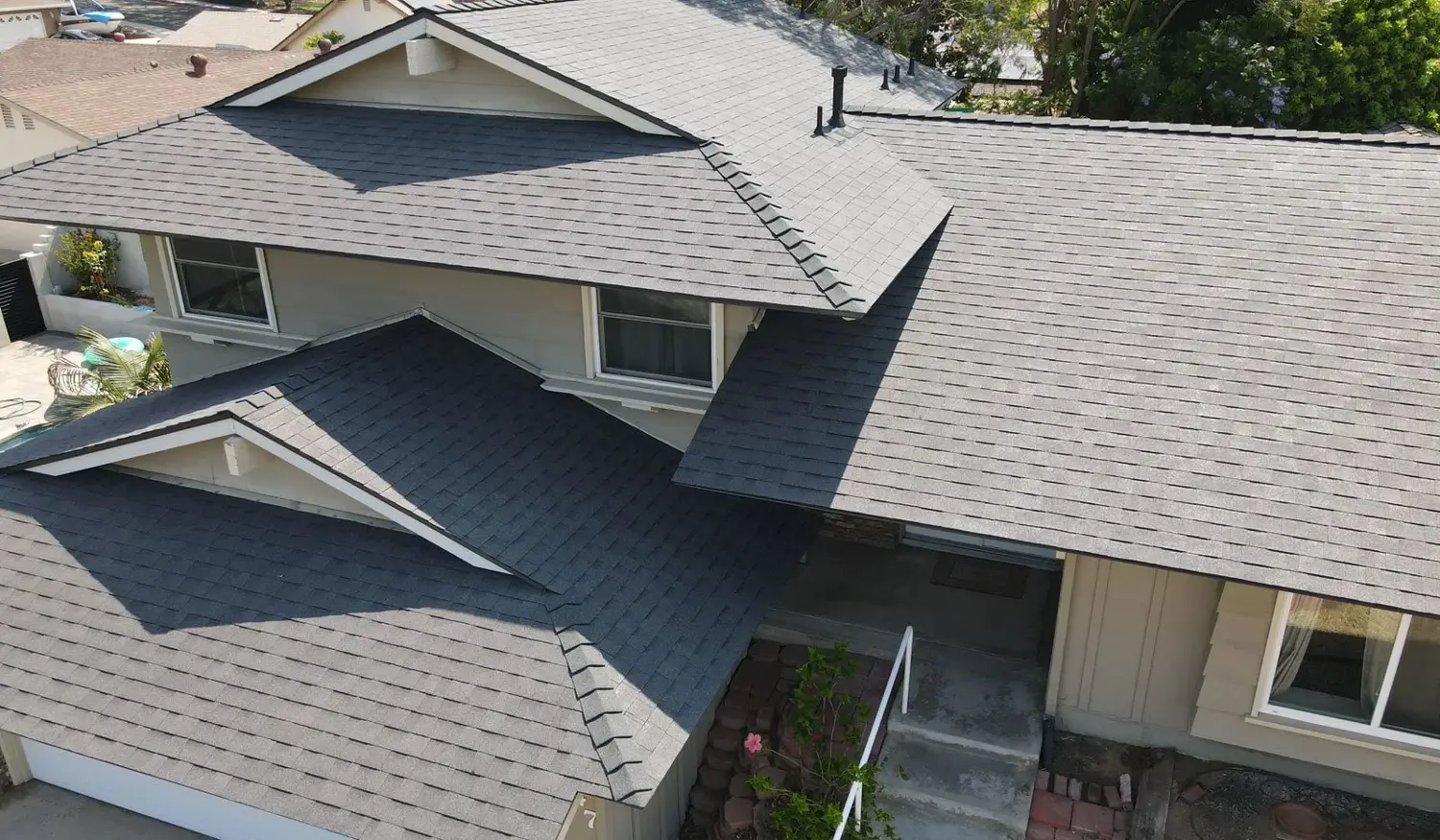
How Proper Roof Ventilation Helps Protect Your Home
Most homeowners never think about attic airflow until something goes wrong. Here is what roof ventilation actually does, what happens when it is off, and how to check yours before your next roof project.
Schedule Your Roofing Inspection Today
Fill out the information below and we’ll reach out to complete your estimate as soon as possible!
What roof ventilation does
A vented attic works like a slow, constant draft. Cooler outside air comes in low, usually through soffit vents under the eaves. Warm, moist air leaves high, through ridge vents, box vents or turbines near the top of the roof. Heat rises, so the system mostly runs on its own.
That airflow has two jobs. In summer it carries heat out of the attic before it bakes the roof deck and the shingles above it. All year it carries out moisture that drifts up from showers, cooking, laundry and the people living below. Without an exit, that moisture condenses on the coldest surface it finds, which is often the underside of the roof deck.
Not every home is built with a vented attic. Some use spray foam on the underside of the deck to create a sealed attic, which follows a different design. This guide covers the common vented attic, which is what most Texas homes have.
Think of the attic as a buffer between the roof and your living space. On a sunny Texas afternoon the shingles can get far hotter than the air around them, and that heat soaks down into the deck. If the attic cannot breathe, the heat stays there into the evening, and the deck and shingles never get a break.
The benefits of a well-ventilated roof
Longer shingle life
Shingles that sit over a superheated deck age faster. Good airflow takes some of that heat away. Our guide on how Texas heat affects asphalt shingles covers the details.
Less moisture and mold
Moving air dries the attic. Trapped humidity can lead to damp insulation, stained sheathing, rusty nails and mold.
A more comfortable top floor
A cooler attic means less heat radiating into the rooms below, which can ease the load on your air conditioning.
Protection for the deck
Wood decking that stays damp can swell, delaminate or rot. Once the deck is soft, shingles cannot hold properly.
Warranty compliance
Shingle manufacturers, including Owens Corning and GAF, publish ventilation requirements. Poor ventilation can affect warranty coverage, so ask what applies to your roof.
Intake and exhaust: why balance matters
Ventilation is a system, not a single vent. It needs intake low on the roof and exhaust high on the roof, sized to work together. Too little intake and the exhaust vents pull air from the wrong places, sometimes from inside the house. Mixing different exhaust types on the same roof, like a ridge vent next to power vents, can short-circuit the airflow so part of the attic never gets fresh air.
The most common problem in older homes is blocked intake. Insulation gets blown over the soffit vents, or soffits get painted or covered during a remodel. The attic still has exhaust vents, but no clean path for air to enter. Houses in big Texas metros are not new: the U.S. Census ACS 2020-2024 puts the median year built at 1982 in Houston and 1981 in Dallas. Plenty of these attics have been insulated, remodeled or reroofed since, and the ventilation was not always rechecked.
Balance also depends on the roof shape. Hip roofs have short ridges, so there is less room for ridge vents and the plan may need other exhaust options. Roofs with several attic spaces, vaulted ceilings or additions may need each section ventilated on its own. That is why a quick look from the yard is a start, but not a diagnosis.
Common ventilation mistakes
Covered soffit vents
Insulation, paint or new siding blocks the intake. The exhaust vents then have little or nothing to pull from.
Mixed exhaust types
A ridge vent combined with power fans or turbines on the same attic can pull air from the nearest vent instead of through the whole space.
Too few intake vents
Adding exhaust without adding intake does not improve airflow. It can even pull conditioned air from the house through ceiling gaps.
Bathroom fans venting into the attic
Warm, wet air from showers dumped into the attic feeds condensation and mold on the deck.
Old vents left in place
During a reroof, unused openings should be removed and sealed, not left as extra holes in the roof.
Signs your attic is not breathing well
The attic feels much hotter than the outside air on a summer afternoon.
Dark stains, frost or water droplets on the underside of the roof deck.
Damp or compressed insulation, or a musty smell.
Rusty nail tips poking through the deck.
Shingles that curl, blister or lose granules earlier than expected.
Peeling paint on soffits or fascia, or a wavy look along the roofline.
Upstairs rooms that stay hot even when the AC runs constantly.
A simple ventilation checklist
Look from the ground
Find your intake vents (soffits, eave vents) and your exhaust vents (ridge, box vents, turbines, power fans). Note if you have more than one exhaust type.
Check the soffits
Make sure soffit vents are open, not painted over or covered by siding or screens clogged with debris.
Peek into the attic safely
On a cool morning, with a flashlight and from the access hatch, look for daylight at the soffit edges, stains on the deck and the condition of the insulation.
Note any bathroom fans venting into the attic
Exhaust fans should send moist air outside, not into the attic space.
Write down what you see
Photos and notes help a roofer diagnose the problem quickly during an inspection.
Plan the fix with your next roof job
Ventilation is easiest to correct when the roof is open, so raise it before any roof replacement.
When to call a roofer
Some fixes are simple, like clearing a blocked soffit or adding baffles so insulation stays out of the airflow path. Others need roof work: cutting in a ridge vent, removing mismatched exhaust vents or sealing old openings. Moisture damage to the deck also needs a professional look, because a soft deck changes the scope of any repair.
GemSco looks at ventilation during inspections and replacements on asphalt shingle, metal, tile and other roof types. We document what we find with photos and give you a written estimate before any work starts. Learn more on our roof ventilation page or book a roof inspection. Estimates are free, and you can reach us at (844) 980-5506.
Frequently Asked Questions
Can a roof have too much ventilation?
Yes, in a sense. The goal is balance, not maximum vent count. Extra exhaust vents without enough intake can pull conditioned air out of the house, and vents placed in the wrong spot can let wind-driven rain in. A roofer should size intake and exhaust together, following the shingle manufacturer and local code.
Does roof ventilation lower energy bills?
It can help, but it is not a cure-all. A cooler attic reduces the heat that reaches the rooms below, which can ease the load on your AC. Insulation, air sealing and the condition of your ductwork usually matter as much or more. Think of ventilation as one piece of a cooler, drier home.
Should I fix ventilation when I replace my roof?
That is the best time. The old roof is off, the deck is exposed and vents can be added, removed or resized without extra tear-off. Ask your contractor to include ventilation in the written estimate, so you can see what changes and why.
Are turbines or ridge vents better?
Both can work. Ridge vents run along the peak and provide even exhaust when paired with good soffit intake. Turbines and box vents work in spots where a ridge vent is not practical. What matters most is not mixing exhaust types and keeping enough intake for the exhaust you have.
We’re Here to Help!
GemSco Roofing & Solar serves Houston, DFW, Austin, San Antonio and surrounding areas. We’re family owned and fully licensed and insured.