

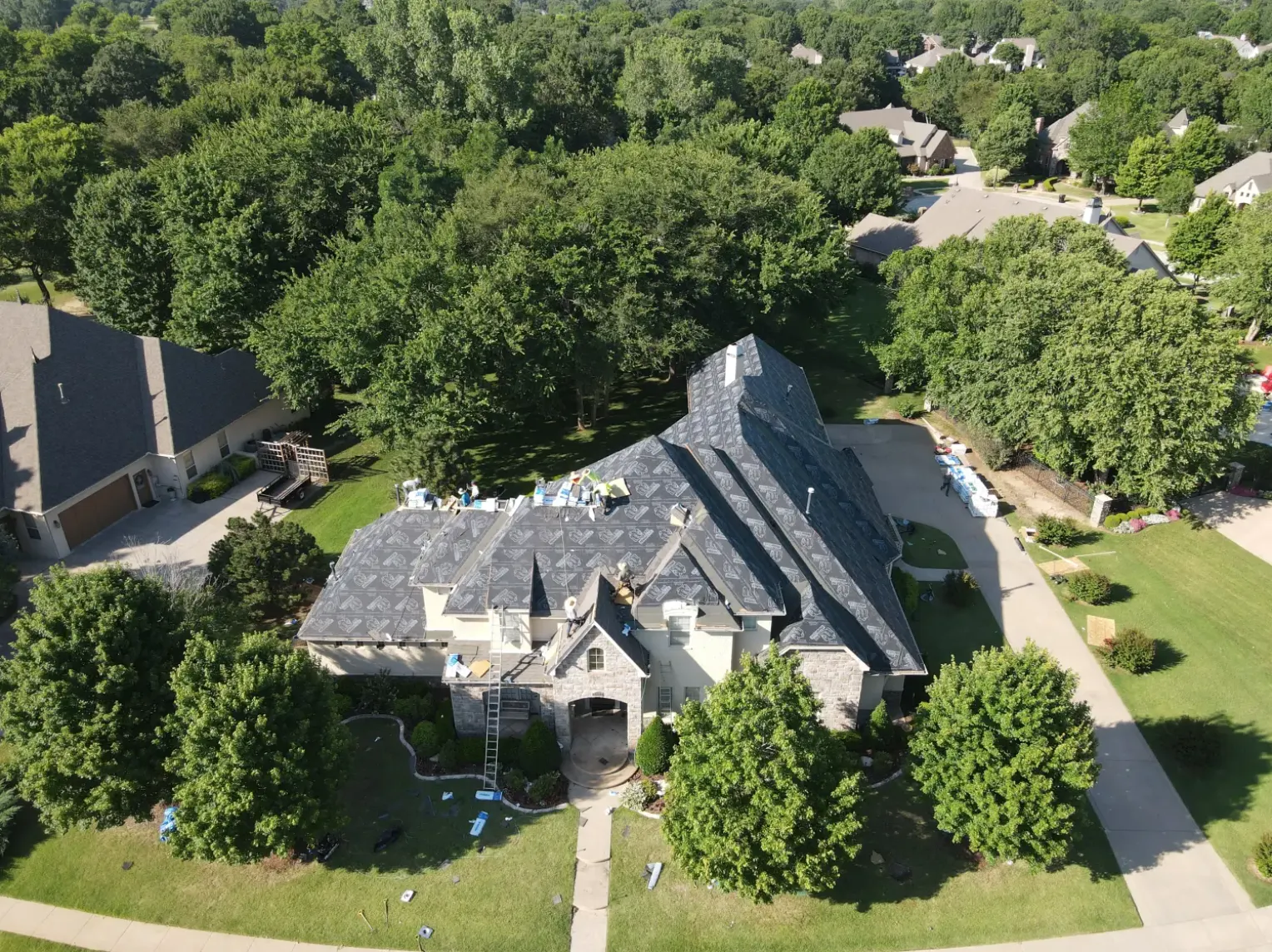
Roof Ventilation
Ventilation is the part of the roof nobody sees and everyone pays for. In Texas heat, an attic that cannot breathe ages your shingles faster and makes your AC work harder.
Schedule Your Roofing Inspection Today
Fill out the information below and we’ll reach out to complete your estimate as soon as possible!


How attic ventilation works
A ventilated attic works like a chimney. Cooler outside air enters low, usually through soffit vents under the eaves. Hot, moist air leaves high, through ridge vents, roof vents or gable vents. When intake and exhaust are balanced, air moves continuously and the attic stays closer to outdoor temperature.
When that flow is blocked or unbalanced, heat and moisture build up. Common causes are soffit vents covered by insulation or paint, too few exhaust vents, or mixing different exhaust types that end up pulling air from each other instead of from the soffits.
In Texas, the main enemy is heat. Moisture matters too, especially along the Gulf Coast, where humid air that reaches a cool deck can condense. A working system handles both, all year, without anyone having to think about it.
Signs of poor ventilation
An attic that feels like an oven
Some heat is normal in summer, but extreme temperatures mean the hot air has nowhere to go.
Rising cooling bills
Heat in the attic radiates into the living space and keeps the AC running longer.
Shingles aging early
Curling, cracking and granule loss on a roof that should still have years left.
Moisture and mildew
Damp insulation, rusty nails or dark stains on the underside of the deck, often from moisture that never escapes.
Wavy roof deck
Decking that warps or sags between rafters can point to long-term heat and moisture.
Ventilation components
Soffit vents: the main intake, under the eaves.
Ridge vents: continuous exhaust along the peak of the roof.
Static roof vents: individual exhaust vents placed near the ridge.
Turbine vents: exhaust vents that spin with wind and rising air.
Gable vents: openings in the gable walls, common on older homes.
Powered attic fans: electric fans that pull air out, which need enough intake to work properly.
How GemSco handles ventilation
Inspection
We check the attic and the roof: intake, exhaust, insulation near the soffits and signs of heat or moisture damage. See roof inspection.
Photos
We photograph blocked vents, damaged decking and any moisture we find.
Written estimate
A written estimate with the changes we recommend, from clearing intake to adding or replacing vents.
Installation
Vents installed and flashed so they move air without letting water in.
Cleanup
We remove debris and old materials from the property.
Ventilation and a new roof
The best time to fix ventilation is during a roof replacement, when the deck is open and ridge vents can be cut in cleanly. Shingle manufacturers, including Owens Corning and GAF, publish ventilation requirements for their products, and a poorly ventilated attic can affect the manufacturer's warranty. That alone is a reason to treat ventilation as part of the roof, not an add-on.
Ventilation can also be corrected on an existing roof. Adding intake, replacing worn vents or removing a conflicting vent type is often a modest job compared with the shingle damage it prevents. If your roof is showing early wear, compare that with our asphalt shingle roofing page to see what to expect from a healthy roof.
Bathroom and kitchen exhaust fans deserve a look as well. When they vent into the attic instead of through the roof or a wall, they add moisture right where it causes damage. Routing them outside is a simple fix that protects the deck and insulation.
Roof ventilation across Texas
GemSco is family owned, fully licensed and insured, with more than 20 years of experience and elite contractor status with Owens Corning and GAF. We inspect and correct roof ventilation on homes and commercial buildings in Houston, DFW, Austin, San Antonio and surrounding areas, including Austin and Houston. Estimates are free.
Frequently Asked Questions
Can a roof have too much ventilation?
The bigger risk is unbalanced ventilation, not too much. Lots of exhaust with little intake can pull air from the house or from other vents instead of the soffits. Mixing exhaust types, such as a ridge vent with a powered fan, can also short-circuit the airflow. The goal is balanced intake and exhaust.
Does attic ventilation lower my energy bill?
It can help, because a cooler attic sends less heat into the living space. Insulation and air sealing between the attic and the house matter just as much. Ventilation removes hot air from the attic; insulation keeps the heat that is there from reaching the rooms below. Both work together.
Should I add a powered attic fan?
Not always. A powered fan without enough intake can pull conditioned air out of the house through ceiling gaps, which works against you. In many homes, clearing and adding soffit intake with a ridge vent does the job without electricity. We recommend fans only when the attic layout needs one.
Why does ventilation matter for shingle life?
Heat trapped under the deck bakes the shingles from below while the sun heats them from above. That speeds up drying, cracking and granule loss. Trapped moisture can also damage the decking the shingles are nailed to. Balanced ventilation helps shingles reach their expected life.
We’re Here to Help!
GemSco Roofing & Solar serves Houston, DFW, Austin, San Antonio and surrounding areas. We’re family owned and fully licensed and insured.