

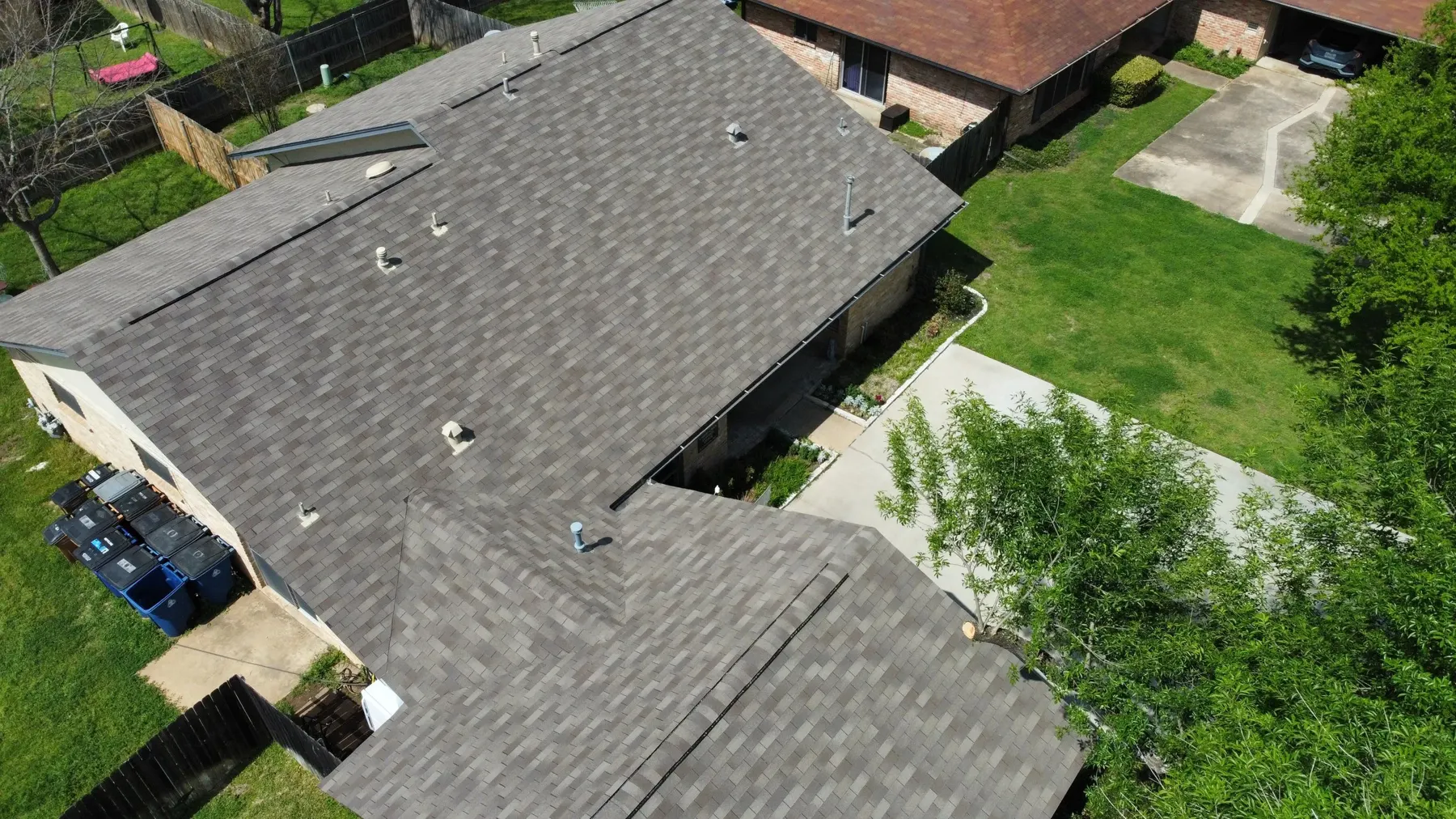
Hail Damage Roof Repair Across Dallas-Fort Worth
North Texas is one of the most hail-prone parts of the state. The NOAA numbers below, city by city, show why one storm can ruin roofs in one suburb and miss the next.
Schedule Your Roofing Inspection Today
Fill out the information below and we’ll reach out to complete your estimate as soon as possible!


Hail by the numbers in six DFW cities
Plano
NOAA's Storm Prediction Center logged 202 hail reports within 10 miles of Plano from 2015 through 2024, 75 of them 1.75 inches or larger. Largest: 4.5 inches on March 24, 2019.
Frisco
NOAA's Storm Prediction Center logged 201 hail reports within 10 miles of Frisco from 2015 through 2024, 68 of them 1.75 inches or larger. Largest: 4.5 inches on March 24, 2019.
Arlington
NOAA's Storm Prediction Center logged 152 hail reports within 10 miles of Arlington from 2015 through 2024, 33 of them 1.75 inches or larger. Largest: 5 inches on June 12, 2023.
Fort Worth
NOAA's Storm Prediction Center logged 143 hail reports within 10 miles of Fort Worth from 2015 through 2024, 31 of them 1.75 inches or larger. Largest: 3 inches on October 10, 2019.
Garland
NOAA's Storm Prediction Center logged 112 hail reports within 10 miles of Garland from 2015 through 2024, 28 of them 1.75 inches or larger. Largest: 5.25 inches on April 11, 2016.
Dallas
NOAA's Storm Prediction Center logged 58 hail reports within 10 miles of Dallas from 2015 through 2024, 10 of them 1.75 inches or larger. Largest: 2.5 inches on June 2, 2017.
Why the counts differ so much
Each count is measured within 10 miles of one point in the city, so it reflects where storms tracked, not how safe a city is. Dallas logged fewer reports than its northern suburbs over these ten years, yet a single storm can drop large hail on any street in the metro. The storm of March 24, 2019 set the maximum for both Plano and Frisco.
What the numbers do show is that golf ball size hail is a regular event in DFW, not a rare one. Plano and Frisco each saw it in eight of the ten years. A roof that has been through several seasons here without an inspection may be carrying damage you cannot see from the ground. Our hail damage roof repair page explains the service in full.
Older homes, newer homes, same hail
Half of the homes in Garland were built before 1978, and half of the homes in Dallas were built before 1981 (U.S. Census Bureau, American Community Survey 2020-2024). On those houses, hail often lands on shingles already near the end of their life, and the question becomes replacement rather than repair.
Half of the homes in Frisco were built before 2009. Those roofs are younger, but they sit in one of the busiest hail areas of the metro, and a first roof that takes a direct hit can need replacing long before its rated life. In between, half of the homes in Arlington were built before 1986, in Plano before 1993 and in Fort Worth before 1994.
How GemSco handles a DFW hail roof
Storm date first
Tell us when the storm hit, so the damage can be tied to that event.
Slope-by-slope inspection
Hits on shingles, ridge caps, vents, flashing, gutters and skylights are photographed and marked.
Written estimate
Repair or replacement, with the photos that show why.
Your claim decision
You decide whether to file. Coverage depends on your policy and your insurer's decision. See roof insurance claims.
Repair or new roof
Owens Corning or GAF products, including UL 2218 Class 4 impact-rated options.
Hail damage you can spot from the ground
Dents on gutters, downspouts and window screens
Dings on AC condenser fins and metal vent caps
Granules piled at downspout outlets
Cracked skylights or broken siding
Shingle pieces in the yard after the storm. For the roof itself, read how to identify hail damage on asphalt shingles.
Frequently Asked Questions
Which DFW cities get the most hail?
Among the cities on this page, Plano and Frisco logged the most reports within 10 miles from 2015 through 2024, according to NOAA's Storm Prediction Center. The counts depend on where storms tracked, so a lower number does not mean a city is safe. Any home in the metro can take a damaging storm.
What does a Class 4 shingle actually mean?
Class 4 is the highest rating in the UL 2218 impact test, in which steel balls are dropped on the roofing to simulate hail. A Class 4 shingle resists cracking better than standard ones, though no roof is hail proof. Owens Corning and GAF both make Class 4 lines, and some insurers discount premiums for them; ask your agent.
How long do I have to report hail damage?
It depends on your policy. Many policies set a window for reporting storm damage, and waiting makes it harder to tie the damage to a specific storm. Check your policy, write down the storm date and get the roof inspected and photographed soon after. GemSco documents the damage; the claim decision stays with you and your insurer.
Can a newer roof really need replacing after hail?
Yes. Large hail can fracture shingles of any age. A young roof usually shrugs off small stones, but golf ball size hail and larger can crack the mat, break seals and dent metal. Whether the damage calls for repair or replacement depends on how widespread it is, and the inspection photos show exactly that.
We’re Here to Help!
GemSco Roofing & Solar serves Houston, DFW, Austin, San Antonio and surrounding areas. We’re family owned and fully licensed and insured.