

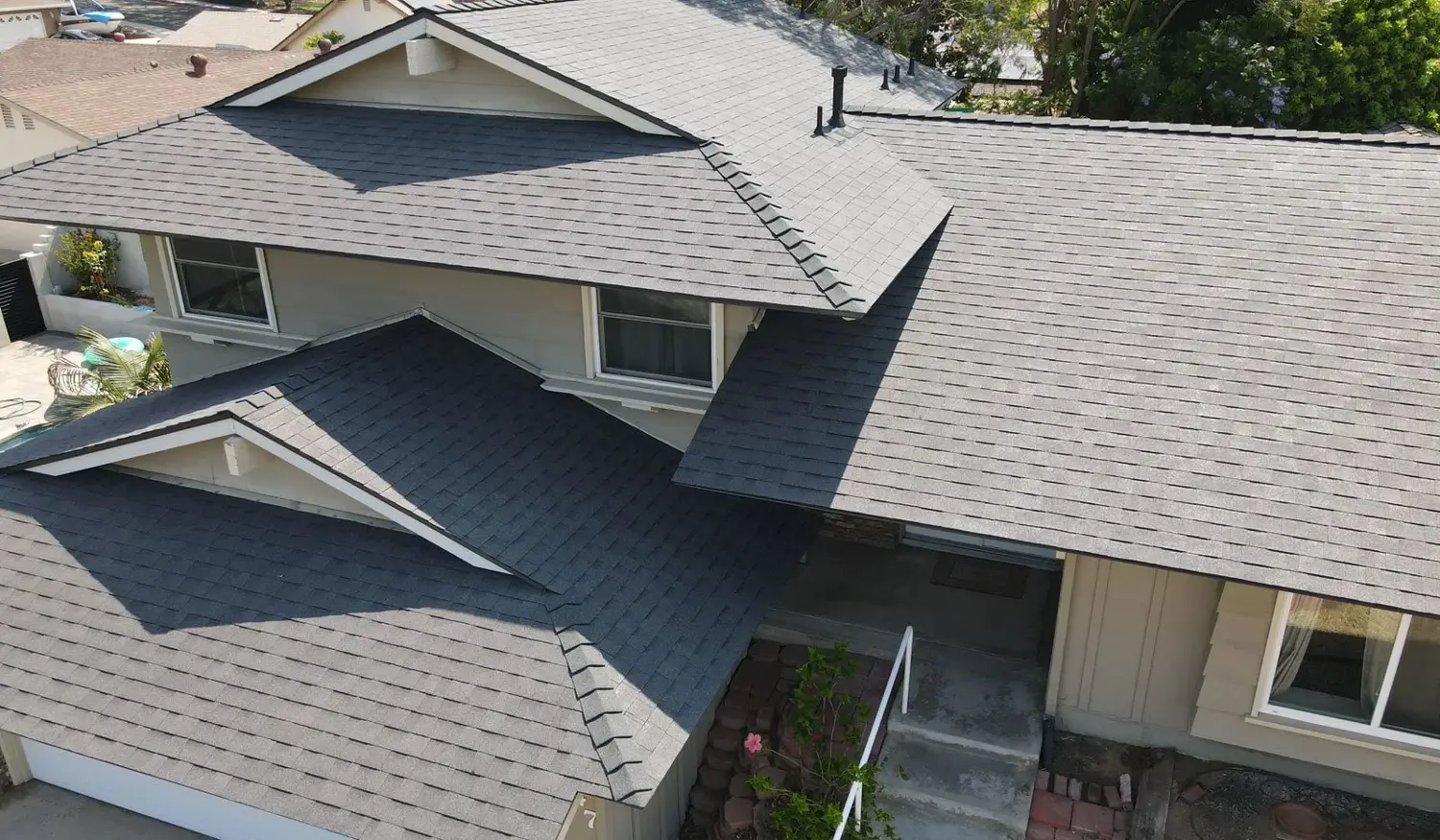
Soffit and fascia damage signs: what to look for at your roof edge
Peeling or stained paint, soft or rotten wood, sagging gutters, gaps, holes and droppings are the main signs that your soffit or fascia is damaged. Most of them show from the ground, and the cause is almost always water from the roof edge, animals or wind.
Schedule Your Roofing Inspection Today
Fill out the information below and we’ll reach out to complete your estimate as soon as possible!
What soffit and fascia do, in plain terms
The fascia is the long vertical board along the roof edge. It caps the rafter ends, and on most Texas homes it is what the gutters are screwed into. The soffit is the panel underneath the overhang, between the fascia and the wall.
Both look like trim, but they do real work. The fascia carries the gutter and keeps water out of the rafter tails. The soffit closes the overhang to animals and, on most vented attics, holds the intake vents that let outside air into the attic.
That is why damage here matters more than it looks. A rotten fascia lets water into the roof structure, and a crushed or blocked soffit can quietly shut down the airflow your attic depends on in a Texas summer.
7 signs your soffit or fascia is damaged
Peeling paint or dark stains
Paint lifts and stains form when water gets behind the board. On fascia, look first under gutter seams and downspout corners.
Soft or crumbling wood
If a screwdriver sinks into the board with light pressure, the wood is rotting, not just weathered.
Sagging gutters or a wavy edge
Gutter hangers need solid wood. A gutter pulling away, or an eave line that dips between rafters, often means the fascia behind it is rotting.
Cracked or warped vinyl
Vinyl and aluminum do not rot, but they crack, bend and pull out of their channels after hail, wind or years of heat.
Holes or chewed edges
Round holes, gnawed corners or a panel pushed up into the attic are classic animal entry points.
Droppings, nesting or noise
Droppings on the wall or porch below, nesting material at a gap, or scratching above the ceiling at dawn and dusk all point to a soffit opening.
Mold or a musty attic
Mildew on the soffit or a damp, stale attic can mean the intake vents are blocked or water is getting in at the eave.
What causes it: water first, then animals and wind
Water is the most common cause by far. GAF lists peeling paint, sagging gutters, cracks, warping and rot as fascia warning signs, and notes that failed sealant leaves the board open to water. Clogged gutters overflow onto the fascia, and a missing or short drip edge lets water run behind the gutter and soak the top of the board.
Animals are next. Squirrels and raccoons look for soft spots at the roof edge, and a small rotten patch is easy for them to chew into a full entry hole. Overhanging branches give them a path; our post on tree limbs and debris covers how to cut that path off.
Wind is the third cause, and on the Gulf Coast it is a big one. A Florida Building Commission study notes that post-storm assessments, including FEMA reports, documented soffit panels pulling loose and fasteners failing, and that a full loss of soffit material led to the worst cases of rain getting into the attic.
Why it matters for your attic ventilation
On most vented attics, the soffit is the intake. Air comes in low at the eaves and leaves high at the ridge or roof vents. Building America describes balanced ventilation as matching the soffit vent area to the upper vent area, so a blocked intake throws the whole system off.
The code sets the minimum. The International Residential Code section on roof ventilation sets the minimum net free vent area at 1/150 of the vented space, with a reduced ratio allowed only under specific conditions. If half of your soffit vents are painted over, crushed or packed with insulation, the attic is no longer getting what the design counted on.
Insulation is the hidden culprit. ENERGY STAR says the most common homeowner mistake is blocking airflow at the eaves, and calls for rafter vents, or baffles, to keep a channel open from the soffit into the attic. A poorly vented attic runs hotter in summer and holds moisture in winter, as our post on attic condensation explains.
A 15-minute check you can do this weekend
Walk the house with binoculars
Go around once in daylight. Look along every eave line for paint failure, stains, dips and gaps, especially under gutter seams and at corners.
Check after a rain
Watch the gutters during or right after a storm. Water spilling over the front or dripping behind the gutter is soaking the fascia.
Look under the overhang
From a stable spot, look up at the soffit. Note sagging panels, holes, rust on vent screens and vents caked with paint.
Probe only what you can reach safely
On a single-story eave, press a screwdriver into a stained spot. Soft wood means rot. Do not climb onto a second-story ladder for this.
Check from the attic side
With a flashlight, look at the eaves from inside. You should see daylight or a clear channel at the soffit vents, not a wall of insulation, and no wet or dark wood.
Take photos
Photograph each problem spot with something for scale. They help a contractor quote the work and help if the damage came from a storm.
Mistakes that make soffit and fascia damage worse
Painting or caulking over soft wood. It looks fine for a season, but the rot keeps spreading underneath.
Replacing the fascia but not fixing the water source. If the gutter still overflows or the drip edge is still missing, the new board rots the same way.
Sealing a hole without checking for animals. An animal trapped in the attic will chew a new way out, sometimes through the ceiling.
Covering soffit vents with solid panels or paint during a repair. The trim looks clean, but the attic loses its intake air.
Ignoring the roof edge when the gutters are replaced. New gutters screwed into weak fascia pull loose with the first heavy rain.
Treating bats like other animals. A Texas A&M AgriLife guide says exclusion is the only safe and effective way to permanently remove bats from a building, so call a wildlife professional before anyone seals a gap.
Repair or bigger fix: how to tell
A short stretch of rotten fascia with sound rafter tails behind it is usually a board replacement. Soffit panels with holes or cracks can often be swapped section by section, as long as the replacements keep the vent area.
It becomes a bigger job when the rot reaches the rafter tails or the roof decking at the eave. The last row of shingles sits right on top of that wood, so long-term water at the fascia often means soft decking too. Our post on signs of rotted roof decking shows what to look for.
Fix the cause at the same time. That often means resetting or replacing the gutters, adding drip edge and opening the intake vents. See how gutter repair and roof ventilation fit together, or book a roof inspection if you are not sure where the water is coming from.
Frequently Asked Questions
What does soffit and fascia damage look like?
Look for peeling or bubbling paint, dark water stains, soft or crumbling wood, a fascia board that bows, gutters pulling away, and cracked, bent or missing soffit panels. Holes, chewed edges and droppings below the eave usually mean animals are getting in.
Is soffit and fascia part of the roof?
They are part of the roof edge, not the roof covering. The fascia caps the rafter ends and carries the gutter, and the soffit closes the overhang and holds the intake vents. Because they sit where the roof drains, roof and gutter problems often show up there first.
Can rotted fascia cause roof leaks?
Rotted fascia itself is a symptom, but the water causing it can travel into the rafter tails and the roof decking at the eave. Once that wood is soft, the edge shingles and drip edge lose their solid base, and leaks or stains along exterior walls can follow.
Does homeowners insurance cover soffit and fascia damage?
It depends on your policy and on what caused the damage. Policies often treat sudden damage from wind or hail differently from slow rot or wear. Photograph the damage, note the storm date and read your policy, then let the insurer decide on the claim.
Keep Reading
What is drip edge on a roof, and how do you know if yours is missing?
Learn MoreHow Proper Roof Ventilation Helps Protect Your Home
Learn MoreSigns of rotted roof decking: what to look for before the shingles come off
Learn MoreAttic condensation in winter: why your attic drips when it hasn't rained
Learn MoreGutter Repair
Learn MoreRoof Ventilation
Learn MoreWe’re Here to Help!
GemSco Roofing & Solar serves Houston, DFW, Austin, San Antonio and surrounding areas. We’re family owned and fully licensed and insured.