

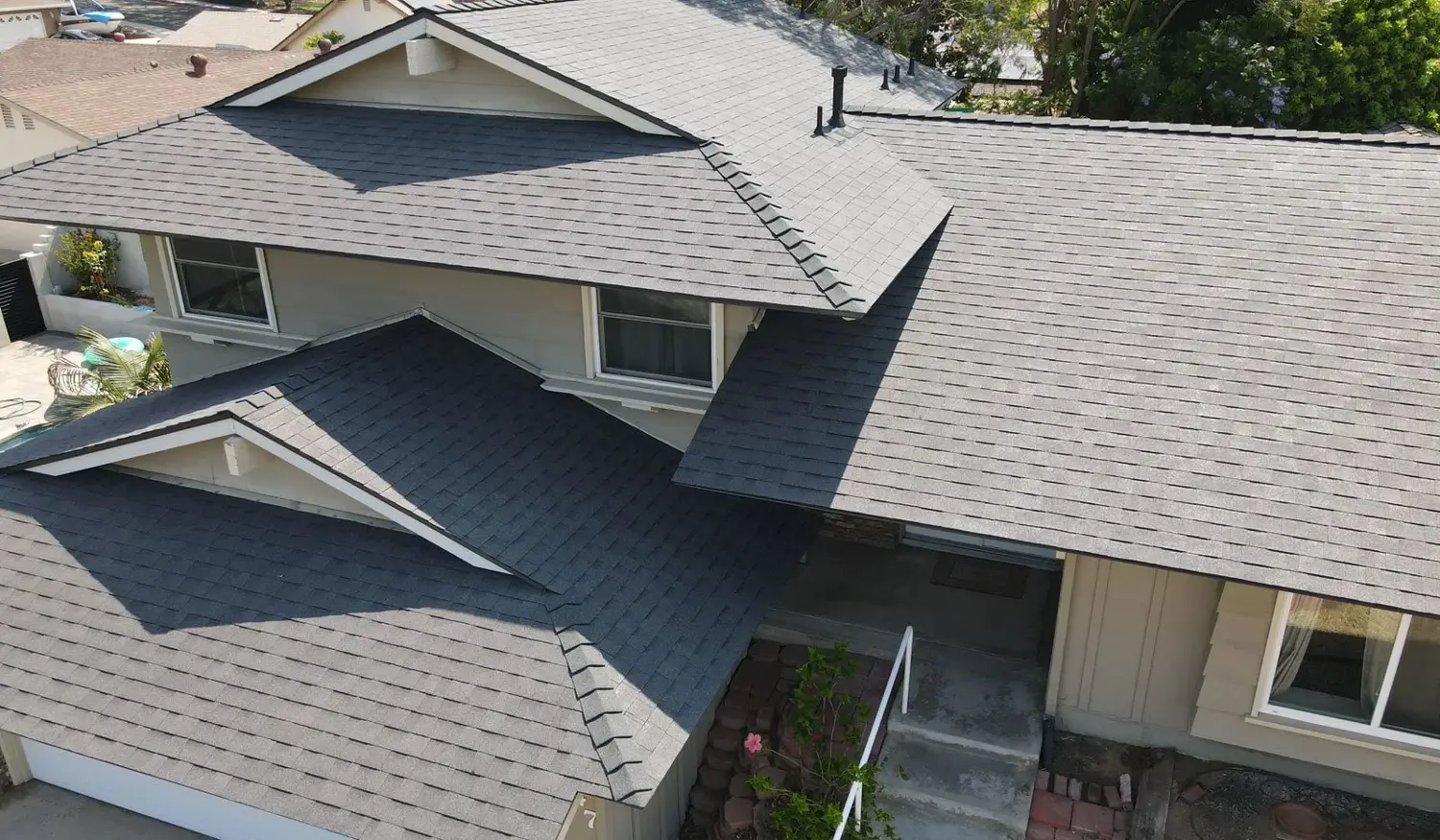
Roof over vs tear off: can you put new shingles over the old ones in Texas?
A roof over (or overlay) puts one new layer of shingles on top of the old one. A tear-off strips the roof to the wood deck first. The code allows an overlay only in narrow cases, and even when it is allowed, you give up the one chance to see what is under your shingles.
Schedule Your Roofing Inspection Today
Fill out the information below and we’ll reach out to complete your estimate as soon as possible!
The short answer: an overlay is legal only on a sound, single-layer roof
Most Texas cities build on the International Residential Code. State law adopts the IRC as the municipal residential code and lets each city adopt its own edition and amendments, so the rule in Plano can differ from the rule in Katy.
Under the reroofing section of the IRC, a recover is not allowed when the existing roof or deck is water-soaked or deteriorated, or when the house already has two or more layers. The same summary notes that local reroof policies are often stricter than the bare code text.
Why do roofers offer overlays at all? Skipping the tear-off means no old shingles to haul away, less debris in the yard and fewer hours with the roof open. Those are real advantages, and on the right roof they can be the sensible choice. The problem is when an overlay is offered on a roof that should not get one.
So the first question is not price. It is whether your roof even qualifies. If you are not sure how many layers you have, count them at the edge of the roof or in the attic before anyone quotes an overlay.
When a tear-off is the only real option
There are already two layers
Two layers of shingles is the code limit for a recover. A third layer is off the table, and the bid should show both layers coming off.
The deck is soft, wet or sagging
A spongy step, a dip between rafters or dark stains on the attic side of the decking mean the base is not sound. New shingles cannot fix that.
There is an active leak
A leak means water already got past the old layer. Covering it hides the path and keeps the wet wood in place.
The old shingles are curled or buckled
New shingles take the shape of what is under them. Curled or lifted shingles show through and can keep the new ones from sealing flat.
You want a top-tier manufacturer warranty
Enhanced warranty programs can require a clean deck. Ask before you sign, not after.
What you lose when nobody sees the deck
The decking is the plywood or OSB that holds every nail. It is only visible during a tear-off. That is when a crew finds rot around a chimney, soft spots under a valley, or old nails that never hit a rafter, and replaces those boards before anything new goes on.
With an overlay, those problems stay sealed under two layers. The new roof can look perfect from the street while the wood under it keeps getting worse. If you are weighing the two options after a storm, read what a roof inspection after hail includes so you know what can and cannot be judged from the surface.
A tear-off also lets the crew replace the underlayment, drip edge and flashing as a system. On an overlay, much of that older material stays where it is, and flashing is a common place for leaks to start.
How an overlay affects your shingle warranty
This is the part most homeowners never ask about. GAF's Golden Pledge brochure lists among its requirements that the roof system must not be installed over an existing roof and that all existing materials be removed to the deck.
Rules also change by product. Owens Corning's instructions for its Supreme shingle say loose, curled or lifted shingles must be nailed down or cut away if the old roof stays, and that installing over existing laminate shingles is not recommended. Other product lines require removal of the old roof outright.
The practical step: ask for the exact shingle and warranty name on the estimate, then ask the contractor to show you where that warranty says an overlay qualifies. If they cannot, assume it does not.
Hail country changes the math
North and Central Texas see repeated hail seasons, and that matters for overlays. IBHS notes that model building codes have no specific hail-resistance requirement for roofing products, but that in moderate hail zones a recover is often not permitted, and points to the local building department as the final word.
A second layer can also make storm damage harder to assess later, because the new shingles sit on an uneven base instead of a flat deck. If you are thinking about a Class 4 impact-resistant shingle, that is a strong reason to start from a clean deck.
Programs that aim for a stronger roof go the same way. The FORTIFIED re-roofing checklist for high wind and hail tells crews to remove all existing roofing material and replace any damaged wood before the new system goes on.
How to decide in five steps
Count the layers
Look at the edge of the roof along the gutter line or at a gable end. Two visible layers of shingles means a tear-off.
Check the attic with a flashlight
Look for dark stains, damp spots, daylight or sagging between rafters. Take photos of anything that looks off.
Call your city's building department
Ask whether a permit is required for a reroof and whether recovers are allowed. Write down the answer and the name of who told you.
Ask about the warranty in writing
Get the shingle name, the warranty tier and whether it allows an overlay. Compare it to the manufacturer's own document.
Compare bids line by line
Make sure each bid states tear-off or overlay, how damaged decking is handled and what underlayment and flashing are included.
Questions to ask any roofer who suggests an overlay
How many layers are on my roof right now, and how did you check?
How will you know if the decking is soft or rotted if you do not remove the old shingles?
Does my city allow a recover on this house, and will you pull the permit?
Which shingle and warranty are you quoting, and does that warranty cover an overlay?
What happens to the old flashing, drip edge and vents?
If I sell the house, how will a buyer's inspector see a two-layer roof?
The bottom line for a Texas homeowner
An overlay can make sense on a single, flat, dry layer over a sound deck, where the city allows it and you accept a shorter list of warranty options. For most older Texas roofs, especially after hail, a tear-off is the cleaner path because it is the only time the deck gets checked and fixed.
If the decision is tied to the age of the roof, see roof repair vs replacement and what to include in a roof replacement estimate. When you are ready, a roof inspection gives you photos of the layers and the deck, and a written roof replacement estimate tells you exactly which option is on the table.
Frequently Asked Questions
Is it OK to put new shingles over old shingles?
Sometimes. The IRC allows one recover layer over a single, sound roof, but not over two existing layers or a wet or deteriorated deck. Your city can be stricter, and some manufacturer warranties require a tear-off. Check your layers, your attic and your city's rules before you agree to an overlay.
How many layers of shingles are allowed in Texas?
Texas cities use the International Residential Code with local amendments. The IRC does not allow a recover when there are already two or more layers, which in practice means two layers total. Your city building department has the final word for your address.
Does a roof over void the shingle warranty?
It depends on the product and the warranty tier. GAF's Golden Pledge brochure requires all existing materials to be removed to the deck, and some Owens Corning products require the old roof to come off. Ask for the exact warranty name and read whether it allows an overlay.
Can you see roof damage if you install over the old roof?
Not the damage that matters most. Rot, soft decking and bad nailing under the old shingles stay hidden during an overlay. A tear-off is the only time the deck is fully exposed and can be repaired before new materials go on.
Keep Reading
Roof Repair vs Replacement: How to Decide
Learn MoreWhat Should Be Included in a Roof Replacement Estimate?
Learn MoreWhy Roof Underlayment Matters During Replacement
Learn MoreClass 4 impact resistant shingles: what the rating means for a Texas roof
Learn MoreRoof Replacement
Learn MoreRoof Inspection
Learn MoreWe’re Here to Help!
GemSco Roofing & Solar serves Houston, DFW, Austin, San Antonio and surrounding areas. We’re family owned and fully licensed and insured.