Class 4 impact resistant shingles: what the rating means for a Texas roof
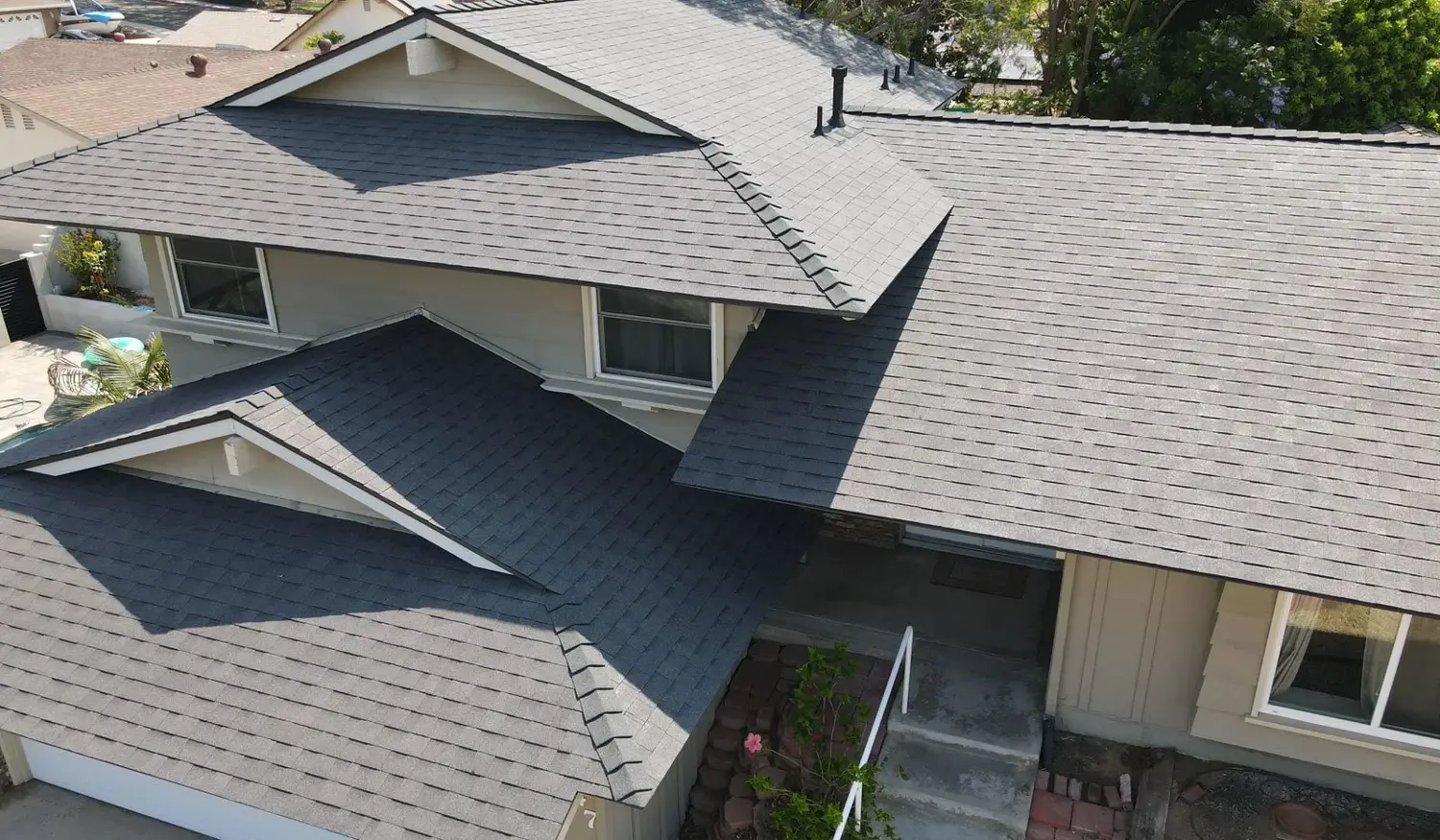
Class 4 is the top rating in the UL 2218 impact test: the shingle took hits from a 2-inch steel ball without cracking. It is a useful hail upgrade in Texas, but it is a lab rating, not a promise that the roof will come through every storm untouched.
Schedule Your Roofing Inspection Today
Fill out the information below and we’ll reach out to complete your estimate as soon as possible!
The short answer: a lab test with a steel ball
UL 2218 sorts roof coverings into Class 1 through Class 4. For the Class 4 test, GAF describes dropping a 2-inch steel ball from 20 feet onto several spots of a shingle test deck. To pass, the shingle cannot crack, split or tear.
Class 3 is one step down. GAF's comparison puts it at a 1.75-inch ball dropped from 17 feet. Both are real upgrades over a standard shingle with no impact rating, but Class 4 is the one Texas insurers single out.
Two things the rating is not. It is not a fire rating: Class A fire and Class 4 impact are separate tests, and a good shingle carries both. And it is not a warranty against hail. It tells you the product passed a controlled test on the day it was tested.
What Class 4 helps with, and what it does not
Helps: fewer fractured shingles
Hail that would crack or punch through a standard shingle is more likely to leave a Class 4 shingle intact. That is the whole point of the test.
Helps: the insurance conversation
In Texas, an impact-rated roof can qualify for a premium credit. Whether yours does, and how much, is your carrier's call.
Does not stop: granule loss and dents
A hit can still knock granules loose or mark the surface. Whether that counts as damage under your policy is a separate question.
Does not stop: wind and bad installation
Impact rating says nothing about nailing, flashing or ventilation. A Class 4 shingle nailed wrong still blows off.
Does not stop: very large hail
The test uses a 2-inch ball. Storms in North Texas can drop bigger stones, and no shingle is hail-proof.
Not every Class 4 shingle performs the same in real hail
The steel-ball test is a pass or fail line, so two products that both say Class 4 can behave very differently on a roof. The Insurance Institute for Business & Home Safety tests this with lab-made hailstones and shingles bought at retail, not samples sent by the factory.
In its 2025 ratings, IBHS scored 24 impact-resistant products from Excellent to Poor and warned that many do not perform as expected in real storms. Before you choose a product, look it up in the IBHS ratings and ask your contractor why they recommend that line.
How to confirm you are actually getting a Class 4 roof
Ask for the exact product name on the written estimate, not just "impact resistant shingles". You cannot tell the rating by looking at a shingle on the roof.
Check the bundle wrapper. GAF notes its products are only rated when sold in packages that carry the UL validation statement, so keep a photo of a wrapper.
Ask about the hip and ridge caps. For its Duration STORM shingle, Owens Corning says the matching hip and ridge shingles are required to complete the Class 4 roof system for warranty coverage.
Ask for the material invoice and the manufacturer's install instructions to be followed and documented. Your insurer may ask for proof later.
Keep everything in one folder: estimate, invoice, wrapper photos, final photos of the finished roof and the permit if your city requires one.
The shingle is only one layer of the roof
A Class 4 shingle sits on top of everything else, and hail is rarely what ends a roof on its own. Water gets in at flashing, valleys and penetrations, and heat trapped in the attic ages any shingle faster. Ask how the bid handles underlayment, drip edge, flashing and roof ventilation, not just which shingle goes on top.
Installation also matters for the rating itself. Manufacturers publish nailing patterns and component requirements, and their warranties depend on them. A crew that skips the starter strip or uses the wrong ridge cap can leave you with a premium shingle and a roof system that no longer matches what was tested.
Class 4 shingles and Texas insurance discounts
The Texas Department of Insurance explains that roofing must pass UL 2218 and be classified Class 1, 2, 3 or 4 to qualify for an impact-resistant roofing credit, and that a Class 4 roof covering receives the highest credit. The amount is set by each insurance company, so there is no single statewide number.
The credit is not automatic. You have to tell your carrier the roof was replaced, name the product and send the proof they ask for. If you skip that call, your premium may never reflect the upgrade.
Read the fine print before you celebrate. A 1998 TDI bulletin adopted an optional endorsement, HO-145, that excludes cosmetic hail damage to roof coverings, and it can only be attached to policies that receive the impact-resistant credit. TDI's consumer blog also warns that a roof discount might come with conditions like a cosmetic damage exclusion, and that terms can change at renewal.
Questions to ask your insurer before you choose
Do you offer a credit for a UL 2218 Class 4 roof?
Ask for it in writing, along with how it would show up on your premium.
What proof do you need?
Invoice, product name, wrapper photos, a form of their own. Get the list before the job starts, not after.
Does the credit add a cosmetic damage exclusion?
Ask how they define cosmetic damage and get the endorsement wording. Your policy, not the sales pitch, decides.
Does the credit change my deductible or roof settlement?
Some policies pay roofs differently by age or material. Our guide to actual cash value vs replacement cost covers the difference.
Can these terms change at renewal?
Read every renewal notice. A credit you had last year is not guaranteed next year.
When Class 4 is worth it, and when to look at other options
If you are already replacing an asphalt shingle roof in a hail-prone area like DFW, upgrading to a Class 4 line is usually the easiest hail upgrade you can make, and if your carrier offers a credit, it can help offset the extra cost over time. The decision gets weaker if you plan to sell soon or your carrier offers no credit.
Shingles are not the only route. Some metal and stone-coated products also carry impact ratings; our comparison of asphalt shingles vs metal roofing in Texas walks through the trade-offs. Whatever you choose, it should be on the estimate by name. Our checklist of what to include in a roof replacement estimate helps you spot a vague bid.
If your current roof just took a storm, deal with that first. Learn how to identify hail damage on asphalt shingles, then get a written inspection for hail damage roof repair before deciding on materials.
Frequently Asked Questions
Are Class 4 shingles worth it in Texas?
Often, if you live in a hail-prone area and are already replacing the roof. They resist cracking better than unrated shingles, and Texas insurers may give a credit for them. Check the product's real-world hail rating and ask your carrier about the credit and any cosmetic damage exclusion before you decide.
Do Class 4 shingles lower homeowners insurance in Texas?
They can. TDI says roofs that pass UL 2218 may qualify for a credit, with Class 4 getting the highest one, but each company sets its own amount. You usually have to request it and send proof of the product installed.
Can Class 4 shingles still get hail damage?
Yes. The rating means the shingle passed a lab test with a 2-inch steel ball. Larger hail, repeated storms, aging and poor installation can still damage the roof, and impacts can loosen granules even when the shingle does not crack.
How can I tell if my shingles are Class 4?
You usually cannot tell by looking at them. Check your roofing invoice or estimate for the exact product name, look for the UL validation statement on the bundle wrappers, and confirm the rating on the manufacturer's product page.
We’re Here to Help!
GemSco Roofing & Solar serves Houston, DFW, Austin, San Antonio and surrounding areas. We’re family owned and fully licensed and insured.