

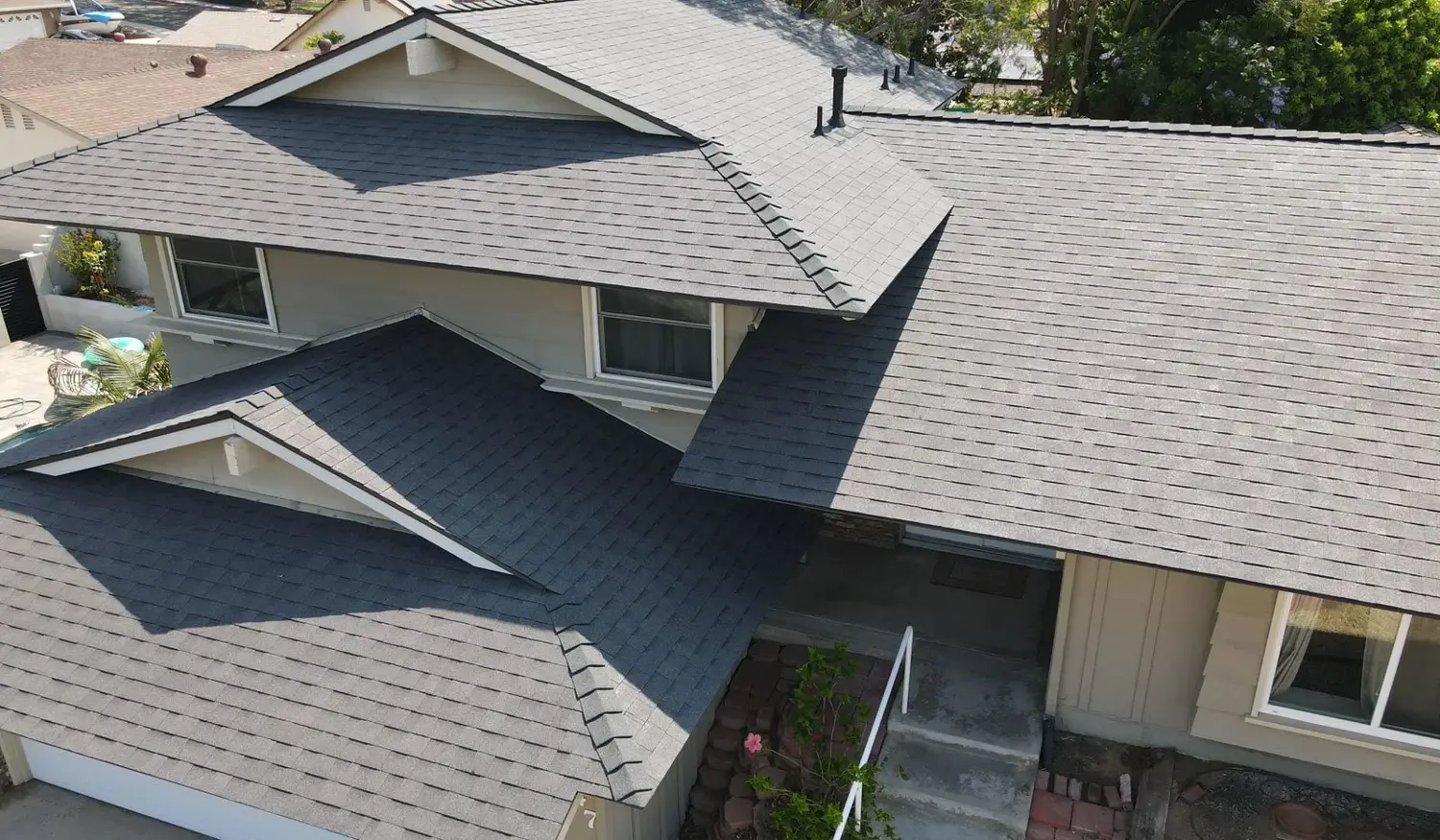
Why Roof Underlayment Matters During Replacement
Shingles get all the attention, but the layer underneath them is your roof's backup plan. Here is what roof underlayment does, the main types, and what to ask before your replacement starts.
Schedule Your Roofing Inspection Today
Fill out the information below and we’ll reach out to complete your estimate as soon as possible!
What underlayment is and what it does
Underlayment is the water-resistant layer installed directly on the roof deck, before the shingles, metal panels or tile go on. You never see it once the roof is finished, but it does real work.
Its first job is backup protection. Wind-driven rain can push water under shingles, especially in heavy Texas storms. If a shingle blows off or cracks, underlayment is what stands between the rain and the deck. Its second job is protecting the deck during installation, so a surprise shower does not soak the wood while the crew works. It also gives the roof covering a smooth, even surface to sit on.
Underlayment is not meant to be the roof. Most types are designed to resist water for a limited time under the finished covering, not to sit exposed to sun and weather for months. That is why a lost shingle needs a timely roof repair, even if the ceiling is still dry.
On a typical replacement, the crew tears off the old roof down to the deck, replaces damaged wood, then installs drip edge, underlayment and flashing before the new covering goes on. Our guide on what happens during a professional roof replacement walks through that order step by step.
The three main types of underlayment
Asphalt-saturated felt
The traditional option. Paper or fiberglass mat soaked in asphalt. Familiar and widely used, but heavier and more prone to tearing or wrinkling if it gets wet before the roof is covered.
Synthetic underlayment
Woven or spun polymer sheets. Lighter, stronger and more tear-resistant than felt, and they usually lie flatter. Many contractors now use synthetic as the field underlayment on shingle roofs.
Self-adhered membrane
Often called ice and water protection. A rubberized sheet that sticks to the deck and seals around nails. Used in the spots where water concentrates, like valleys and around penetrations.
Felt vs synthetic vs self-adhered: quick comparison
Weight and handling
Felt is the heaviest of the three. Synthetic rolls are lighter and longer, so there are usually fewer laps. Self-adhered sheets are sticky and need careful placement.
Tear resistance
Synthetic generally resists tearing under foot traffic and wind during installation better than felt.
Water exposure
All three resist water, but self-adhered membranes also seal around nails, which is why they go where water concentrates.
Heat
Not every product handles the high temperatures under metal or in hot attics the same way. Check the product rating for your roof covering.
Typical use
Felt or synthetic for the main field of the roof. Self-adhered membrane in valleys, around penetrations and at vulnerable edges.
Where underlayment matters most
Water does not hit a roof evenly. It collects and moves in predictable places, and that is where the underlayment plan should be strongest.
Valleys carry the runoff of two slopes at once. Eaves and rakes take wind-driven rain and runoff at the edges. Chimneys, skylights, walls, plumbing vents and other penetrations interrupt the shingle pattern, so they rely on flashing plus a good underlayment underneath. Many leaks that seem mysterious trace back to these spots, which our guide on signs your roof flashing is failing covers in detail.
Low-slope sections deserve special attention. Water moves slower on a shallow pitch, so the roof covering and the underlayment both have to handle more contact time. Shingle manufacturers set minimum slopes and specific underlayment requirements for these areas.
Installation details matter as much as the product. Underlayment should be lapped so water runs over each seam, not into it, and fastened as the manufacturer specifies. Wrinkles, gaps and torn spots under the roof covering become weak points that nobody will see again until something leaks.
Underlayment and your roof covering
Asphalt shingles: a field underlayment plus self-adhered membrane in valleys and around penetrations is a common approach. See our asphalt shingle roofing page.
Metal roofing: panels can get very hot, so the underlayment needs to tolerate high temperatures. Ask what is rated for use under metal on our metal roofing projects.
Tile: tile roofs depend heavily on the underlayment, because water can get past the tiles by design. The underlayment is often the main water barrier.
Manufacturer systems: Owens Corning and GAF both offer underlayments built to work with their shingles, and certain warranty options can depend on the components used.
What to ask about underlayment in your estimate
Which type goes in the field?
Ask whether the main underlayment is felt or synthetic, and the product name if possible.
Where does self-adhered membrane go?
Valleys, around penetrations, along eaves or low-slope areas. The estimate should say where.
Is the underlayment compatible with the roof covering?
Especially important under metal and tile, where heat and water exposure are higher.
Is it part of a manufacturer system?
If you want a specific warranty option, ask which components it requires.
What happens if the deck is damaged?
Underlayment needs a sound deck. Ask how damaged decking is found, documented and priced.
Why this matters during a replacement
A full replacement is the one moment when the underlayment can be done right, because the old roof is off and the deck is exposed. Skimping here saves very little and leaves the roof with a weaker backup layer for its whole life. It is also the best time to check the deck, flashing and roof ventilation, since all of them work together.
Two estimates can list the same shingle and still be very different roofs underneath. Our guide on what to include in a roof replacement estimate shows how to compare line by line.
GemSco is an elite contractor for Owens Corning and GAF and works on asphalt shingle, metal, tile and other roof types across Houston, DFW, Austin and San Antonio. Every roof replacement starts with an inspection, photos and a written estimate. Estimates are free, and you can call (844) 980-5506.
If your roof is due for replacement after storm damage, ask that the estimate list underlayment the same way it lists shingles: product, where it goes and how much. A clear scope makes it easier to compare bids and to see what is included.
Frequently Asked Questions
Is synthetic underlayment better than felt?
Synthetic is usually lighter, stronger and more tear-resistant, and it handles exposure during installation better. Felt still works when installed correctly. The right choice depends on the roof covering, the slope and the manufacturer's requirements. Ask your contractor which product they plan to use and why.
Can underlayment be replaced without replacing the roof?
Not across the whole roof. Underlayment sits under the covering, so replacing it means removing the shingles, metal or tile above it. In a localized repair, a roofer can replace underlayment in the damaged area while the covering is off. Widespread underlayment failure usually points toward replacement.
Does underlayment stop leaks if shingles blow off?
It helps, but only for a while. Most underlayments are designed to sit under a finished roof, not to face sun and rain on their own. After shingles blow off, schedule a repair quickly and cover the area if you can do it safely, so the deck stays dry.
How do I know what underlayment my roof has?
Check old paperwork from the last replacement, or ask a roofer to note it during an inspection. Sometimes it can be seen at the edges or in the attic near the eaves. The surest way is during a repair, when the covering is lifted.
We’re Here to Help!
GemSco Roofing & Solar serves Houston, DFW, Austin, San Antonio and surrounding areas. We’re family owned and fully licensed and insured.