

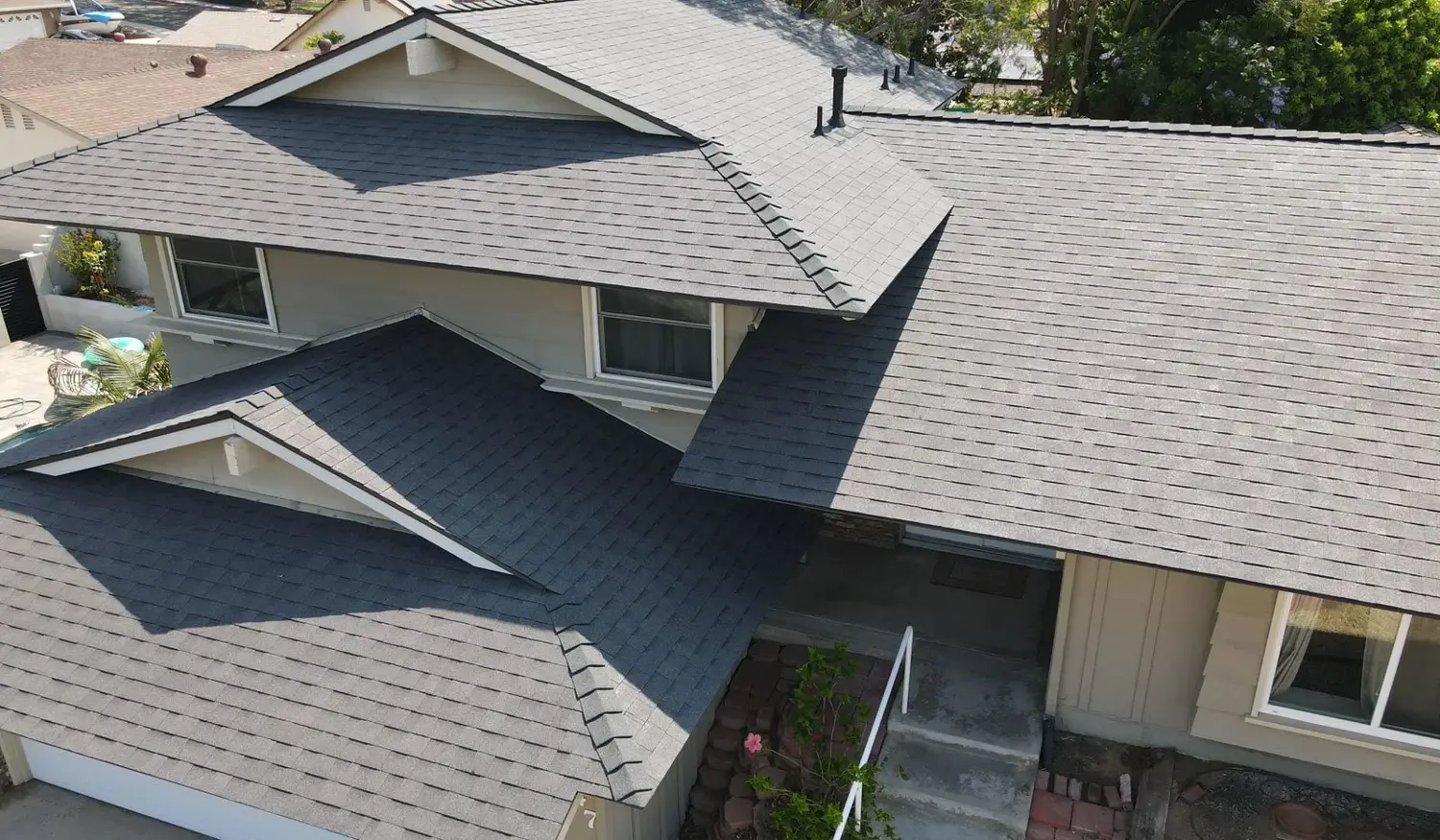
How to Tell If Your Roof Flashing Is Failing
Flashing is the metal that seals the places where your roof changes direction or meets something else. When it fails, water goes straight to the deck, often with no missing shingle in sight.
Schedule Your Roofing Inspection Today
Fill out the information below and we’ll reach out to complete your estimate as soon as possible!
What flashing does, and why it fails first
Shingles handle flat, open areas of the roof well. The trouble spots are the joints: where the roof meets a wall, a chimney, a skylight, a vent or another slope. Flashing bridges those joints so water is guided back onto the shingles instead of into the gap.
Flashing often fails before the shingles do. The metal itself can last, but it is held in place by nails and sealant, and it relies on correct overlaps. Texas heat dries out sealant. Houses and roofs move slightly with temperature, which loosens fasteners. Wind can bend the edge of a flashing piece, and hail can dent it so seams open.
Many leaks blamed on the shingles actually start at flashing. That is why flashing tops the list in our guide to the 8 common causes of roof leaks in Texas homes.
The main types of flashing on a roof
Step flashing
Small L-shaped pieces woven in with each course of shingles where a roof meets a side wall.
Counterflashing
A second layer set into or over the wall that covers the top of the step flashing, so water cannot get behind it.
Chimney flashing
A set of pieces around the chimney base, often with a cricket or saddle behind wide chimneys to split the water.
Valley flashing
Metal or membrane lining where two slopes meet, carrying a large share of the water on the roof.
Drip edge
The metal strip at the eaves and rakes that guides water into the gutter and protects the deck edge.
Vent and pipe flashing
Collars and boots around plumbing vents, exhaust vents and other penetrations.
Signs of failing flashing from outside
Flashing that is lifted, bent or pulled away from a wall or chimney.
Rust, holes or dents in the metal, especially along seams.
Cracked, missing or crumbling sealant at the top edge of flashing.
Counterflashing that is loose or missing, so the top of the step flashing is exposed.
Gaps or cracked mortar where flashing is set into a chimney.
Stains or streaks on siding or brick just above the roof line.
A drip edge that is missing, bent or sitting behind the gutter instead of over it.
Signs of failing flashing from inside
Inside the house, flashing leaks have a typical location. Look for stains on ceilings next to an exterior wall where a lower roof meets a second story, around the chimney chase, near skylight shafts and directly below roof vents. In the attic, check the wood around those same features for dark marks, soft spots or rusty nails.
Flashing leaks also tend to show a pattern over time. They often get worse in wind-driven rain, when water is pushed sideways against the joint. If your leak appears only during storms from one direction, read our article on why a roof leaks only in heavy rain.
Another clue is peeling paint or swollen drywall on the inside of a wall that has a roof joint on its outer side. Water that gets behind step flashing can run down inside the wall instead of dripping from the ceiling.
Why flashing fails: the usual causes
Installation is the biggest factor. Step flashing that is too short, pieces that are nailed through the part that should stay free, or flashing that was reused from an old roof without inspection all leave weak points. Another common shortcut is face-nailing a single long piece of metal along a wall and covering it with sealant instead of weaving step flashing in with each course of shingles. It can look neat at first and leak within a few seasons.
Weather does the rest. Sealant dries and cracks after repeated heat cycles. Wind lifts loose edges and bends thin metal. Hail dents flashing and can open the seams between pieces. Over time, rust works through steel flashing that lost its coating.
Changes to the house matter too. New siding, a stucco repair or a new window near the roof line can disturb counterflashing or cover it the wrong way. If a leak started soon after other work on the exterior, mention it to your roofer.
A flashing check you can do from the ground
Walk the perimeter
With binoculars, look at every place the roof touches a wall, chimney, dormer or skylight.
Focus on the top edges
The top edge of each flashing piece is where sealant cracks first. Look for dark gaps or missing caulk.
Check the metal
Look for rust streaks, dents and pieces that sit at a different angle from their neighbors.
Look at the wall above
Stains, cracked mortar or gaps in siding above the flashing can let water behind it.
Match with the attic
On a dry day, check the attic under each feature for stains or damp wood.
Photograph and date
Pictures from the same spots each season make slow changes easy to spot.
Reseal, repair or replace flashing?
Fresh sealant can buy time when the flashing itself is sound and only the caulk at the top edge has cracked. It is a maintenance step, not a permanent fix for bent, rusted or short flashing. Sealant alone also cannot correct flashing that was installed with the wrong overlaps.
Replacing step flashing usually means lifting or removing the shingles along that wall so the new pieces can be woven in properly, then adding or resetting the counterflashing. Chimney flashing often needs the counterflashing reset into the mortar joints. Done right, this is a lasting repair. If your roof is near the end of its life, it can make more sense to replace the flashing as part of a new roof. Our guide to roof repair vs replacement helps with that call.
U.S. Census ACS 2020-2024 estimates put the median year built of homes in Dallas at 1981 and in Arlington at 1986. On homes that age, flashing has often been resealed many times. If the sealant keeps failing, the flashing underneath likely needs attention.
GemSco is family owned, fully licensed and insured, and an elite contractor for Owens Corning and GAF, with more than 20 years of experience. We inspect flashing, photograph what we find and give you a written estimate. Visit our roof repair page or call (844) 980-5506 for a free estimate.
Frequently Asked Questions
Can roof flashing be repaired without replacing the roof?
Yes, in most cases. Flashing at walls, chimneys and vents can be repaired or replaced as a section, lifting the shingles around it and reinstalling them or replacing them. If the roof itself is worn out, it may be smarter to replace the flashing during a roof replacement.
Is caulk enough to fix leaking flashing?
Only when the flashing is in good shape and the sealant at its edge is the only problem. Caulk does not fix bent, rusted or short flashing, or flashing installed with the wrong overlaps. In those cases the leak returns once the caulk dries out.
What is counterflashing?
Counterflashing is a second layer of metal that covers the top of the step flashing or base flashing. On a chimney it is usually set into a mortar joint. On a wall it sits behind the siding. It stops water from running behind the flashing that is attached to the roof.
Should flashing be replaced during a roof replacement?
It is a good idea to inspect all flashing during a replacement and replace pieces that are rusted, bent or poorly installed. Ask your contractor what the estimate includes for flashing, drip edge and vent boots, so you are comparing complete scopes.
We’re Here to Help!
GemSco Roofing & Solar serves Houston, DFW, Austin, San Antonio and surrounding areas. We’re family owned and fully licensed and insured.