

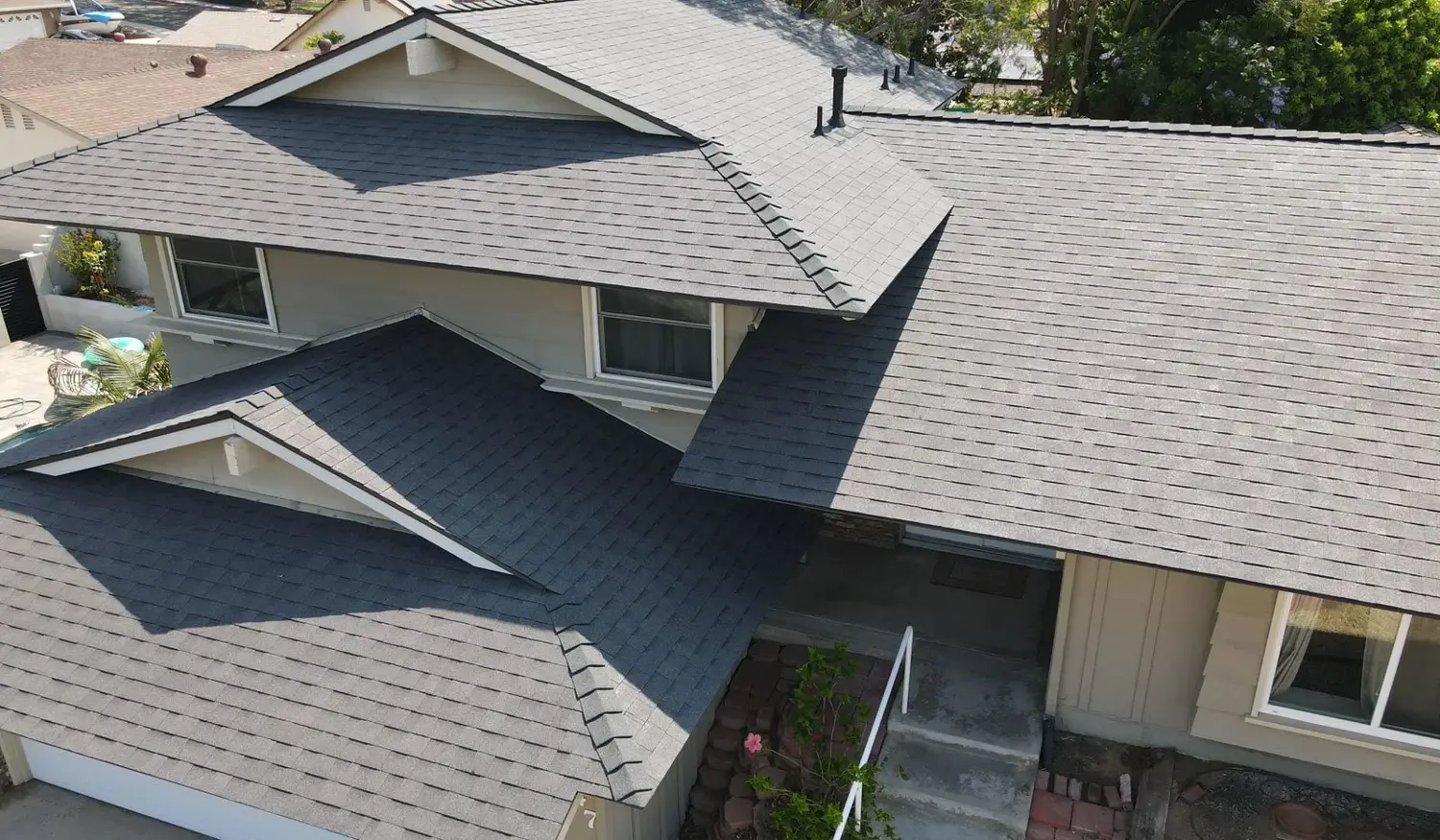
Why Is My Roof Leaking Only When It Rains Heavily?
A roof that stays dry in a drizzle and drips in a downpour is telling you something specific. The opening is real, but it only lets water in when volume, wind or backup pushes water where it normally never goes.
Schedule Your Roofing Inspection Today
Fill out the information below and we’ll reach out to complete your estimate as soon as possible!
Why heavy rain finds gaps that light rain misses
A roof is built in layers that overlap so water runs downhill and off the edge. In light rain, water moves slowly across the surface and follows that path. In a heavy storm, three things change at once: there is far more water, it moves faster, and wind pushes it sideways or even uphill under the laps.
That means a small weakness can stay hidden for years. A shingle that lost its seal, a flashing seam that opened a little, or a valley that is slightly clogged will handle a normal shower. Then a storm dumps water faster than that spot can shed it, and you get a drip that disappears the next day.
This pattern is common in Texas, where much of the year's rain can arrive in short, intense bursts. It is also common on older homes. U.S. Census ACS 2020-2024 estimates put the median year built of homes in Houston at 1982 and in Dallas at 1981. Roofs on houses that age have usually been replaced at least once, but the flashing, valleys and gutters are often original or patched, and those are the parts heavy rain tests first.
6 reasons a roof leaks only in heavy rain
Wind-driven rain
Strong gusts push water under shingle edges and behind flashing. Look for leaks that show up only when the storm comes from one direction.
Overflowing valleys
Valleys collect water from two slopes. When they carry too much, or debris slows them down, water rises past the edge of the valley lining.
Gutter backup
Full or undersized gutters push water back under the roof edge and into the fascia and soffit. The stain usually appears near an exterior wall.
Short or failing flashing
Step flashing and counterflashing that are short, bent or loose work in light rain and fail when water sheets down a wall.
Low-slope sections
Porches, additions and patio covers with little pitch drain slowly. In a downpour, water sits long enough to find a seam.
Broken shingle seals
A shingle that is no longer bonded down lifts in gusts and lets water blow underneath.
What the timing tells a roofer
Heavy-rain leaks are hard to diagnose because the roof is dry when the roofer arrives. The details you collect during the storm are often the best clue anyone gets. A leak that starts within minutes of hard rain points to an opening at or near the spot. A leak that starts an hour or more into the storm usually means water is traveling along a rafter or the deck, or that gutters and valleys had to fill first.
Wind direction matters just as much. If the drip only appears when the storm blows in from the south, the problem is likely on a south-facing wall joint, a dormer, or the leading edge of that slope. A leak that ignores wind and follows rainfall volume points more toward valleys, gutters and low-slope areas.
If you have more than one leak, or leaks in new places every season, read our guide to the 8 common causes of roof leaks in Texas homes. It covers the wider list, including aging roofs, which this article does not.
Keep a heavy-rain leak log
Write down when it started
Note the time the rain got heavy and the time the first drip appeared. The gap between the two is useful.
Note the wind
Record which way the storm was blowing. A weather app's hourly history helps if you check it later the same day.
Mark the spot
Put painter's tape on the ceiling or floor where water lands, and measure its distance from the nearest exterior wall.
Check the gutters from a window
If water is pouring over the gutter edge instead of out of the downspouts, write that down and take a short video.
Look in the attic if it is safe
With a flashlight, follow wet wood toward the ridge. Do not step between joists, and stay out if there is any electrical risk.
Photograph everything
Dated photos and videos help the roofer find the source, and they document the damage.
How a roofer confirms the source
A good inspection starts with the log and the attic, then moves to the roof sections above the leak and uphill from it. The roofer checks the valleys, the flashing at walls and chimneys, the shingle seals in the windward areas, and the gutters and drip edge at the eaves.
When the source is still unclear, a controlled water test can recreate the storm. The roofer runs water on one small section at a time, starting low and moving up, while someone watches inside. It takes patience, but it shows exactly which area lets water in. Our guide on how to find the source of a roof leak explains that method step by step.
The roofer should also look beyond the obvious spot. Heavy-rain leaks often have two contributing causes, such as a partly clogged valley next to a short piece of step flashing. Fixing only one of them can reduce the leak without stopping it. Ask for photos of every point that was checked, not only the one that was repaired, so you know what was ruled out.
Siding and windows deserve a look too. Water that gets behind siding above a roof line, or around a window frame near the roof, can run down inside the wall and appear as a ceiling leak. A roofer who checks only the shingles may miss it.
Fixes that usually solve heavy-rain leaks
Replacing short or loose step flashing and adding proper counterflashing at walls.
Cleaning and relining valleys, and keeping debris out of them.
Repairing or resizing gutters and downspouts so they do not back up. See gutter repair.
Resealing or replacing shingles that lost their bond in exposed areas.
Correcting low-slope sections with a material made for low pitch instead of standard shingles.
Do not wait for the next big storm
A leak that only shows in heavy rain still soaks the deck and insulation every time it happens. Between storms that water dries, so it is easy to forget. Over several seasons it can rot the deck, stain drywall and feed mold in the attic. The fix is usually smaller and simpler when you act after the first episode.
GemSco is family owned, fully licensed and insured, and an elite contractor for Owens Corning and GAF, with more than 20 years of experience on Texas roofs. We inspect, photograph what we find and give you a written estimate. To have a heavy-rain leak traced and fixed, visit our roof leaks page or call (844) 980-5506 for a free estimate.
Frequently Asked Questions
Can a roof leak only during heavy rain and still be a serious problem?
Yes. The opening is small, but every heavy storm sends water into the deck, insulation and framing. Between storms it dries, so the damage builds quietly. Rot, stains and mold often show up years later, when the repair is bigger than it would have been after the first leak.
Why does my roof leak when the wind blows from one direction?
Wind pushes rain sideways and can drive it under shingle edges, flashing and siding joints on the side facing the storm. A leak that follows one wind direction usually points to a wall joint, dormer, chimney or roof edge on that side of the house. Tell your roofer which way the storm came from.
Could the leak be my gutters and not the roof?
It can be. When gutters overflow or back up, water can run behind the fascia and into the wall or soffit, and the stain looks like a roof leak. Leaks near exterior walls that appear only in downpours are often gutter or drip edge problems. An inspection checks both.
Is a hose test something I should do myself?
It is better left to a roofer. A useful water test is slow, works one small section at a time from the bottom up, and needs someone on the roof and someone inside. Being on a wet roof is risky, and spraying the wrong way can push water where rain would never go.
We’re Here to Help!
GemSco Roofing & Solar serves Houston, DFW, Austin, San Antonio and surrounding areas. We’re family owned and fully licensed and insured.