

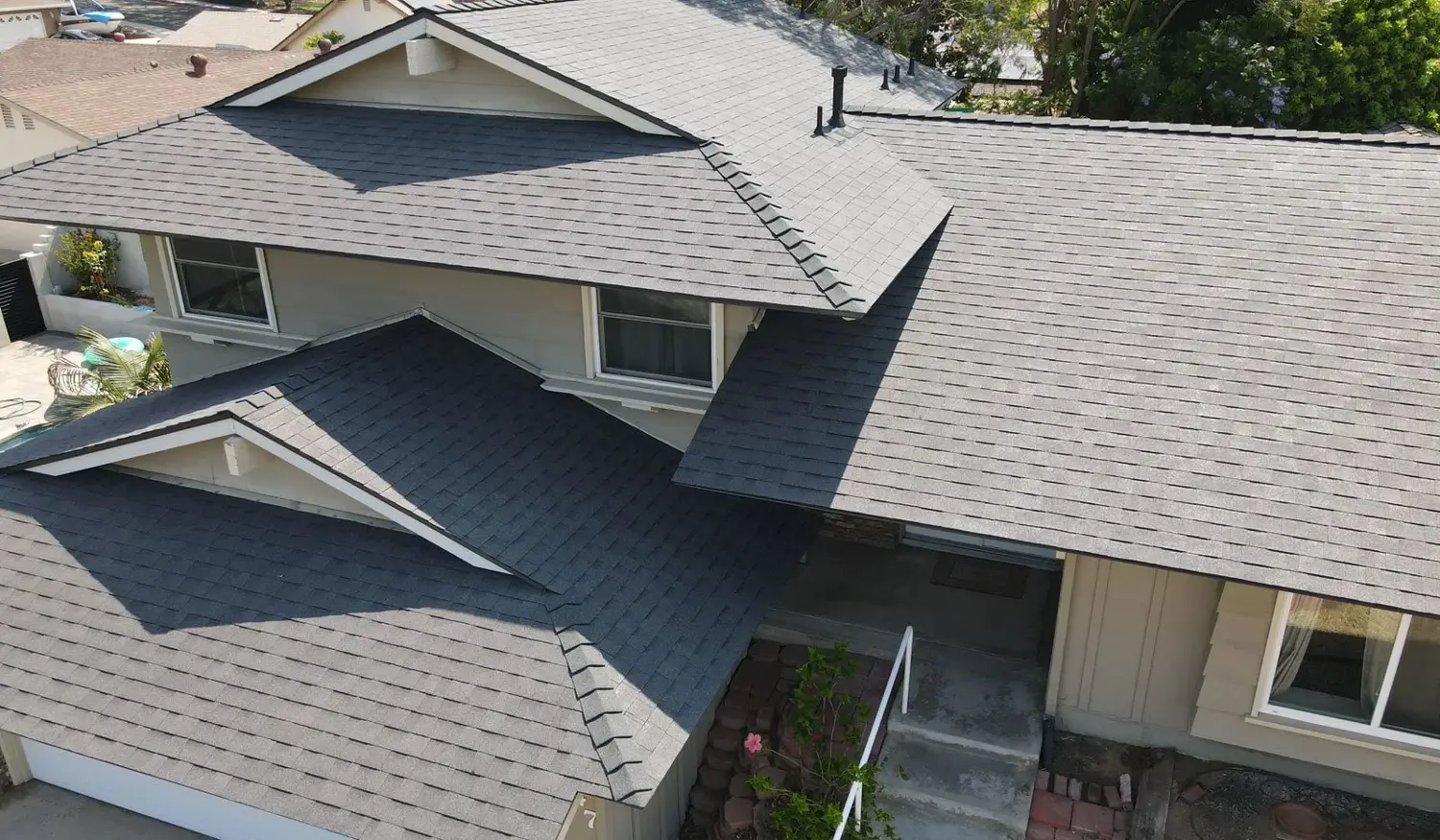
Roof Repair vs Replacement: How to Decide
Roof repair vs replacement is the most common question homeowners ask a roofer. The right answer depends on the age of the roof, how far the damage goes and what the deck underneath looks like.
Schedule Your Roofing Inspection Today
Fill out the information below and we’ll reach out to complete your estimate as soon as possible!
Start with the age of the roof
Asphalt shingle roofs usually last 20 to 30 years, depending on the product, ventilation, installation and weather. In Texas, heat and storms push many roofs toward the low end of that range. Metal, tile and stone-coated roofs usually last longer, but their flashing and underlayment still wear out.
If your roof is in the first half of its life, a repair is usually the smart move. Fixing a few damaged shingles or a failed pipe boot on a ten-year-old roof restores it. If the roof is near the end of its expected life, money spent on repairs buys less and less time. Not sure how old it is? Closing documents, permits or the previous owner may tell you, and an inspector can estimate from the materials and wear. Home inspection reports from your purchase often note the roof age too.
Age is a starting point, not the verdict. A well ventilated roof with quality shingles can outlast its range, and a roof that took heavy hail can be done in a fraction of it. That is why age always gets paired with an inspection of the actual condition.
Signs a repair is enough
Damage is localized
A few missing or cracked shingles after a storm, in one area of a roof that is otherwise in good shape.
One clear leak source
A single leak traced to a pipe boot, flashing around a chimney or a damaged vent.
Solid decking
The plywood or boards under the shingles are dry and firm, with no soft spots or sagging.
Matching materials
Replacement shingles in the same style and color are still available, so the repair blends in.
Young roof, one event
A roof in the first half of its life that took damage from a single storm or a fallen limb.
Signs it is time to replace
Widespread wear
Curling, cupping, cracking or heavy granule loss across most slopes, not just one spot.
Repeated leaks
New leaks in different places every season, even after repairs.
Sagging or soft deck
A roofline that dips or decking that feels soft points to long-term moisture. That is structural and goes beyond shingles.
Hail across the whole roof
Bruising and impacts on most slopes. Patching leaves damaged shingles in place around the new ones.
Light in the attic
Daylight through the boards, or damp and moldy insulation, means water and air are getting through.
Already two layers
Building codes limit how many layers can be stacked, so a roof that was already overlaid usually needs a full tear-off.
The hidden cost of repairing too long
Repairs feel cheaper because each one is. But on a worn-out roof, small repairs add up, and every leak between them can damage the decking, insulation, drywall and anything stored in the attic. Water that runs for months under shingles also rots the wood that a new roof would have been nailed to, which makes the eventual replacement bigger.
Matching is another hidden cost. Shingle lines and colors change over the years. A repair on an older roof can leave a patch that stands out from the street, which matters if you plan to sell. Ask whether matching shingles are still made before you approve a repair on a visible slope.
On the other side, replacing a roof that only needed a repair is money you did not have to spend. That is why the decision should come from a full inspection, not from a quick look. Be cautious with anyone who recommends replacement without showing you photos, or who pushes a repair on a roof that is clearly at the end of its life. If you are seeing water already, our guide to the common causes of roof leaks in Texas homes helps narrow down where it comes from.
How to make the call, step by step
Find out the roof's age
Check records or ask the previous owner. Compare it to the expected life of your material.
Get a full inspection
Every slope, flashing, vents, gutters and the attic. Ask for photos of what the inspector found.
Ask for both options in writing
A written estimate for the repair and one for replacement, so you can compare them side by side.
Weigh how long the repair will last
Ask how many years the repair is likely to buy on this roof, and what else is close to failing.
Check storm damage and insurance
If the damage came from hail or wind, read your policy before deciding. Coverage depends on your policy and on your insurer's decision.
Plan the budget
If replacement is the right answer but timing is hard, ask about financing and compare the total cost, not only the monthly payment.
Budget, financing and storm damage
Financing is available through GemSco. If you consider it, compare the rate, the term, the total cost over the life of the loan and any prepayment penalties. Our blog has more on choosing a roof financing plan.
If the damage came from a storm, an insurance claim may be part of the picture. GemSco can inspect the roof, document the damage with photos and give you a written estimate. Whether the claim is covered, and for how much, depends on your policy and on the insurance company's decision.
Replacement is also the moment to upgrade. You can choose impact resistant shingles rated UL 2218 Class 4, switch to metal roofing, improve attic ventilation or add new gutters. Those choices are much harder to make in the middle of a repair, so it is worth asking about them when you compare the two options. If you have solar panels, plan their removal and reinstallation as part of the project, since the roof under them gets replaced too.
Get an honest recommendation
GemSco is family owned, fully licensed and insured, and an elite contractor for Owens Corning and GAF, with 20+ years of experience on asphalt shingle, metal, tile, wood shake, stone-coated and flat roofs. We handle roof repair and roof replacement for homes in Houston, San Antonio, DFW and Austin. Estimates are free, and we offer discounts for military, first responders and seniors. Call (844) 980-5506.
Frequently Asked Questions
How long does an asphalt shingle roof last in Texas?
Asphalt shingles usually last 20 to 30 years. In Texas, sun, heat and storms often push roofs toward the lower end, and poor attic ventilation shortens that further. The product, the quality of the installation and how often the roof takes hail all matter. An inspection tells you where your roof actually stands.
Can I replace only part of my roof?
Sometimes. A single slope can be replaced when the damage is limited to it and matching materials are available. The risk is a visible color difference and a joint between old and new sections. If the rest of the roof is also aging, a full replacement is often the better long-term choice.
Is it okay to put new shingles over the old ones?
An overlay is sometimes allowed, but it hides the deck, so soft or rotten wood stays in place. It also adds weight, and building codes limit the number of layers. A tear-off lets the roofer inspect and fix the deck before installing the new roof, which is why many roofers prefer it.
Will a new roof increase my home's value?
A new roof can make a home easier to sell and easier to insure, since buyers and inspectors look closely at roof age. How much it changes the value depends on the market and the home. The clearer benefit is stopping leaks and avoiding the damage they cause.
We’re Here to Help!
GemSco Roofing & Solar serves Houston, DFW, Austin, San Antonio and surrounding areas. We’re family owned and fully licensed and insured.