

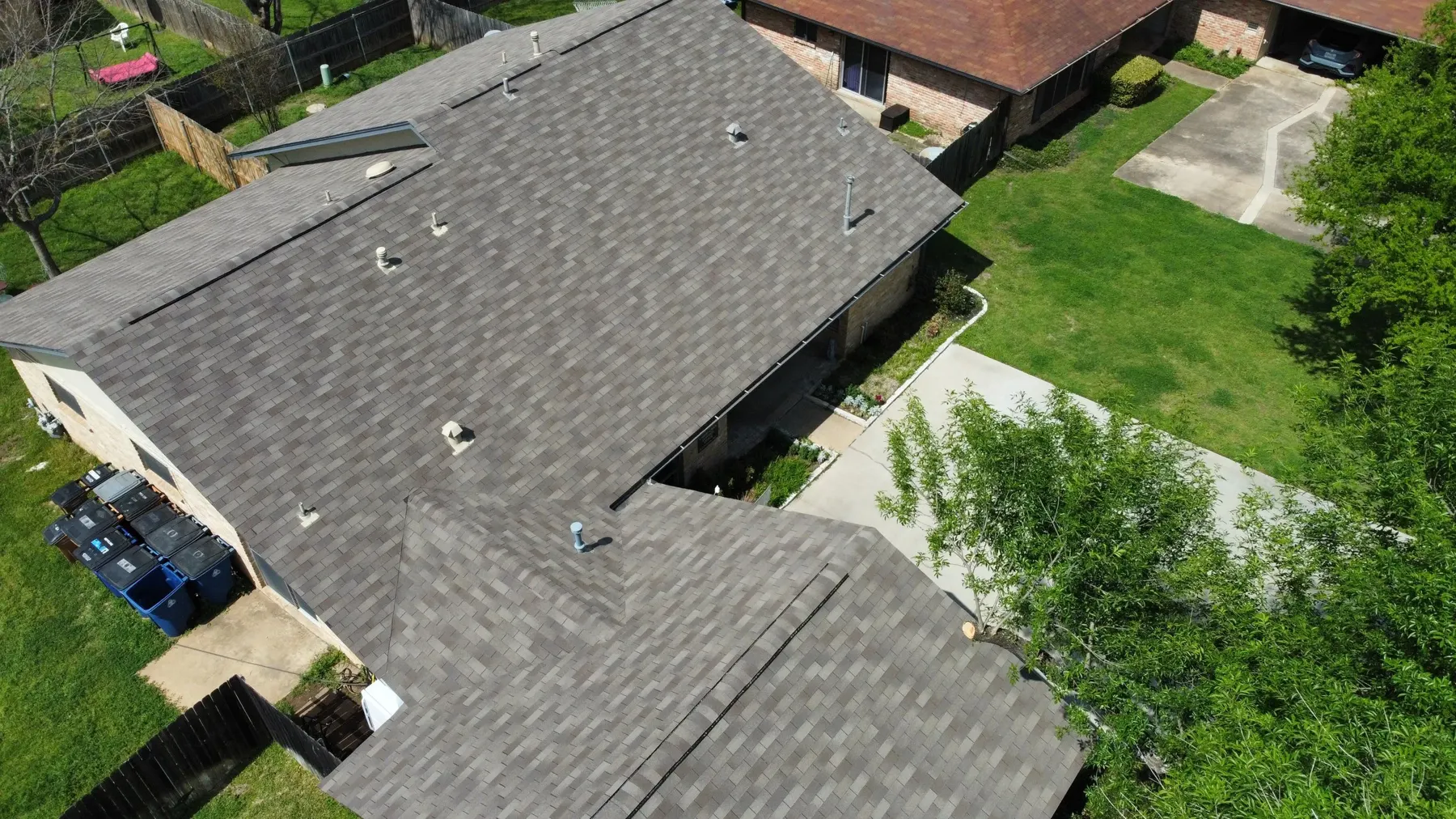
Bedford Commercial Roofing: Flat Roofs in Hail Country
Low-slope roofs take hail head-on and hide the damage well. For Bedford property owners, a steady inspection routine is the cheapest protection there is.
Schedule Your Roofing Inspection Today
Fill out the information below and we’ll reach out to complete your estimate as soon as possible!


Warning signs on a commercial roof
Water stains on ceiling tiles after rain.
Ponding that remains on the roof days after a storm.
Blisters, bubbles or soft spots in the membrane.
Loose or lifted edge metal along the perimeter.
Cracked sealant around rooftop units, pipes and curbs.
Higher cooling bills or musty air that can point to wet insulation under the membrane.
Hail exposure for Bedford buildings
NOAA's Storm Prediction Center logged 165 hail reports within 10 miles of Bedford from 2015 through 2024. Twenty-nine of them were 1.75 inches or larger, and the largest measured 3.25 inches on May 27, 2024. On a flat roof, hail that size can puncture single-ply membranes, crack older built-up surfaces and crush the insulation boards that hold the roof flat.
Because hail fell in 6 of those 10 years, a commercial roof in Bedford should be checked after every storm season, not just when a leak appears. Water that gets under a membrane can travel far before anyone sees it inside.
Rooftop equipment adds risk. HVAC units, exhaust fans and skylights all sit on curbs that are flashed into the roof. Hail dents the housings and can split the flashing at the base, and those spots are hard to see unless someone walks the roof. The same goes for the edge metal along parapets, which can be bent loose by large stones and then lifted by wind during the next storm. A post-storm check should look at every curb, not just the open field of the membrane.
Common low-slope roof systems
Single-ply membranes
TPO and EPDM sheets on low-slope roofs. Our post on TPO vs. EPDM roofing compares them.
Metal roofs
Panels, fasteners and seams need checks after hail and high wind.
Low-slope sections
Mixed buildings with flat and pitched areas need both handled as one system.
A yearly routine for property managers
Spring check
Clear drains and look for winter damage before storm season.
Post-storm check
After any hail, walk the roof and photograph punctures, dents and lifted seams.
Fall check
Clear leaves from drains and scuppers and reseal penetrations as needed.
Keep a log
Record findings, repairs and photos for each visit. A written commercial roof maintenance plan keeps it consistent.
Water that stays put
Ponding is one of the most common problems on flat roofs. It adds weight, speeds wear on the membrane and finds any seam that is not fully sealed. Clogged drains are the usual cause, but sagging decking and crushed insulation can create low spots too. Our article on flat roof drainage systems covers the options for fixing it.
When repairs keep piling up, it may be time to plan a replacement. Here are the signs a commercial roof needs replacement.
Working with GemSco
GemSco handles residential and commercial roofing, including low-slope and flat systems, and is fully licensed and insured with 20+ years of experience. We plan work around your hours and tenants. Learn more on our commercial roofing page.
Frequently Asked Questions
How fast should a commercial roof leak be fixed?
As soon as possible. A leak over offices or stock causes damage every time it rains, and water spreading under the membrane soaks more insulation each day. A temporary repair can stop the water while the permanent fix is planned and scheduled.
Can my tenants stay open during roof work?
In most cases, yes. Work can be done in sections and scheduled around business hours. Give tenants notice, plan for parking and deliveries, and agree on how the inside will be protected if debris or dust is a concern.
What records should I keep for my commercial roof?
Keep inspection reports, photos, repair invoices and the dates of any storms. These records show the roof's condition over time, help plan budgets and make it easier to explain new damage to an insurer if a storm hits.
More Roofing Help in Bedford
Roofing in Bedford, TX
City overviewRoof Repair in Bedford
Learn MoreRoof Replacement in Bedford
Learn MoreStorm & Hail Damage in Bedford
Learn MoreRoof Inspection in Bedford
Learn MoreGutters in Bedford
Learn MoreSolar Panel Installation in Bedford
Learn MoreSolar Removal & Reinstall in Bedford
Learn MoreCommercial Roofing Near Bedford
We’re Here to Help!
GemSco Roofing & Solar serves Houston, DFW, Austin, San Antonio and surrounding areas. We’re family owned and fully licensed and insured.