

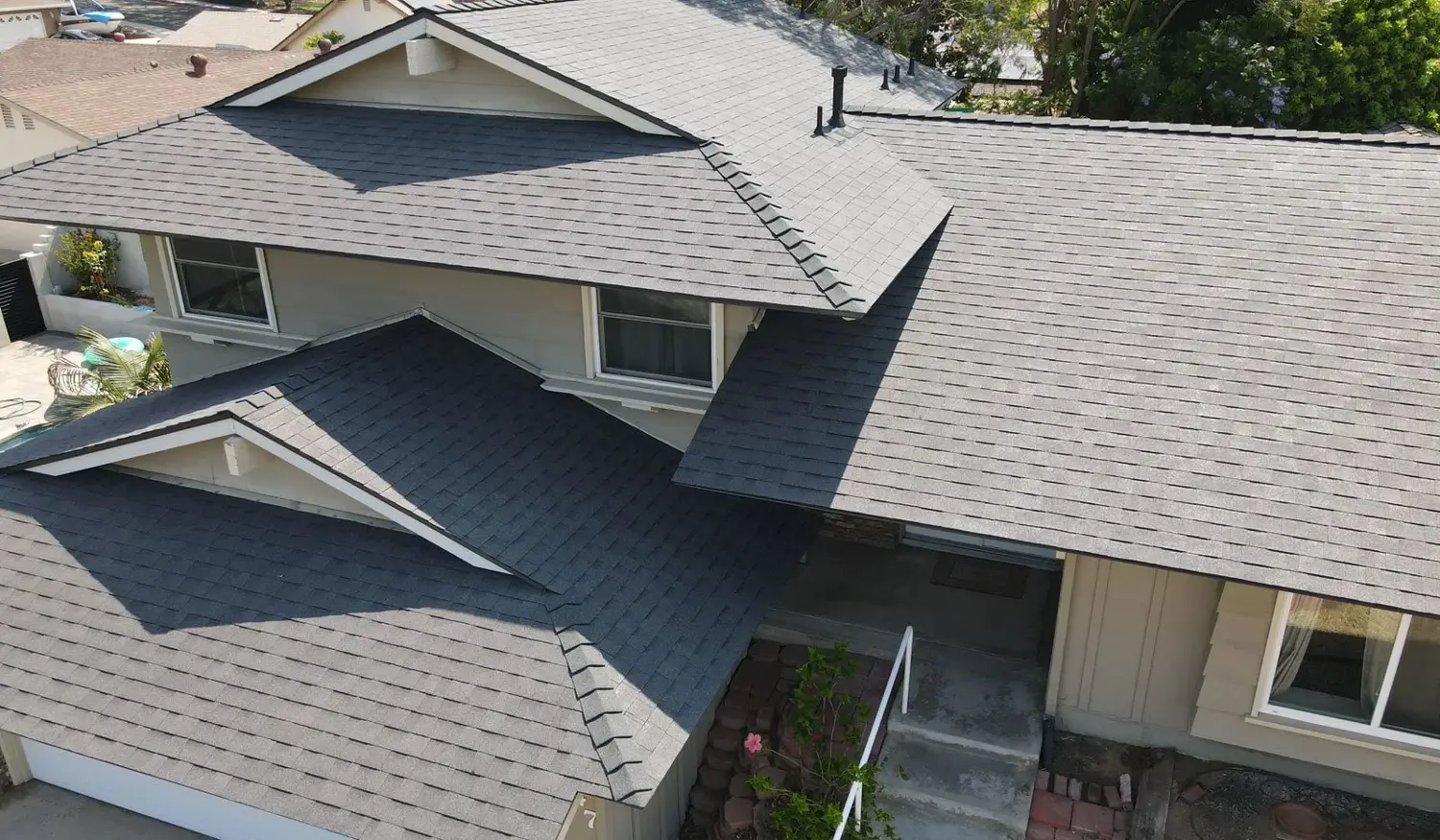
What Is a Flat Roof Drainage System and Why Does It Matter?
Flat roofs are not truly flat. They are built with a slight slope that sends water to a drainage system. When that system fails, water sits on the roof, and standing water is behind many flat roof problems.
Schedule Your Roofing Inspection Today
Fill out the information below and we’ll reach out to complete your estimate as soon as possible!
How a flat roof gets rid of water
A low-slope roof cannot rely on gravity the way a steep shingle roof does. Water moves slowly, so the roof is designed with a gentle pitch toward specific exit points. That pitch can come from the structure itself, from tapered insulation boards, or from small built-up ridges called crickets that steer water around obstacles.
The drainage system is everything that collects that water and carries it off the building: the drains, scuppers, gutters, downspouts and the pipes behind them. Every part has to stay open and sealed. A single clogged drain can turn a section of roof into a shallow pool after a storm.
This matters in Texas, where a summer thunderstorm can drop a lot of rain in a short time. The drainage system has to keep up with that burst, not just with a light shower.
Think of the drainage system as a chain. The slope moves water, the drain or scupper collects it, and the pipe, collector box or downspout carries it away from the building. A weak link anywhere in that chain shows up as water that stays on the roof or water that ends up where it should not, like against a wall or at the foundation.
The main types of flat roof drainage
Interior drains
Drains set in the roof surface, often near the middle, connected to pipes that run down through the building. Common on larger commercial roofs. Protected from freezing and hidden from view.
Scuppers
Openings in the parapet wall at the roof edge that let water spill out, usually into a collector box and downspout. Simple and less prone to clogging, but the roof must slope toward them.
Gutters and downspouts
Run along the edge of roofs without a parapet. Familiar from homes, and easy to inspect, but they need regular cleaning to work.
Overflow drains and scuppers
A backup path set slightly higher than the primary drain. If the main drain clogs, water still has a way off the roof before it builds up.
Crickets and tapered insulation
Not exits themselves, but the shaping that moves water toward the exits and away from walls, curbs and rooftop units.
Choosing between drains, scuppers and gutters
Large roofs
Interior drains are common on wide roofs where the edges are far from the middle. The pipes inside the building need to stay clear and sealed.
Roofs with parapet walls
Scuppers through the parapet are a simple way out, often paired with collector boxes and downspouts.
Small buildings and homes
Low-slope sections on homes, porches and additions often drain to gutters along the edge.
Every roof
Some form of overflow protection helps, so a single clog does not let water build up on the roof.
Why ponding water is a problem
Ponding water is water that stays on the roof long after the rain stops. A common rule of thumb in the industry is that water still standing 48 hours after rain points to a drainage problem worth checking.
Standing water adds weight to the structure, which can make the low spot deeper over time. It ages roofing membranes and seams faster, especially under the Texas sun. It collects dirt and debris, which can feed plant growth and clog drains further. And if there is any opening in the membrane, standing water has all the time it needs to find it. Many flat roof repair calls start with a pond that nobody noticed.
Low-slope sections on homes deserve the same attention. Porch roofs, additions and patio covers are often low-slope, and they tend to get less attention than the main roof. A clogged edge or a sagging section can let water sit against the wall where the low roof meets the house, which is a classic hidden leak point. If you have a mysterious leak near a porch or addition, our guide on why a roof leaks only in heavy rain explains how drainage plays a part.
Signs your flat roof drainage is not working
Water standing on the roof two days after rain.
Rings of dirt or algae marking where water used to sit.
Leaves, gravel or debris piled around drains and scuppers.
Water spilling over the roof edge or parapet instead of through the scuppers.
Rust or stains below scuppers and downspouts.
Ceiling stains inside, often near drains or along exterior walls.
Sagging or soft spots on the roof surface.
A flat roof drainage maintenance checklist
Schedule regular inspections
Have the roof checked at least twice a year and after major storms. Spring and fall work well in Texas.
Clear drains and strainers
Remove leaves and debris from drain baskets, scuppers and gutters. Make sure strainers are in place so debris does not enter the pipes.
Check the seals around drains
The flashing where the membrane meets a drain is a common leak point. Look for cracks, gaps or lifted edges.
Watch for ponding after rain
Walk the roof safely or have someone check a day or two after a storm. Note and photograph low spots.
Keep rooftop work from blocking water
HVAC and other trades can leave debris or equipment in the water path. Ask contractors to clean up after rooftop work.
Keep records
A simple log of inspections, photos and repairs helps spot patterns and plan budgets.
Fixing drainage the right way
Some drainage problems are maintenance: a clogged drain or a gutter full of leaves. Others are design or structural: a low spot that collects water, a drain set too high, or too few exits for the roof area. Those usually need re-sloping with tapered insulation or crickets, new or relocated drains, or a larger repair of the membrane around them. When drainage problems are widespread and the membrane is worn out, it can be the moment to plan a commercial roof replacement that fixes the slope at the same time.
GemSco works on flat and low-slope roofs for homes and businesses. We inspect, document with photos and give you a written estimate before work starts. Learn more on our commercial roofing page or call (844) 980-5506 for a free estimate.
Frequently Asked Questions
How much slope does a flat roof need?
Flat roofs are built with a small slope so water moves toward drains. The exact minimum depends on the roofing system, the manufacturer and the building code that applies. A roofer can check whether your roof drains as designed and where low spots have formed over time.
Is some standing water on a flat roof normal?
Small puddles that dry within a day or two are common, especially right after a storm. Water that remains longer, or pools that keep growing, point to a drainage problem. Mark the spots, take photos and have the roof inspected before the membrane starts to age or leak.
Can ponding water be fixed without replacing the roof?
Often yes. Clearing or adding drains, building crickets or adding tapered insulation in a low area can solve localized ponding. If the membrane is worn across the roof and drainage is poor in many spots, combining the drainage fix with a replacement may make more sense.
Who should clean the drains on a commercial roof?
Anyone trained to work safely on the roof can clear debris, but many owners include it in a scheduled maintenance plan. The inspection that comes with the cleaning also catches early problems around drain seals, which is where leaks often start.
We’re Here to Help!
GemSco Roofing & Solar serves Houston, DFW, Austin, San Antonio and surrounding areas. We’re family owned and fully licensed and insured.