

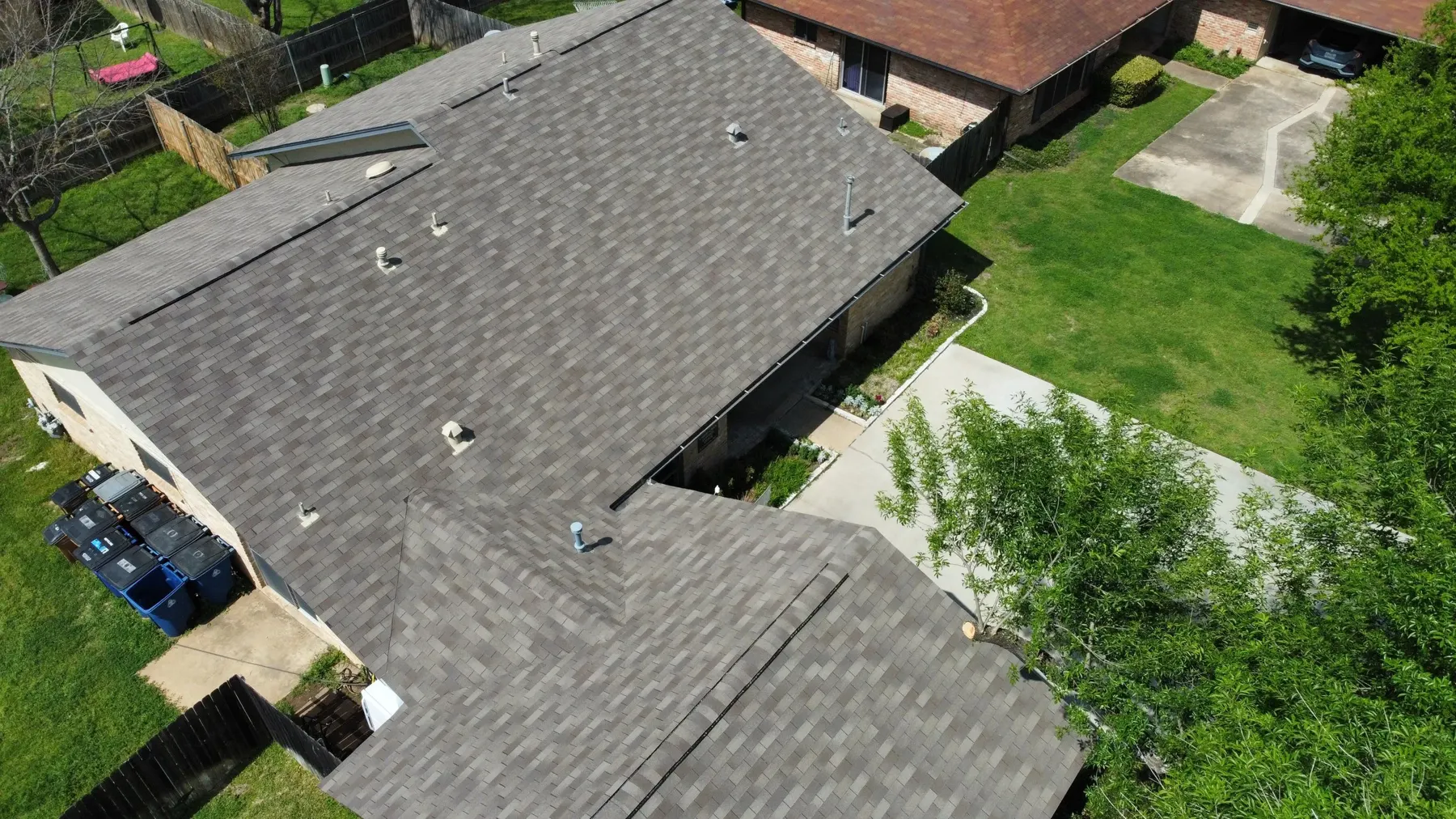
Commercial Roofing in North Richland Hills: Flat Roof Basics
For a business, a roof leak is more than a repair bill. It can close a room, damage stock and upset tenants. Here is how to keep a low-slope roof working.
Schedule Your Roofing Inspection Today
Fill out the information below and we’ll reach out to complete your estimate as soon as possible!


A practical maintenance cycle
Spring check
Clear drains and scuppers and look over seams before storm season.
After every hail or wind event
Walk the roof or have it walked, and photograph any dents or tears.
Fall check
Clear leaves, check flashing at walls and around rooftop units.
Keep records
A log of inspections and repairs helps with budgeting and claims. See our commercial roof maintenance plan guide.
Hail risk for commercial roofs here
NOAA's Storm Prediction Center logged 206 hail reports within 10 miles of North Richland Hills from 2015 through 2024. Of those, 47 were 1.75 inches or larger, and the biggest was 3.25 inches on April 28, 2021. Hail of that size fell in 7 of the 10 years.
On a flat roof, hail can bruise the membrane, crack seams and crush the insulation underneath. Because water moves slowly on a low slope, it can spread under the membrane and appear far from the damage. A walk of the full roof after each major storm is the reliable way to catch it early. Properties across Tarrant County face the same pattern.
Rooftop equipment adds risk. HVAC units, vents and skylights each need flashing that stays watertight, and service crews walking to them wear paths in the membrane. After a hail event, dents on these units are often the quickest way to judge how hard the roof was hit.
Low-slope roof systems on the market
TPO
Single-ply membrane with heat-welded seams.
EPDM
Rubber membrane, often with adhered or taped seams. Compare them in TPO vs. EPDM roofing.
Modified bitumen
Layered asphalt-based sheets used on many smaller buildings.
Metal panels
Common on low-slope buildings; hail dents may be cosmetic or may affect seams.
Warning signs on a commercial roof
Water ponding for days after rain.
Blisters, bubbles or open seams in the membrane.
Stains on ceiling tiles inside.
Soft or spongy spots when walking the roof.
Leaks that return after being repaired. Read signs a commercial roof needs replacement.
Rooftop units with hail dents, which suggest the membrane around them was hit as well and should be checked up close.
What drives the cost of a commercial project
Wet insulation
The more insulation that is soaked, the more has to be removed and replaced.
Roof size and access
Large roofs and tight access for materials affect scheduling and equipment.
Rooftop units
Curbs and flashing around equipment take careful detail work.
Drainage changes
Fixing ponding may mean adding drains or improving slope.
Repair or replace
If damage is localized and the insulation is dry, repairs can extend a roof's life. If moisture has spread through large areas, a replacement is often the better long-term call. Some owners also consider coatings or a recover over a sound roof; whether either fits depends on the existing system and local code.
GemSco handles residential and commercial roofing, including low-slope and flat roofs, and is fully licensed and insured with 20+ years of experience. Learn more about our commercial roofing service or about GemSco in North Richland Hills.
Frequently Asked Questions
How often should a commercial roof be inspected?
Twice a year is a common routine, in spring and fall, plus after any major hail or wind event. Regular inspections catch open seams and clogged drains while they are cheap to fix, before water spreads through the insulation and into the building.
Why does water pond on my flat roof?
Ponding usually comes from clogged drains, sagging decking or a roof that was not built with enough slope to its drains. Water that sits for days speeds up wear. Our guide to flat roof drainage systems explains the fixes.
Can roof work happen while my business is open?
Often yes, with planning around entrances, parking, deliveries and noisy work. Our article on how to reduce business disruption during roof repairs lists practical steps to agree on with your roofer before the crew arrives on site.
More Roofing Help in North Richland Hills
Roofing in North Richland Hills, TX
City overviewRoof Repair in North Richland Hills
Learn MoreRoof Replacement in North Richland Hills
Learn MoreStorm & Hail Damage in North Richland Hills
Learn MoreRoof Inspection in North Richland Hills
Learn MoreGutters in North Richland Hills
Learn MoreSolar Panel Installation in North Richland Hills
Learn MoreSolar Removal & Reinstall in North Richland Hills
Learn MoreCommercial Roofing Near North Richland Hills
We’re Here to Help!
GemSco Roofing & Solar serves Houston, DFW, Austin, San Antonio and surrounding areas. We’re family owned and fully licensed and insured.