

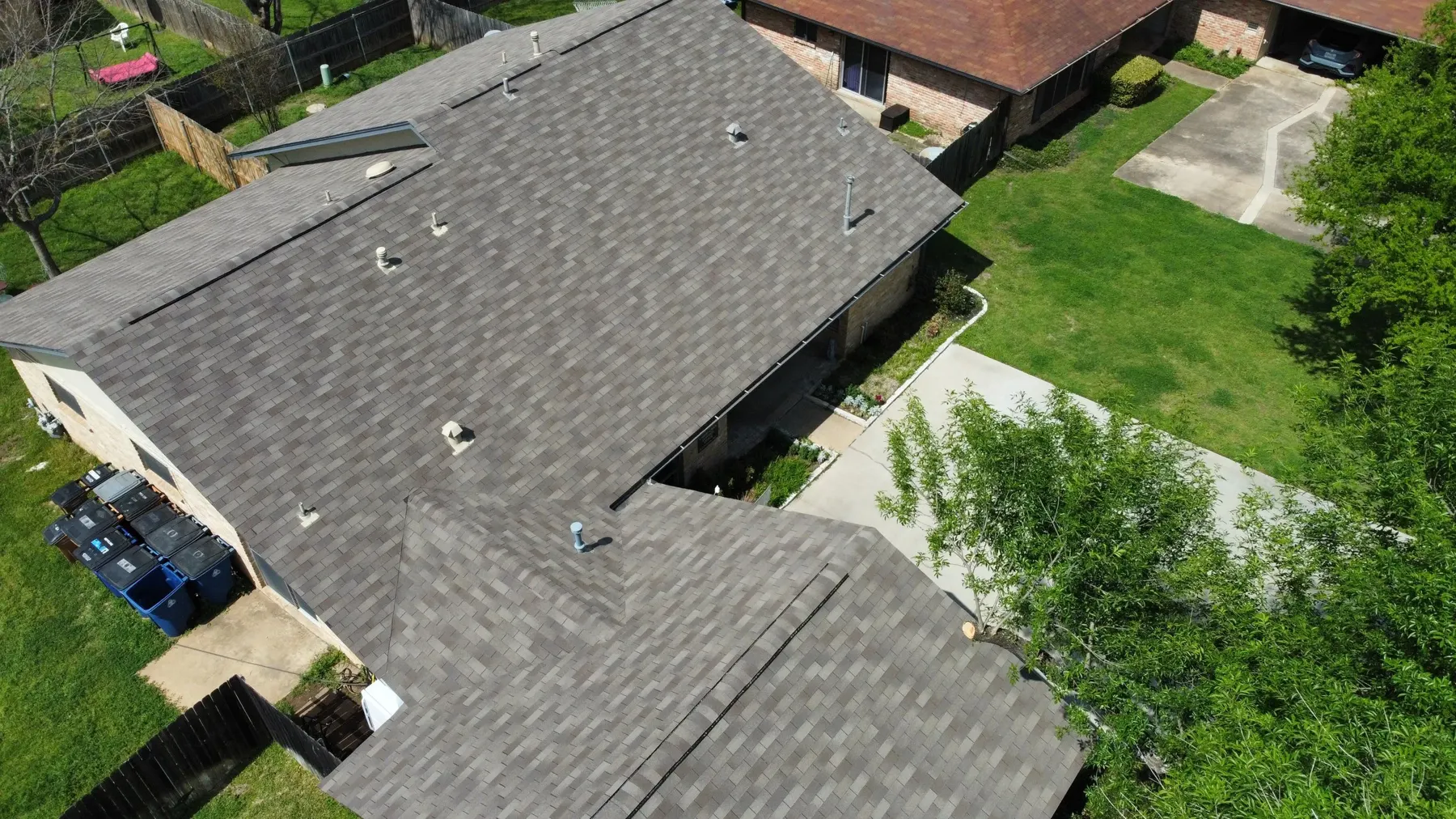
Hail and Fort Worth Roofs: Reading the Damage and Repairing It
Fort Worth sees large hail more years than not. Knowing how to read the damage, and what to do first, protects both the roof and your claim.
Schedule Your Roofing Inspection Today
Fill out the information below and we’ll reach out to complete your estimate as soon as possible!


Fort Worth's hail record, 2015 to 2024
NOAA's Storm Prediction Center logged 143 hail reports within 10 miles of Fort Worth from 2015 through 2024. Of those, 31 were 1.75 inches or larger. Large hail fell in 2015, 2016, 2019, 2020, 2021, 2023 and 2024, so in 7 of the 10 years.
The largest stone in that span measured 3 inches, on October 10, 2019. That fall date matters: many owners only think about hail in spring and skip checking the roof after an autumn storm.
Fort Worth covers parts of Tarrant, Denton, Johnson, Parker and Wise counties (U.S. Census Bureau). A report within 10 miles does not mean your roof was hit. Hail falls in narrow paths, so one part of the city can be damaged while another stays clear.
What we look for after hail
Shingle bruises
Soft, dark spots where the mat was crushed. Learn how to identify hail damage on asphalt shingles.
Granule loss
Exposed asphalt that ages fast in the sun.
Soft metal dents
Vents, flashing and gutters record the size and direction of the hail.
Cracked accessories
Skylights, vent caps and ridge vents often break before shingles do.
Damage to the attic side
Daylight through cracked decking or damp spots on the underside of the boards after rain.
Hail, wind or wear?
Hail marks are random and appear on every slope facing the storm.
Wind damage shows as lifted, creased or missing shingles along edges and ridges.
Normal wear is even and worse on the sunniest slopes.
Blisters look like hail but have no matching dents on metal.
Our guide on wind damage vs. hail damage shows examples.
After the storm passes
Look from the ground
Check gutters, vents, windows and the yard. Stay off the roof.
Take photos
Date-stamped photos of damage and hail on the ground help later. See photos to take after roof storm damage.
Book an inspection
GemSco inspects, documents with photos and gives you a written estimate.
The insurance side
Your policy and your insurance company decide what is covered. Deductibles and whether the policy pays replacement cost or actual cash value change the numbers. See actual cash value vs. replacement cost and our roof insurance claims page.
We provide the evidence: photos, measurements and a written scope of repair. If you are renting, report the damage to the owner, who handles the claim. For the service itself, see hail damage roof repair and our Fort Worth roofing page.
Be cautious with anyone who knocks on your door right after a storm and asks you to sign that day. Read before signing a roofing contract after a storm. A good contractor gives you time, a written estimate and photos of what they found, and lets you read the contract before you commit. If the claim seems low, see what to do when your roof insurance claim is underpaid.
Frequently Asked Questions
Can hail damage show up months after the storm?
Yes. A hit can crack the shingle mat without breaking the surface. Sun and rain then wear that spot until it leaks, sometimes many months later. That is why an inspection soon after a storm is useful even when the ceiling is dry. Read why roof damage may not cause an immediate leak.
What should I do if my hail claim is denied?
Ask the insurer for the reason in writing and compare it with your policy and your inspection photos. You may be able to request a reinspection or appeal. Read how to appeal a denied roof insurance claim for the steps, and keep all your documentation together.
Should I upgrade to impact-rated shingles after hail?
In a city where hail of 1.75 inches or more was reported in 7 of 10 years, it is worth considering. Class 4 shingles are tested to UL 2218 and are built to resist impact better than standard ones. Ask your agent whether they affect your policy before you choose.
More Roofing Help in Fort Worth
Roofing in Fort Worth, TX
City overviewRoof Repair in Fort Worth
Learn MoreRoof Replacement in Fort Worth
Learn MoreRoof Inspection in Fort Worth
Learn MoreCommercial Roofing in Fort Worth
Learn MoreGutters in Fort Worth
Learn MoreSolar Panel Installation in Fort Worth
Learn MoreSolar Removal & Reinstall in Fort Worth
Learn MoreStorm & Hail Damage Near Fort Worth
We’re Here to Help!
GemSco Roofing & Solar serves Houston, DFW, Austin, San Antonio and surrounding areas. We’re family owned and fully licensed and insured.