

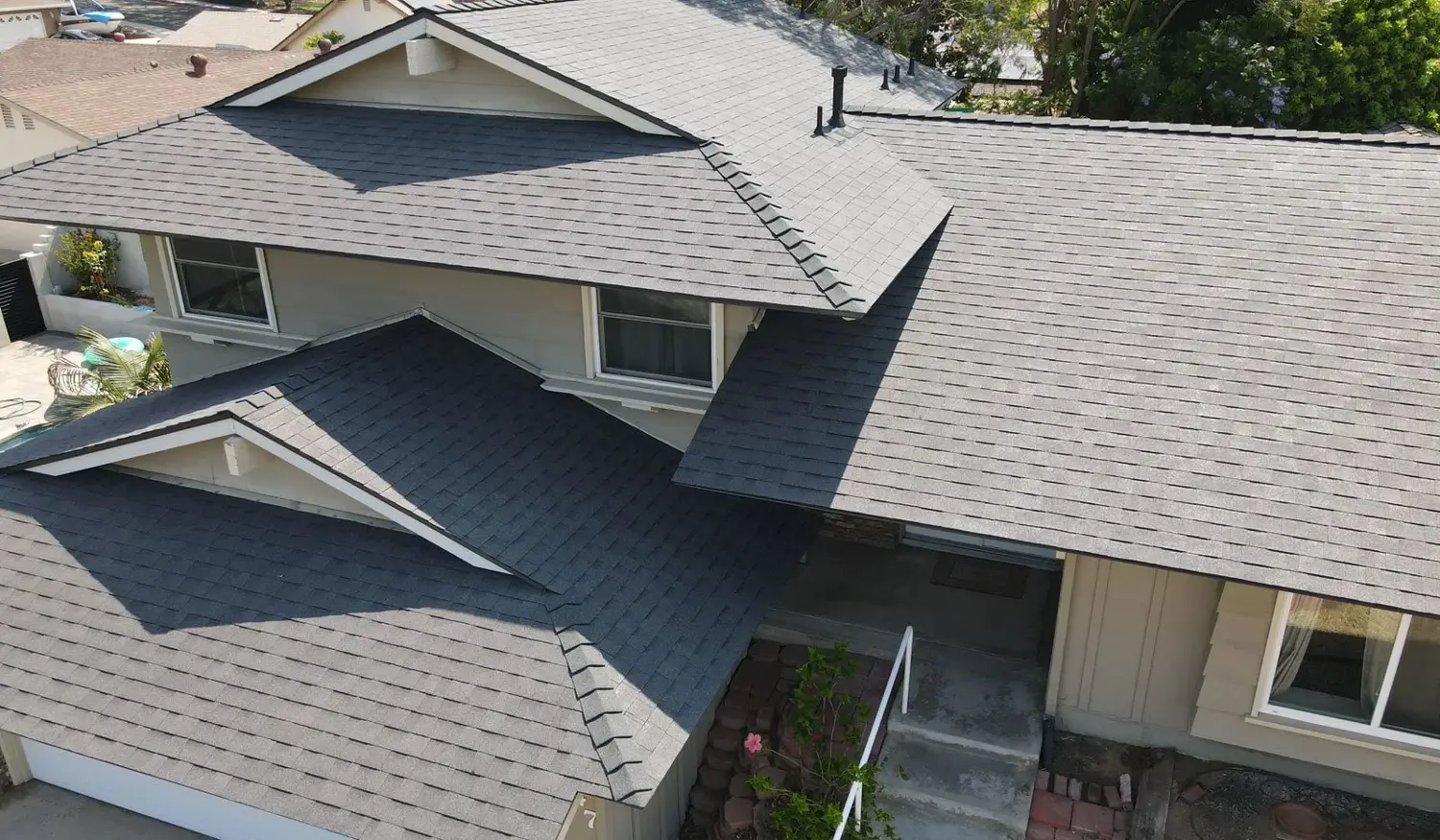
Why Roof Damage May Not Cause an Immediate Leak
A dry ceiling after a storm does not mean the roof came through fine. Roofs are built in layers, and damage to the top layer can take months to reach the inside of the house.
Schedule Your Roofing Inspection Today
Fill out the information below and we’ll reach out to complete your estimate as soon as possible!
A roof is a system of layers
On a typical Texas home, the shingles sit on top of underlayment, which sits on the roof deck. Flashing seals the joints at walls, chimneys and valleys. Water has to get past each layer before it reaches the attic.
Storm damage usually hits the top layer first. A hailstone bruises a shingle, wind breaks a seal strip, a branch scrapes off granules. The underlayment below is still intact, so the roof keeps shedding water. Nothing drips, and the damage stays out of sight.
The problem is that the underlayment was never meant to be the main barrier. Once it carries that job alone, sun, heat and repeated rain wear it down. The leak comes later, often in a storm that seems ordinary.
Newer roofs are not immune. A roof that is only a few years old has fresh sealant and flexible shingles, but a direct hit from large hail or a strong gust can still break the surface. Older roofs simply have less margin, so the same storm leaves more damage and the delay before a leak can be shorter.
Five ways damage turns into a delayed leak
Bruised shingles break down
Hail can crack the mat under the surface. Granules loosen over the following months, the asphalt bakes in the sun and the spot eventually opens up.
Broken seals let go later
A shingle whose seal broke in one storm can stay put, then blow off in the next one. The leak follows the second storm, not the first.
Small cracks need the right rain
A cracked pipe boot or vent may stay dry in light rain and only leak in wind-driven or heavy rain from one direction.
Water travels before it shows
Water that gets in can run along rafters or the deck and soak into insulation for a long time before a ceiling stain appears.
Dry spells hide the problem
In a dry stretch the damage has no chance to leak. It shows up when the wet season returns, long after the storm is forgotten.
Why the delay costs more
When a leak finally shows, it rarely starts at the stain. By then water may have soaked the deck, wet the insulation and started to stain or soften drywall. Plywood or OSB that stays wet can swell and lose strength. Damp insulation stops insulating. A small shingle repair becomes a decking, insulation and ceiling repair.
Timing also matters for paperwork. The longer the gap between a storm and the discovery of its damage, the harder it is to show which event caused it. Our article on hidden roof leaks explains how slow leaks hide inside the attic.
Hail country makes this a regular issue. NOAA's Storm Prediction Center logged 202 hail reports within 10 miles of Plano from 2015 through 2024, 75 of them 1.75 inches or larger. Even in Houston, where hail is less frequent, the same source logged 40 reports in that period, with the largest at 2.5 inches on January 8, 2016. Wind and heavy rain add to that across the state.
Several storms in a row make the delay even harder to read. A roof can take hail one spring, wind the next fall and heavy rain the following year. When the leak finally appears, it may be the result of all three, which is why dated inspections after each significant event are so useful.
Damage that leaks fast vs damage that waits
Usually leaks fast
Missing shingles, a punctured deck from a falling limb, torn flashing or a vent cap blown off. Water gets in with the next rain.
Often waits
Hail bruises, small cracks, broken seal strips and granule loss. The roof still sheds water, so the damage stays quiet for a while.
Leaks only sometimes
Cracked pipe boots, loose flashing and lifted edges. They leak in wind-driven rain from one direction and stay dry the rest of the time.
How to catch hidden damage before it leaks
Get an inspection after a significant storm
If you had hail, strong wind or a branch hit the roof, have it checked within a few weeks, even if nothing leaks. A roof inspection looks at the layers you cannot see.
Check the attic every few months
With a flashlight, look at the underside of the deck and around vents for dark spots, damp insulation or rusty nails.
Watch the gutters
Heavy granule buildup in gutters months after a storm can mean shingles are breaking down.
Look up after heavy rain
Check ceilings near exterior walls, closets and around light fixtures. Early stains are faint and easy to miss.
Keep records
Note storm dates and keep photos of the roof and attic. A timeline helps your roofer, and your insurer if you file a claim.
Early signs that damage is progressing
Shingles that look darker or patchy in spots.
Granules collecting at downspout exits long after the storm.
A musty smell in the attic or upstairs closets.
Rusty or damp nail tips poking through the deck.
Paint bubbling on ceilings or upper walls.
Shingles that lift or flutter on a windy day.
Find it while it is still a small repair
The best time to fix storm damage is before it leaks. At that stage the fix is usually limited to shingles, flashing or a boot, and the deck below is still dry. GemSco inspects the roof, documents what we find with photos and gives you a written estimate for hail damage repair, leak repair or a broader repair.
An inspection after a storm looks for exactly the damage that waits. The inspector checks shingles by touch for bruising, lifts edges to test seals, looks at every boot, vent and flashing joint, and goes into the attic when it is accessible to look for early moisture. The point is to find the problem while the deck is still dry, so the repair stays limited to the roof surface. If you would rather start with a self-check, our guide on what to check on your roof after a thunderstorm lists what you can safely look at from the ground.
We are family owned, fully licensed and insured, and an elite contractor for Owens Corning and GAF, with more than 20 years of experience on Texas roofs. Request a free estimate or call (844) 980-5506.
Frequently Asked Questions
How long after a storm can a roof start leaking?
It can be days, months or even the next storm season. It depends on the type of damage, the condition of the underlayment and how much rain follows. Bruised shingles and broken seals often take time to fail. That is why an inspection soon after a significant storm is worth it even when everything looks dry.
If my roof is not leaking, is it worth an inspection?
After a hailstorm, high wind or a fallen branch, yes. Damage that has not leaked yet is usually the cheapest to fix, and the inspection gives you dated photos of the roof's condition. If nothing is found, you have a clean record to compare against after the next storm.
Can I still file a claim for damage I find months later?
It depends on your policy, which may set a deadline for reporting damage, and on your insurance company's decision. That is one reason to check the roof soon after a storm. GemSco can inspect, photograph the damage and give you a written estimate you can share with your insurer.
Is a wet attic always a roof problem?
Not always. Condensation from poor ventilation, a bathroom fan that vents into the attic or a leaking HVAC line can also wet it. The pattern helps: condensation tends to be spread out, while a roof leak usually follows a path from one spot. A roofer can trace the moisture so you fix the right thing.
We’re Here to Help!
GemSco Roofing & Solar serves Houston, DFW, Austin, San Antonio and surrounding areas. We’re family owned and fully licensed and insured.