

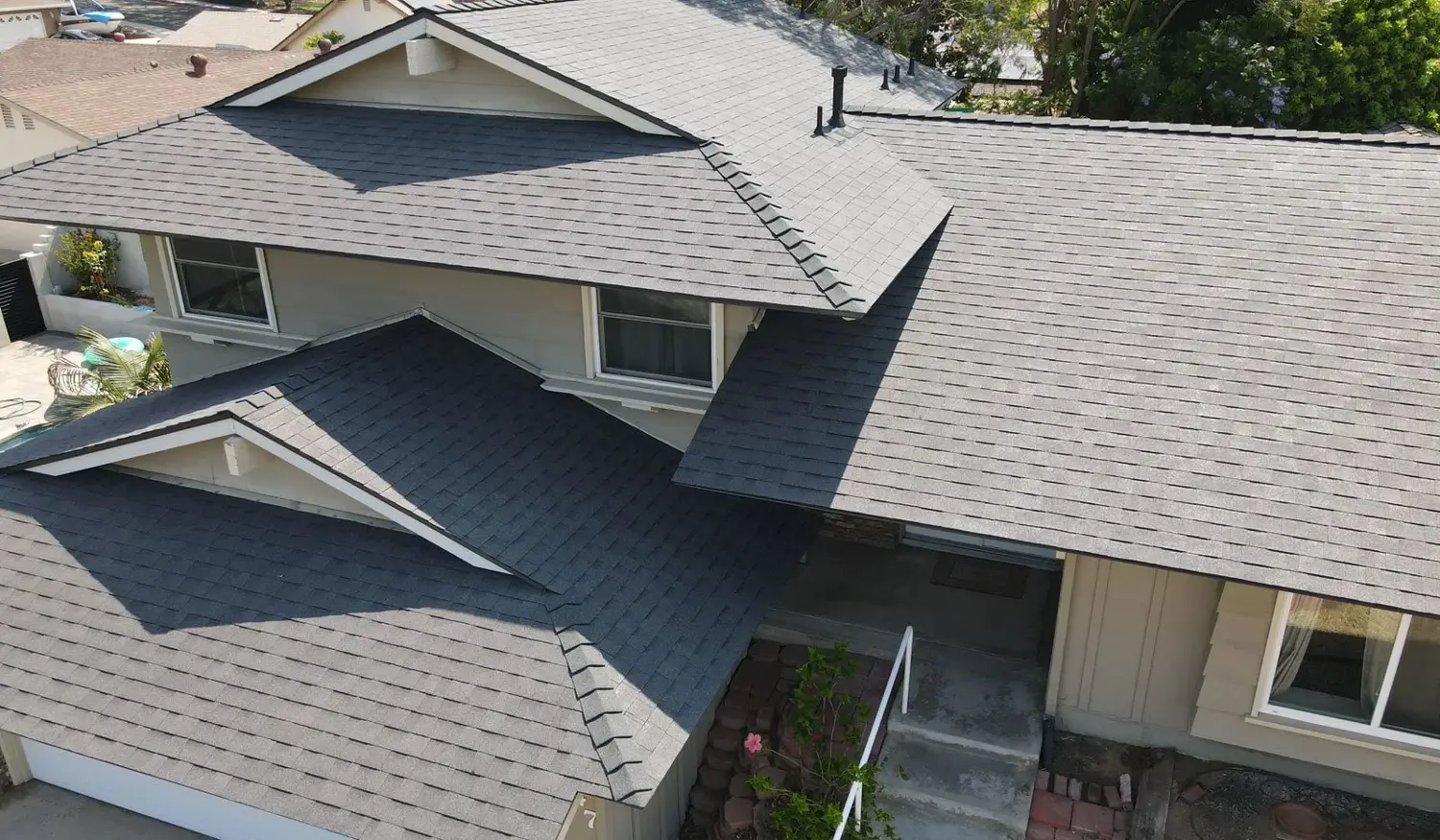
What to Check on Your Roof After a Texas Thunderstorm
Most Texas thunderstorms bring heavy rain and gusty wind, and some bring hail. A 20-minute check after the storm tells you whether the roof came through fine or needs a closer look.
Schedule Your Roofing Inspection Today
Fill out the information below and we’ll reach out to complete your estimate as soon as possible!
Why check after every strong thunderstorm
A thunderstorm tests a roof in three ways at once. Wind pulls at edges and ridges. Heavy rain finds any gap in flashing or boots and fills gutters faster than they can drain. Hail, when it comes, bruises shingles and dents metal. Any one of these can leave damage that does not leak right away.
Central Texas is a good example of how often this happens. NOAA's Storm Prediction Center logged 91 hail reports within 10 miles of Austin from 2015 through 2024, 30 of them 1.75 inches or larger, with the largest at 3 inches on September 24, 2023. Around Round Rock the same source logged 92 reports in that period, 36 of them 1.75 inches or more. Those are hail reports only. Storms with wind and heavy rain and no hail are far more common.
The goal of a homeowner check is not to diagnose the roof. It is to decide whether you need a professional to look. Everything below can be done from the ground, from a window or from the attic.
Take photos as you go, even of things that look minor. A dated record from the day after the storm is far more useful than a memory weeks later, both to a roofer and to your insurer if you decide to file. If you are not sure what to capture, our guide to photos to take after roof storm damage has a full list.
Your after-storm checklist, in order
Wait for the storm to clear
Lightning can strike miles from the rain. Wait until thunder has stopped, then look for downed power lines before you step outside and keep well away from any.
Walk the yard
Look for shingle pieces, ridge caps, vent covers, flashing strips, gutter sections and broken branches. Anything from the roof on the ground means something moved up top.
Check gutters and downspouts
Look for sagging sections, pulled-away brackets, overflow stains on the fascia and piles of granules at downspout exits.
Scan each slope
From across the street, look for missing shingles, shingles sitting higher than their neighbors, dark patches and anything lying on the roof.
Look at the details
Check flashing at chimneys and walls, the boots around pipes, roof vents, skylights and any solar panels for anything bent, loose or out of place.
Check the attic and ceilings
With a flashlight, look for drips, wet insulation and daylight through the deck. Then check ceilings near exterior walls, closets and light fixtures for fresh stains.
What each finding usually means
Shingles in the yard
Wind broke seals or tore shingles loose. The rest of that edge or ridge often has lifted shingles too.
Gutter overflow stains
Gutters clogged or could not keep up. Water may have backed up under the roof edge and into the fascia.
Granules at downspouts
Some granule loss is normal on an older roof. A heavy, fresh pile after the storm can point to hail.
Dented vents or gutters
Hail hit hard enough to dent metal. The shingles likely took impacts too, even if you cannot see them.
Damp attic insulation
Water is getting in somewhere above. The wet spot may not be directly under the entry point.
Fresh ceiling stain
Water has already passed the deck and insulation. Treat it as active and get the roof checked soon.
Heavy rain problems that are easy to miss
Wind and hail get the attention, but a lot of thunderstorm leaks come from water volume alone. Valleys, where two slopes meet, carry the runoff of both and overflow if leaves or debris block them. Flashing that is fine in a light rain can let water in when rain is driven sideways against a wall or chimney.
Gutters play a bigger role than most people think. When they overflow, water runs behind them, soaks the fascia board and can reach the roof deck at the edge. Repeated overflow rots wood that is hidden behind the gutter. If yours overflowed in the storm, check the downspouts for clogs, and consider gutter repair if sections pulled loose or sag.
Do not forget the ground around the house. Downspouts that dump water against the foundation, or splash blocks that washed away in the storm, are not roof damage, but they show how well the roof is draining. Put them back in place so the next storm does not pool water where it should not be.
If a leak only appears in the heaviest storms, that pattern is a clue in itself. Our guide on why a roof leaks only in heavy rain covers the usual causes.
What not to do after a thunderstorm
Do not climb onto a wet roof. Shingles and metal are slick, and damaged areas can give way.
Do not pull branches off the roof yourself if they are large or near power lines.
Do not caulk over a leak from inside the attic. It hides the problem without stopping the water.
Do not throw away pieces of shingle or flashing from the yard before you photograph them.
Do not sign a contract with someone who knocks on your door the same day without checking who they are.
When to call a roofer, and what happens next
Call for an inspection if you found shingles or roof parts on the ground, dents on metal, a heavy granule pile, damp insulation or any new stain. Call right away if water is actively coming in. An emergency roof repair can cover the opening until the permanent fix.
If the storm came with hail, our article on how to identify hail damage on asphalt shingles goes deeper on what to look for. If it was mostly wind, see whether Texas winds can lift shingles without you noticing. And if a tree came down, read about tree limb and debris damage.
GemSco is a family owned, fully licensed and insured roofing company and an elite contractor for Owens Corning and GAF, with more than 20 years of experience. We inspect the roof, document damage with photos and give you a written estimate for storm damage repair or a targeted roof repair. We serve Austin, Houston, DFW and San Antonio. Request a free estimate or call (844) 980-5506.
Frequently Asked Questions
How soon after a thunderstorm should I check my roof?
As soon as the storm has fully passed and it is safe to be outside, usually the same day or the next morning. Early checks catch active leaks before they spread and give you dated photos of any damage. If you find nothing, check the attic again after the next heavy rain.
Can I check my roof myself with a ladder?
Looking from a ladder at the edge is safer than walking the roof, but it still carries risk after rain. Most of what you need to see is visible from the ground with binoculars, from upstairs windows and from the attic. Leave walking the slopes to a roofer with proper safety gear.
Can lightning damage a roof?
Yes, though it is less common than wind or rain damage. A strike can scorch shingles, split wood, damage chimneys or start a fire in the attic. If you think lightning hit your home, call the fire department first, even with no visible flames, and have the roof inspected after.
Should I call my insurance company after every storm?
Not necessarily. If you find no damage, there is nothing to report. If you do find damage, coverage depends on your policy and on your insurance company's decision. Many homeowners have the roof inspected first so they know what they are dealing with. GemSco provides photos and a written estimate either way.
We’re Here to Help!
GemSco Roofing & Solar serves Houston, DFW, Austin, San Antonio and surrounding areas. We’re family owned and fully licensed and insured.