

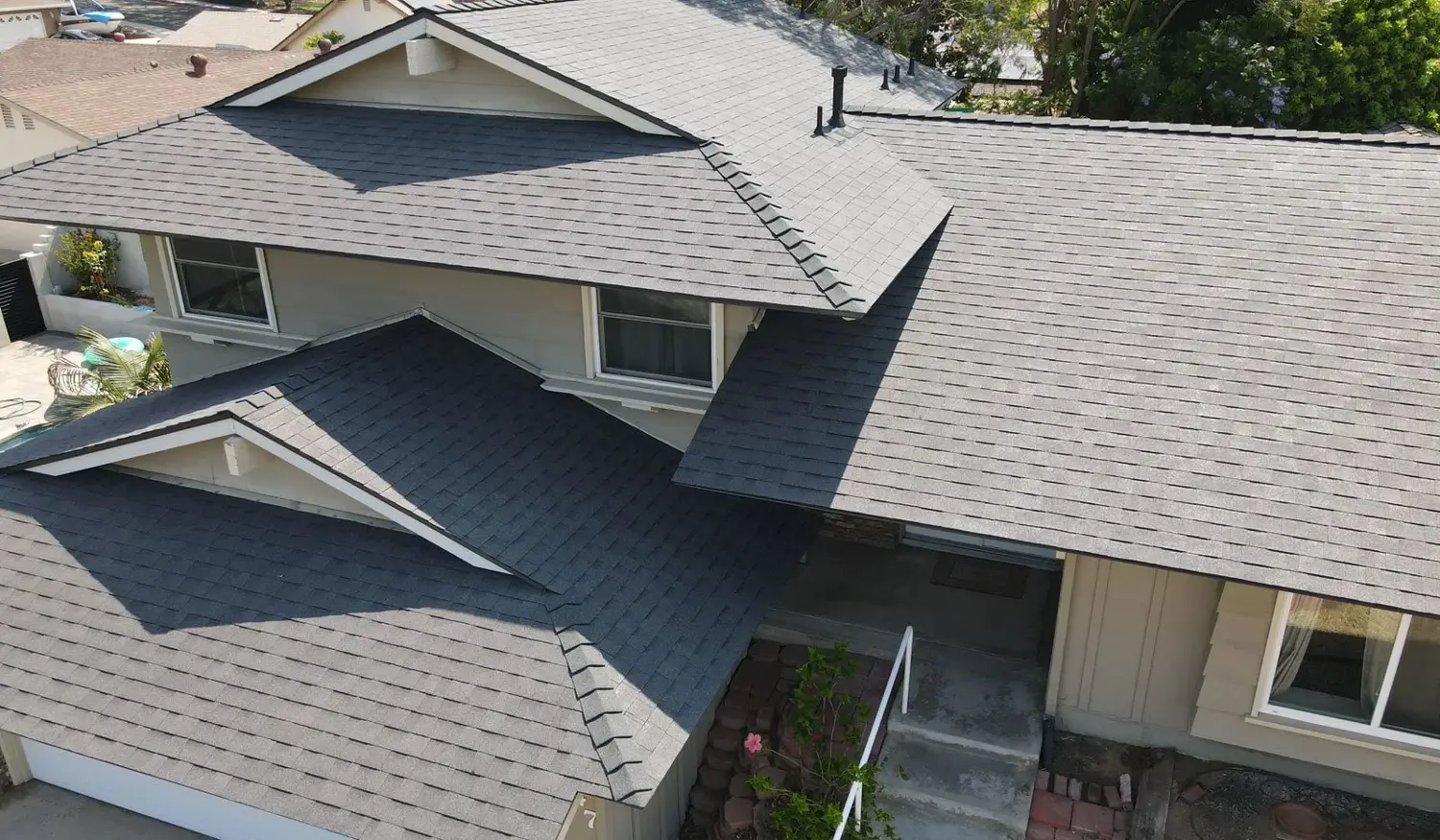
Roof pipe boot leak: the signs, the cause and the right fix
A pipe boot is the rubber-and-metal collar that seals the plumbing vent where it comes through your roof. When its rubber cracks or pulls away from the pipe, water runs straight down the pipe into the attic. The fix is usually a new boot, not a new roof.
Schedule Your Roofing Inspection Today
Fill out the information below and we’ll reach out to complete your estimate as soon as possible!
What a pipe boot is and why it leaks
Every house has plumbing vent pipes poking through the roof, usually one to three of them. Each one sits inside a pipe boot: a flat metal or plastic base that slides under the shingles, plus a flexible collar that hugs the pipe. The base sheds water around the hole. The collar seals the gap between the pipe and the boot.
GAF, one of the largest shingle makers, calls plumbing vent penetrations vulnerable points and a common source of roof leaks. The Department of Energy's Building America guide agrees that penetrations through the roof deck are among the most vulnerable areas for water intrusion.
The weak spot is almost always the rubber collar. The metal base can outlast the shingles around it. The rubber cannot.
Why the rubber cracks, especially in Texas
Most standard boots use a neoprene or similar rubber collar. Sunlight and heat break that rubber down over time. It hardens, loses its stretch, and starts to crack, almost always right where it grips the pipe. Once there is a split, rain running down the pipe follows it straight into the attic.
Texas speeds this up. The collar sits in full sun every afternoon, and the roof surface gets far hotter than the air in summer. Add hail that can nick the rubber and wind that flexes it, and a collar can fail years before the shingles around it. That is why a fairly young roof can still leak at a vent.
Older homes may have lead boots instead of rubber. Lead does not crack in the sun, but squirrels sometimes chew it, and the soft metal can tear where it folds over the top of the pipe.
Signs your pipe boot is the leak
A ceiling stain near a bathroom or kitchen
Vent pipes sit above bathrooms, kitchens and laundry rooms. A stain on the ceiling below one of those rooms is a strong hint.
Wet insulation around the pipe in the attic
Look where the vent pipe passes through the attic. Damp, flattened or stained insulation around it is the classic sign.
Dark wood around the hole
Stained roof decking or rusty nail tips right around the pipe mean water has been getting in for a while.
A split or gap you can see from the ground
With binoculars, look at the collar. A crack, a curled edge or daylight between the rubber and the pipe is enough to know.
Leaks only in hard or wind-driven rain
A small split may only let water in when rain runs heavily down the pipe or blows sideways into the gap.
How to check your pipe boots in 15 minutes, without climbing
Find the pipes from the yard
Walk around the house and count the vent pipes on the roof. Most are short gray, white or black pipes near the ridge or behind bathrooms.
Look with binoculars or a phone zoom
Check the collar around each pipe. You want smooth rubber hugging the pipe, not cracks, curling edges or a visible gap.
Look for old caulk or tar
Gobs of sealant around a boot usually mean someone already patched a leak there. It is worth a closer look.
Go into the attic with a flashlight
Follow each vent pipe up to the roof deck. Check the wood around the hole and the insulation below it for stains or damp spots.
Come back after the next rain
Stains that grow or wood that feels damp a day after a storm confirm an active leak. Take photos with the date.
Stay off the roof
If you cannot see the collar clearly from the ground, leave the close look to a roofer. A fall costs far more than an inspection.
Why a blob of caulk is not the fix
The first thing most people try is caulk or roofing tar around the cracked collar. It can stop the drip for a while. Then the sun cracks the patch too, and the leak comes back, often worse, because the patch hid the damage while the deck stayed wet.
Sealant can also make things worse. GAF warns that using sealant the wrong way can trap water and let it back up under the shingles and the boot. On a correctly installed boot, GAF says the flanges sit flat and need no sealant at all.
A patch buys you a few dry days before a real repair. It should not be the repair. Our post on why temporary roof patches fail explains the pattern.
How a pipe boot gets replaced the right way
A roofer loosens the shingles above and beside the pipe without tearing them, removes the old boot and checks the decking around the hole. Soft or rotten wood gets replaced before anything new goes on. Skipping that step is how a new boot ends up leaking again.
The new boot has to be layered like the shingles. The Building America guide shows pre-formed vent pipe flashing integrated shingle-fashion with the underlayment and shingles: the base goes over the shingles below the pipe and under the shingles above it, so water always runs over the next layer, never behind it.
GAF's steep-slope pipe flashing guide describes the same order: shingles up to the base of the pipe, the flashing next, then the courses above cut to fit around it. Done right, it is usually a short repair on one spot of the roof.
What to ask the roofer before the repair
Will you check the decking around the pipe, and how is rotten wood priced if you find it?
Are you replacing the whole boot, or only putting a sleeve or sealant over the old one?
What type of boot are you installing, and does it match the pipe size and the slope of my roof?
How many vent pipes did you check? If one boot has cracked, the others are usually the same age.
Can you send me photos of the boot before and after?
If the roof is near the end of its life, does it make more sense to plan a replacement?
Repair the boot or replace the roof?
A leaking pipe boot alone is a repair, not a reason to replace the roof. If the shingles are in good shape, a new boot and any damaged decking under it solve the problem. Our guide on whether you can repair a roof without replacing all the shingles covers how spot repairs work.
It changes if the attic shows wide rot around the pipe, the shingles are brittle and breaking, or several penetrations leak at once. Then the boots are one symptom of an aging roof, and a roof replacement vs repair decision is the honest conversation.
Not every stain near a vent is the boot, either. Chimneys, skylights and bath fans leak in similar places, so it helps to find the true source of the leak before paying for a fix. If you already see water, a roof leak repair visit should start with that diagnosis.
Frequently Asked Questions
How do I know if my roof pipe boot is leaking?
Look for a ceiling stain under a bathroom, kitchen or laundry room, then check the attic where the vent pipe passes through. Wet insulation, dark wood or rusty nails around the pipe point to the boot. From the ground, binoculars often show a cracked collar or a gap between the rubber and the pipe.
Can I just caulk around a leaking pipe boot?
Caulk can slow a leak for a short time, but it is not a lasting fix. The sun cracks the patch, and badly placed sealant can trap water under the shingles. A cracked collar is fixed by replacing the boot and checking the decking under it.
Is a pipe boot leak covered by homeowners insurance?
It depends on your policy and on what caused the damage. Many policies treat aging or wear differently from sudden storm damage like hail. Your insurer makes that call. Photos of the boot and the attic, with dates, help either way.
Should all the pipe boots be replaced at once?
Usually it makes sense to look at all of them. Boots installed at the same time age at the same rate, so if one has cracked, the others are often close. Replacing them in the same visit is simpler than coming back for each one.
Can a leaking pipe boot cause rot or mold?
Yes. A slow leak around a vent pipe can soak the decking and insulation for months before a ceiling stain appears. Wet wood softens and can rot, and damp insulation can grow mold. That is why the attic check matters more than the ceiling.
We’re Here to Help!
GemSco Roofing & Solar serves Houston, DFW, Austin, San Antonio and surrounding areas. We’re family owned and fully licensed and insured.