

Modified bitumen roofing: what it is, how it is installed and when it beats TPO or EPDM
Modified bitumen, or mod-bit, is asphalt blended with rubber or plastic polymers and rolled into sheets for flat and low-slope roofs. It is the asphalt option on a flat roof: thick, tough, easy to patch, and still common over porches, additions and small commercial buildings in Texas.
Schedule Your Roofing Inspection Today
Fill out the information below and we’ll reach out to complete your estimate as soon as possible!
What modified bitumen actually is
Plain asphalt gets brittle in cold and soft in heat. Manufacturers fix that by mixing a polymer into the asphalt and pressing it around a fiberglass or polyester mat. GAF describes these as reinforced, polymer-modified asphalt membranes usually installed in two layers: a base sheet and a cap sheet.
The cap sheet is the part you see. Most are covered in mineral granules, like a shingle laid flat. Others have a smooth surface that gets a coating.
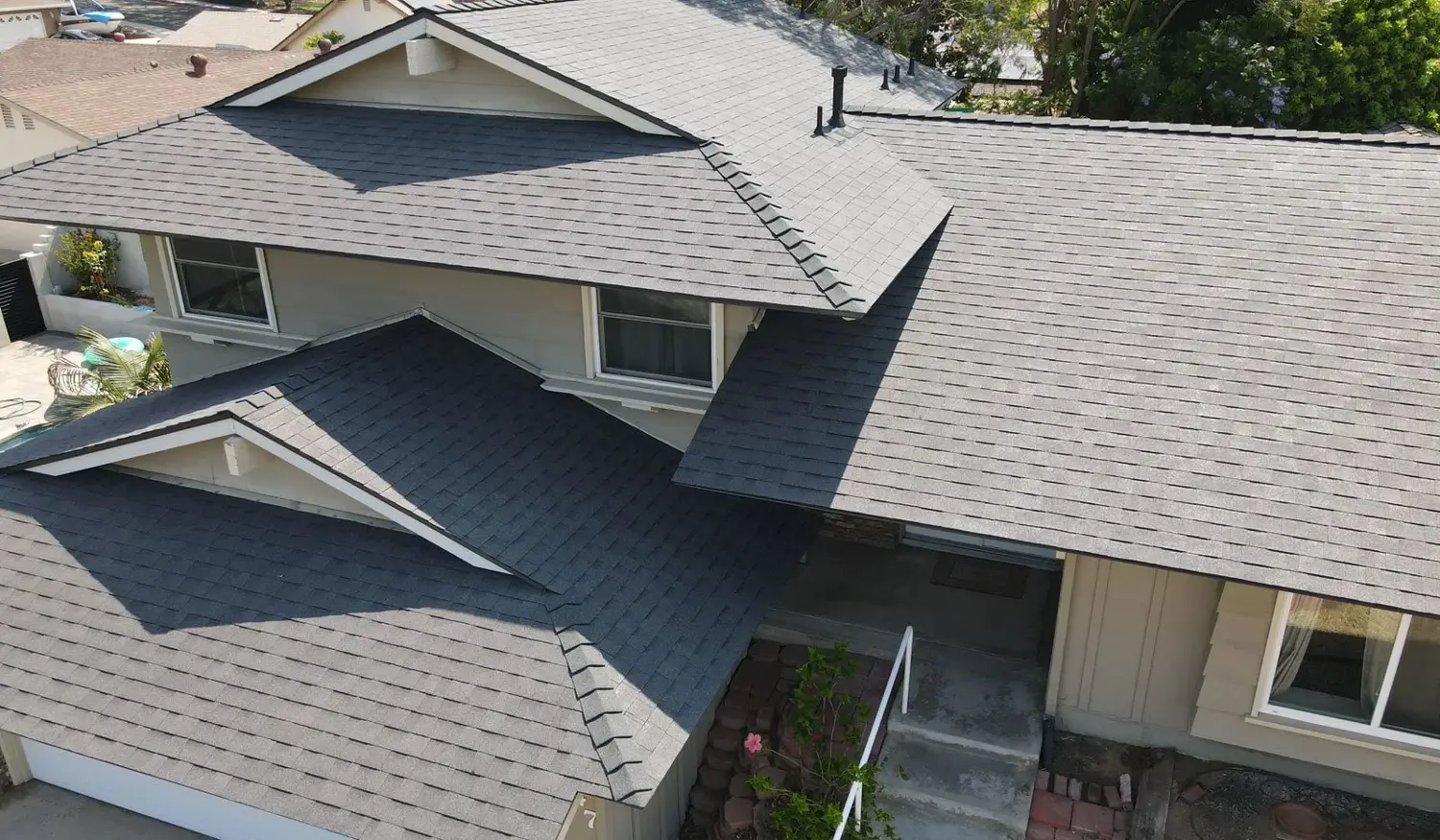
On a house, you usually find mod-bit on the flat section over a porch, a garage, a room addition or a mid-century home with a low roof line. It is less common on a full house roof, because shingles need more slope to shed water.
If you are not sure whether your roof counts as low-slope, our guide to roof pitch explained shows how to measure it.
SBS vs APP: the two kinds you will hear about
SBS (rubber-modified)
Blended with a rubbery polymer. It stays flexible and stretches with the building as it heats and cools. Often installed with adhesive, hot asphalt or as a self-adhered sheet.
APP (plastic-modified)
Blended with a plastic polymer. It is stiffer and is usually torch-applied. Makers of APP products often pitch them for sun resistance.
Granulated cap
Mineral granules protect the asphalt from UV. Bare, dark spots where granules are gone are the first thing to check.
Smooth or coated cap
No granules, so the surface depends on a coating. That coating needs to be renewed over the life of the roof.
Torch, cold glue or peel-and-stick: why the method matters on a house
Mod-bit sheets are bonded three main ways: melted on with a propane torch, glued with a cold adhesive, or self-adhered with a factory sticky back. Fine Homebuilding walks through how each method changes the job on a home.
Torching is fast and gives strong seams, but it is an open flame on a roof. The roofing industry created the CERTA torch-safety certification through NRCA and the Midwest Roofing Contractors Association to cut fires from torch-applied roofing. It covers fire hazards on the roof and a fire watch after the torch is off.
On most Texas homes the roof deck is wood. NRCA's newer guidance says the fire risk of torching over combustible decks outweighs the advantages of the method. For a house, that usually points to cold-applied or self-adhered sheets. Ask any contractor which method they plan to use, and why.
How long it lasts, how hot it runs and what wears it out in Texas
Lifespan claims vary a lot, and many come from people selling one product. This Old House puts modified bitumen at about 20 to 30 years. Treat that as a range for a well-drained, maintained roof, not a promise. For other materials, see how long roofing materials last in Texas.
NIST surveyed modified bitumen roofs in the field and found that about a quarter of them had defects that lowered their performance rating. The main ones: surface cracking in both SBS and APP sheets, granule loss, especially where water ponds, and SBS sheets slipping.
Texas sun and long hot summers speed up granule loss and cracking. Standing water makes it worse, which is why drainage matters as much as the membrane.
Dark granules soak up Texas sun, but you can pick a cooler surface. The Department of Energy notes that some modified bitumen products are reflective enough to meet cool roof standards, and others can get a reflective coating. Over a living space, that can lower the heat coming through the ceiling.
The trade-off: the asphalt roofing makers' own white paper says light surfaces can show dirt, algae and stains more and may need cleaning to stay reflective. Decide at replacement time, not by recoating a roof that is already failing.
Checklist: what to look for on a mod-bit roof today
Water still standing two days after a rain, or clogged scuppers and drains at the low edge. Ponding is where NIST found the most granule loss.
Bare black or shiny patches where the granules have worn off.
Cracks in the cap sheet, often in a crazed, dried-mud pattern on older roofs.
Seams lifting at the edges, or a seam you can slip a fingernail under.
Blisters: soft, raised bubbles. Do not pop them.
Splits or gaps where the membrane meets a wall, a parapet or the metal roof edge.
Stains on the ceiling under the flat section, even small ones.
Slope and drainage: the rule a flat roof cannot skip
A flat roof is never truly flat. The 2024 International Residential Code calls for modified bitumen to have a design slope of at least one-fourth inch per foot, or 2 percent, for drainage. Your city may adopt a different edition, so the local code has the final word.
That quarter inch is the floor, not the goal. One roofing consultant points out that 1/4:12 is the minimum allowed, not the ideal pitch for mod-bit. If water is pooling, the fix may be tapered insulation, crickets or better drains, not just a new cap sheet. Our post on flat roof drainage systems covers those options.
A quick test after a storm: walk the low edge and note where water still sits a day or two later. Take photos with something for scale. That record helps any contractor see the real slope problem instead of guessing.
Five questions to ask before anyone works on your flat roof
What is on my roof now?
Ask them to name the system and how many layers are there. A mod-bit roof, a coated roof and an old built-up roof call for different repairs.
Which install method will you use, and why?
Torch, cold adhesive or self-adhered. On a wood deck under a living space, ask how they handle fire risk if they plan to torch.
Where does the water go?
A good bid explains the drainage path and how ponding gets fixed: tapered insulation, crickets, bigger scuppers or new drains.
What happens at the walls and edges?
Most flat roof leaks start where the membrane turns up a wall or meets metal edge and flashing. The bid should say how those details are built.
Is the deck or insulation wet?
Ask how they will check before covering anything. Wet material left under a new membrane rots the deck and shortens the roof's life.
Modified bitumen vs TPO vs EPDM, in plain terms
Modified bitumen
Thick, multi-layer and tough against foot traffic and scuffs. Easy to patch with matching material. Dark granules run hot unless you pick a reflective cap.
TPO
A single white sheet with heat-welded seams. Reflects sun well. Best on large, simple roofs with few penetrations.
EPDM
A single rubber sheet, usually black. Flexible and long-lived, with seams and penetrations as the weak spots.
When mod-bit fits best
Small roofs with many details: parapets, vents, a wall tie-in, a deck people walk on. The full single-ply comparison is in our TPO vs EPDM guide.
Frequently Asked Questions
Is modified bitumen the same as rolled roofing?
No. Rolled roofing is a thin, single-layer asphalt sheet. Modified bitumen is polymer-modified, reinforced and usually installed in two layers. The building code treats them as different products with different slope rules, so a contractor should not swap one for the other.
Can you walk on a modified bitumen roof?
Yes, for normal maintenance. It handles foot traffic better than many single-ply sheets. Still, avoid it on very hot afternoons when the asphalt is soft, step gently near seams and edges, and use walkway pads if people cross the roof often to reach equipment.
Can modified bitumen be repaired instead of replaced?
Often, yes. Cracks, small punctures and lifted seams can usually be patched with matching material. If the cap sheet is cracked across large areas, water is trapped under it, or the deck feels soft, patches stop making sense and a roof inspection should decide repair versus replacement.
Can you put modified bitumen over an existing roof?
Sometimes, if the code and the manufacturer allow it, there is only one existing layer and the roof below is dry. Wet insulation or a soft deck must come off first. Trapping moisture under a new membrane shortens its life.
We’re Here to Help!
GemSco Roofing & Solar serves Houston, DFW, Austin, San Antonio and surrounding areas. We’re family owned and fully licensed and insured.