

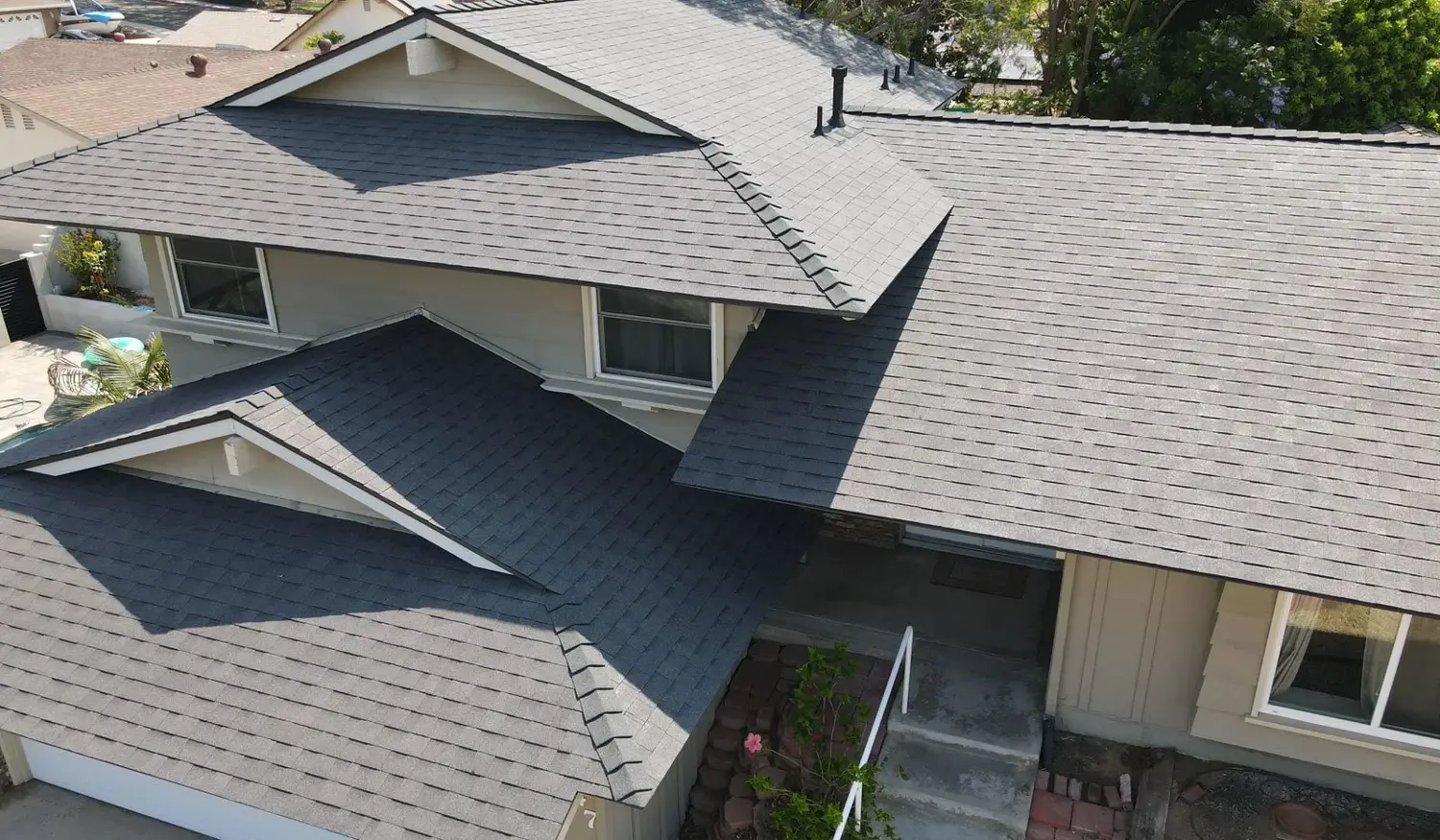
Black streaks on roof shingles: what they are and how to get rid of them safely
Long black streaks running down a shingle roof are almost always a blue-green algae called Gloeocapsa magma, not dirt, mold or a failing roof. They are mostly a looks problem, but the wrong cleaning method can do real damage to the shingles.
Schedule Your Roofing Inspection Today
Fill out the information below and we’ll reach out to complete your estimate as soon as possible!
The short answer: it is algae, and it is mostly cosmetic
The dark streaks come from a microscopic organism usually listed as Gloeocapsa magma, technically a cyanobacterium. Its spores travel on the wind, land on the roof and grow where the surface stays damp. As the colony spreads it builds a dark protective coating, which is the black you see.
Rain carries it downhill, so it shows up as vertical streaks rather than spots. It loves shade and humidity, which is why it tends to show first on the north side of the house, under trees, and on roofs along the Gulf Coast and in East Texas.
The Asphalt Roofing Manufacturers Association calls it algae discoloration, and its guidance is about appearance and safe cleaning. In plain terms: the streaks by themselves will not make your roof leak next week. What they can do is make a good roof look old, hurt curb appeal when you sell, and hide other problems a roofer would want to see.
Make sure it is algae, not something worse
Algae streaks
Long, soft-edged dark stripes running down the slope. The shingle surface still has its granules and feels gritty.
Granule loss
Dark patches where the gritty surface is gone and you see smooth black asphalt. That is wear or damage, not a stain.
Hail bruises
Random dark spots, often round, sometimes soft when pressed. Common after a storm and worth a closer look.
Moss or lichen
Raised, fuzzy green or crusty gray-green growth. Moss holds water against the shingle and can lift the edges.
Rust or debris stains
Orange-brown lines below metal vents or flashing, or dark marks under tree branches that rub the roof.
Why the difference matters
Streaks that stay on top of a gritty surface are a cleaning question. Bare spots, bruises and curling edges are a roof condition question. Black patches with no granules can look like algae from the driveway, but they mean the shingle is losing the layer that shields the asphalt from the sun.
If you are not sure which you are looking at, compare it with photos in our guides on how to identify hail damage on asphalt shingles and why shingles curl, crack or fall off. When in doubt, a roof inspection settles it before you spend money on cleaning a roof that may need repairs.
Does roof algae damage shingles over time?
Opinions vary. Some sources say the algae feeds on the limestone filler in shingles, but that claim is poorly documented, and the shingle makers mostly describe the problem as staining. What is clearer is the indirect effect: a streaked, shaded roof stays damp longer, and damp, shaded roofs are where moss and lichen move in.
Moss is the one to take seriously. It holds water against the shingles, grows under the edges and can lift them, which opens a path for wind-driven rain. If you see green, fuzzy growth among the black streaks, treat it as a maintenance item, not a cosmetic one.
The bigger risk for most Texas homeowners is not the algae. It is the cleaning. A pressure washer can strip off in an afternoon the granules that took years to wear.
How to clean black streaks without hurting the roof
Never pressure wash
ARMA says high-pressure washing is likely to damage asphalt roofing and should not be used to remove algae. It blasts off the granules that protect the asphalt from UV.
Read the shingle maker's instructions first
ARMA notes the streaks can be lightened with a diluted household bleach and water solution, applied gently, and that the mix recommended by manufacturers varies. ARMA adds that other chemicals or methods should not be used without the maker's approval.
Apply low and slow
The solution goes on with a garden sprayer, not a pressure tip. It sits a short time and is rinsed off gently with plain water. No scrubbing with stiff brushes.
Protect what is below
Wet down plants and grass before and after, and keep runoff in mind where downspouts drain. Bleach and landscaping do not mix.
Think twice about climbing up
A wet, treated roof is slippery, and ARMA encourages using professionals for this job. A fall costs far more than streaks ever will.
Expect it to come back
ARMA describes this cleaning as typically temporary. Without a change on the roof itself, the streaks tend to return.
Keeping streaks away: zinc strips and algae-resistant shingles
Zinc and copper slow growth down: rain running over a strip near the ridge carries traces of the metal down the roof. Oregon State University's guide to chemical moss control for roofs lists zinc strips as a long-term control and notes they work best before growth is well established. The effect fades with distance from the strip, so long slopes and areas below chimneys may need their own row.
The longer-term fix is built into the shingle. Major brands now sell algae-resistant lines with copper-based protection in the shingle surface. Owens Corning's StreakGuard algae resistance is one example, and GAF's StainGuard protection is another.
Both makers back these with their own algae warranties, and the fine print matters. Owens Corning's warranty page ties its longer algae coverage to using qualifying Owens Corning hip and ridge products, with shorter coverage otherwise. For GAF, its announcement of the StainGuard Plus technology says coverage applies to products sold in packaging that carries the StainGuard Plus logo.
What to check or ask about today
Walk around the house and note which slopes have streaks. North-facing and shaded slopes usually go first.
Use binoculars or a phone zoom: is the surface still gritty, or are there smooth bare spots?
Look for green, fuzzy moss along shingle edges and in valleys. That gets attention before the streaks do.
If you plan to clean, find the brand of your shingles and its cleaning guidance before anyone sprays anything.
Turn down any offer to pressure wash the roof, even one sold as low pressure that still uses a pressure tip.
Trim branches that shade or rub the roof. More sun and air means a drier roof and less growth.
If a replacement is coming anyway, ask that the estimate name the shingle line and whether it is algae resistant, plus the matching hip and ridge caps.
When the streaks are a reason to call a roofer
Streaks alone rarely justify a new roof. But they are a good excuse to have someone look closely, because the same shaded, damp slope is where you find soft decking, lifted shingle edges and worn spots around pipes and vents. Our guide to how Texas heat affects asphalt shingles covers the aging signs that matter more than color.
If the roof is near the end of its life, the streaks are a reminder to choose the next one with algae resistance in mind. Comparing lines like those in architectural vs 3-tab shingles and reading the roofing warranty explained helps you know what you are buying. For homes in humid areas like Houston, see our Houston roofing page and the options for asphalt shingle roofing.
Frequently Asked Questions
What causes black streaks on roof shingles?
In most cases it is a blue-green algae called Gloeocapsa magma. Its spores are carried by the wind, settle on the roof and grow where it stays damp and shaded. Rain spreads it downhill, which is why it forms vertical streaks instead of spots. Humid regions, shaded slopes and north-facing roof planes usually get it first.
Are black streaks on a roof harmful?
The algae itself is mostly a cosmetic problem and does not cause leaks on its own. The real risks are indirect: damp, shaded slopes also invite moss, which can lift shingle edges, and dark patches can hide granule loss or hail bruising. Aggressive cleaning, especially pressure washing, can do more harm than the algae.
Can I pressure wash black streaks off my roof?
No. The asphalt roofing industry warns that high-pressure washing is likely to damage asphalt shingles because it strips the protective granules. The recommended approach is a gentle, low-pressure application of a cleaning solution approved by the shingle manufacturer, followed by a gentle rinse with plain water.
Do zinc strips stop roof algae?
Zinc or copper strips near the ridge can slow regrowth, because rain carries traces of the metal down the roof. They work best on a roof that has already been cleaned and before growth is well established, and their effect fades farther down long slopes. Algae-resistant shingles are the longer-term option.
Will the black streaks come back after cleaning?
Usually, yes. Cleaning with a diluted bleach solution is typically a temporary fix, and the discoloration tends to return because the conditions that let it grow, shade and moisture, are still there. Zinc or copper strips, trimming trees and choosing algae-resistant shingles at the next replacement reduce how often it returns.
Keep Reading
How to Identify Hail Damage on Asphalt Shingles
Learn MoreArchitectural vs 3-tab shingles: which one makes sense for a Texas roof?
Learn MoreWhat Causes Shingles to Curl, Crack, or Fall Off?
Learn MoreRoofing warranty explained: manufacturer vs workmanship, and what can void them
Learn MoreAsphalt Shingle Roofing
Learn MoreRoof Inspection
Learn MoreWe’re Here to Help!
GemSco Roofing & Solar serves Houston, DFW, Austin, San Antonio and surrounding areas. We’re family owned and fully licensed and insured.