
Architectural vs 3-tab shingles: which one makes sense for a Texas roof?
Both are asphalt shingles, but architectural shingles are thicker, laminated and carry much higher wind and warranty ratings from the manufacturers. For a full replacement in Texas, architectural is the default today; 3-tab mostly shows up on repairs and tight budgets.
Schedule Your Roofing Inspection Today
Fill out the information below and we’ll reach out to complete your estimate as soon as possible!
The short answer: same material, different build
A 3-tab shingle is one flat layer of asphalt-coated fiberglass mat with two cutouts that make it look like three tabs. Every tab is the same size, so the roof reads as a neat, flat grid.
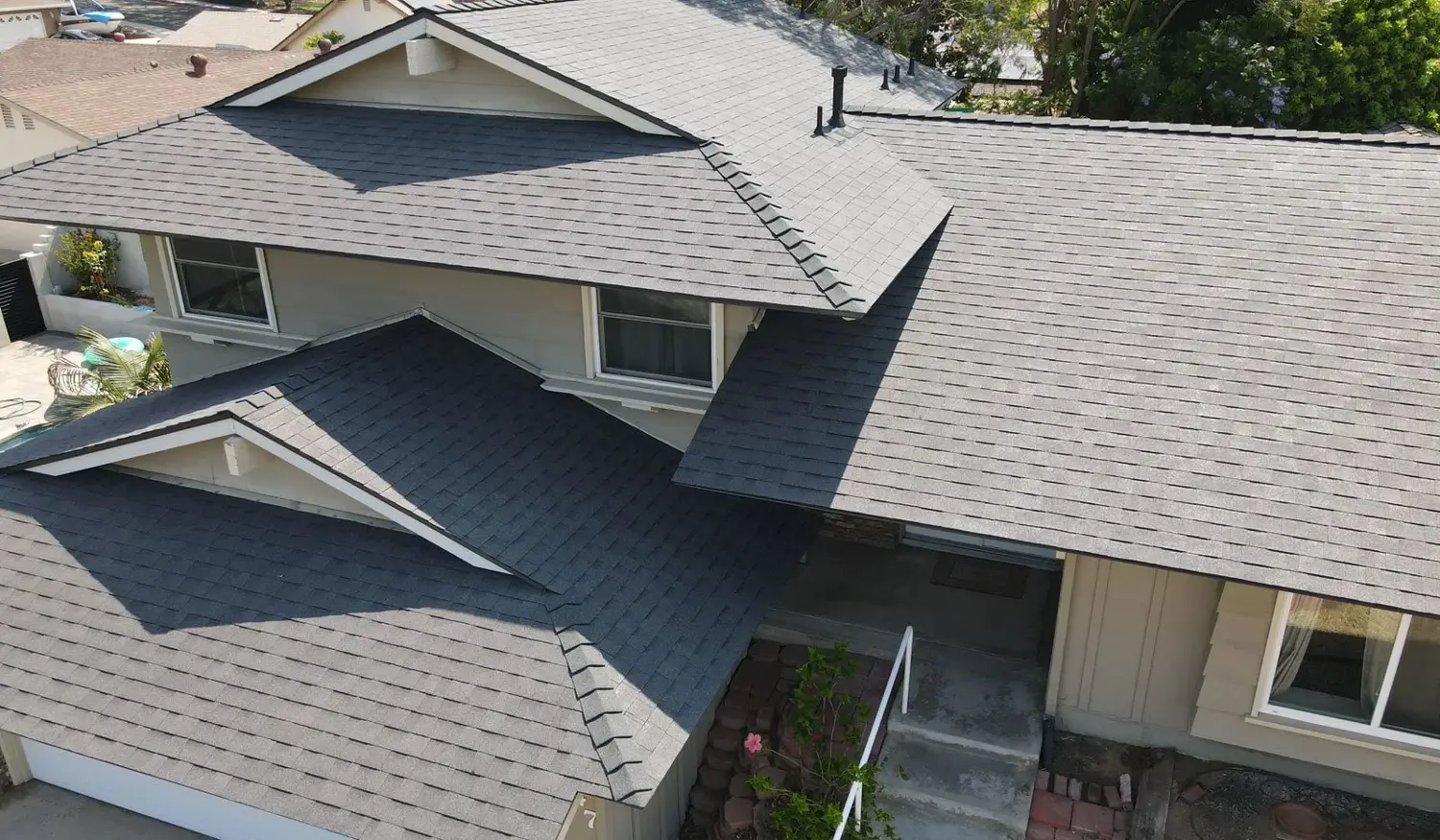
An architectural shingle, also called laminated or dimensional, bonds two or more layers together. The bottom layer shows through gaps in the top one, which gives the shadow lines and the uneven, wood-shake look you see on most newer Texas subdivisions.
That extra layer is not just looks. It makes the shingle thicker and heavier, it changes how it is nailed, and it is the reason manufacturers back architectural lines with much stronger wind and material warranties than their 3-tab products.
Side by side: what actually changes
Look
3-tab is flat and uniform. Architectural has depth and shadow lines, and it hides small waves in an older roof deck better.
Wind rating
Typical 3-tab lines are warranted to 60 mph. Common architectural lines are warranted to 130 mph or more, with the right installation.
Material warranty
3-tab lines usually carry a 25-year limited warranty. Architectural lines from the big brands usually carry a limited lifetime warranty.
Weight
Architectural shingles weigh noticeably more per square. Your contractor should check the product data sheet against the roof framing.
Repairs
3-tab is getting harder to find in exact colors, so patching an old 3-tab roof often ends in a visible mismatch.
Upfront cost
3-tab costs less to buy. Whether it costs less over the life of the roof is a different question.
Wind: the difference that matters most in Texas
Look at what the manufacturers put in writing. Owens Corning lists its Supreme three-tab shingle with a 25-year limited warranty and a 60 mph wind resistance limited warranty. GAF says its Royal Sovereign 3-tab is warranted for winds up to 60 mph.
Compare that with their architectural lines. Owens Corning backs TruDefinition Duration with a limited lifetime warranty and a 130 mph wind warranty when it is installed the way its warranty requires. GAF says its Timberline HDZ shingles with LayerLock can get a wind warranty with no maximum wind speed when installed with four nails and qualifying GAF accessories.
The National Weather Service calls a thunderstorm severe once its wind gusts reach 58 mph or more. Texas sees plenty of those every spring, so a 60 mph wind warranty leaves almost no margin here. If you have already seen tabs flip up after a storm, our post on whether Texas winds can lift shingles shows what that damage looks like.
Why 3-tab shingles are fading out
Manufacturers have been cutting their 3-tab lines for years, and the insurance trade press has reported that most manufacturers are winding down three-tab production. The reasons are simple: buyers prefer the dimensional look, and the architectural lines perform better in wind.
They are not gone. Both GAF and Owens Corning still list 3-tab products on their sites, and supply houses still stock some colors. But fewer colors and styles each year means the real problem shows up when you need a repair, not when you buy a new roof.
If your roof is 3-tab and a storm takes out one slope, the replacement shingles may not match what is up there. That is worth knowing before you file a claim or plan a repair. Our post on repairing a roof without replacing all the shingles covers when a patch is still reasonable.
Before you sign: what to check on the estimate and the wrapper
The exact product name, not just "architectural shingles". Two lines from the same brand can have very different wind and impact ratings.
The wind classification on the bundle wrapper. The Texas Department of Insurance tells homeowners to choose shingles tested to ASTM D3161 Class F or ASTM D7158 Class H, with the manufacturer showing compliance on the wrapper.
Nails per shingle and where they go. A wind warranty only holds if the shingle is nailed the way the manufacturer's instructions say.
Starter strips at the eaves and rakes, and matching hip and ridge caps. Many top wind warranties require the brand's own accessories.
Whether the warranty needs to be registered, and who does it. Keep a copy of the registration and a photo of one wrapper.
If you want hail protection too, ask for an impact rating. Read our guide to Class 4 impact resistant shingles before you pick a line.
On the coast, the wrapper label is not optional
In the coastal counties covered by the Texas Windstorm Insurance Association, a roof replacement goes through a windstorm inspection. TDI's windstorm inspection program says the adopted code requires manufacturers to show ASTM D3161 or D7158 compliance on the wrapper, and inspectors look for it.
That label applies to every shingle, 3-tab or architectural, so do not assume a product qualifies because of its style. In Galveston or Freeport, ask your contractor to show you the wind class on the wrapper before materials are ordered, not after they are on the roof. A failed windstorm inspection can hold up your coverage and mean redoing work.
How to decide for your house
Repair or replacement?
For a small repair on a sound 3-tab roof, matching 3-tab can still make sense if a close color is available. For a full replacement, start with architectural.
How long will you stay?
If you plan to stay ten years or more, the longer warranty and higher wind rating of architectural shingles work in your favor.
How exposed is the lot?
Coastal and open, windy lots need the highest wind class you can get. Check the wrapper label against what TDI and your city require.
Do you get hail?
In DFW and the Hill Country, compare impact-rated architectural lines and ask your insurer whether they affect your premium.
Get it in writing
Ask for two written estimates with the same product line so you compare the same roof. Our checklist on what to include in a roof replacement estimate helps.
The shingle is only half the roof
A great shingle on a bad install still fails. Underlayment, flashing, drip edge and ventilation decide whether the roof reaches its rated life in Texas heat, so ask about each of them, not only the shingle line.
Ventilation matters more than most people think. A hot, poorly vented attic bakes shingles from below, and that wear shows up first on south and west slopes. Before you pick a shingle, ask how the attic will be vented and whether the intake and exhaust are balanced.
If you are weighing a new roof, see how a full roof replacement works, or compare products on our asphalt shingle roofing page. If you are thinking about leaving asphalt altogether, our post on asphalt shingles vs metal roofing in Texas lays out the trade-offs.
Frequently Asked Questions
Are architectural shingles worth it over 3-tab?
For a full replacement, usually yes. Architectural shingles from the major brands carry much higher wind warranties and longer material warranties than 3-tab lines, and they are easier to find in matching colors later. 3-tab still has a place for small repairs on an existing 3-tab roof.
Do they still make 3-tab shingles?
Yes, but fewer of them. GAF and Owens Corning both still list 3-tab products, while most manufacturers have trimmed their lines and colors. That makes exact color matches harder to find when an older 3-tab roof needs a repair.
How long do architectural shingles last in Texas?
Heat, hail, wind and attic ventilation all shorten or stretch the real life of a roof, so a warranty term is not a life expectancy. Our post on how long roofing materials last in Texas walks through what wears asphalt shingles down here and what to watch for.
Can you put architectural shingles over 3-tab?
Sometimes the code allows a second layer, but it adds weight, hides deck damage and can affect the manufacturer's warranty. In most Texas replacements a full tear-off is the better route. Our roof over vs tear off post explains when an overlay is allowed and when it is not.
Keep Reading
Class 4 impact resistant shingles: what the rating means for a Texas roof
Learn MoreCan High Texas Winds Lift Roof Shingles Without You Noticing?
Learn MoreRoof over vs tear off: can you put new shingles over the old ones in Texas?
Learn MoreHow Long Do Different Roofing Materials Last in Texas?
Learn MoreAsphalt Shingle Roofing
Learn MoreRoof Replacement
Learn MoreWe’re Here to Help!
GemSco Roofing & Solar serves Houston, DFW, Austin, San Antonio and surrounding areas. We’re family owned and fully licensed and insured.