Commercial Roofing in Seagoville: Flat and Low-Slope Roofs
Business roofs face the same storms as homes, but they drain and wear differently. Here is what owners and managers in Seagoville should know.
Schedule Your Roofing Inspection Today
Fill out the information below and we’ll reach out to complete your estimate as soon as possible!


Common commercial roof types
Single-ply membranes
Large sheets of synthetic material, such as TPO or EPDM, used widely on flat roofs across the market. Compare them in TPO vs. EPDM roofing.
Built-up and modified bitumen
Layered asphalt-based systems that have been used on flat roofs for decades.
Metal roofing
Panels on low-slope buildings such as shops and warehouses, valued for long life.
Shingle roofs on small buildings
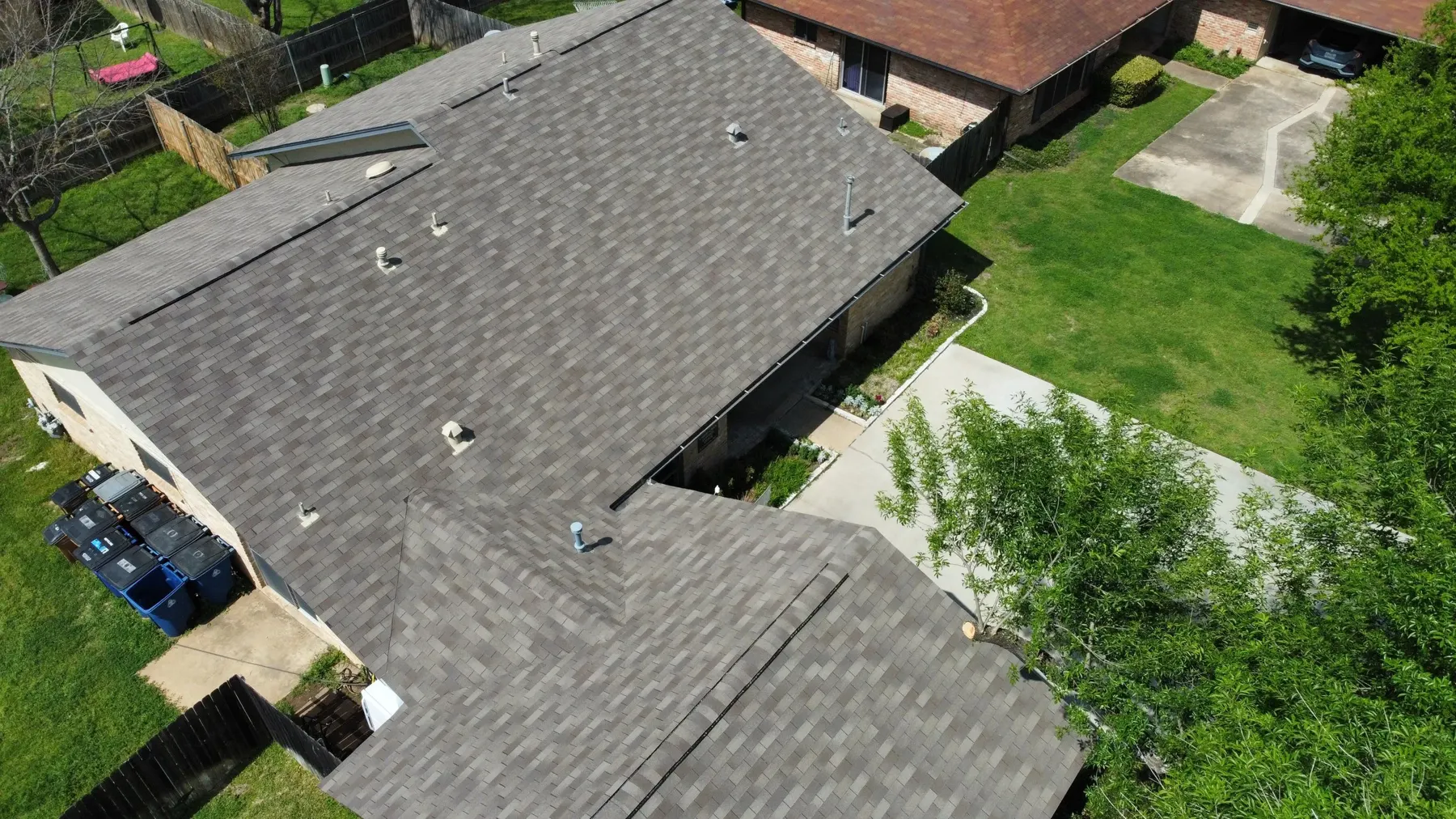
Offices and retail spaces with a steeper pitch often use asphalt shingles like a home.
Storm exposure for Seagoville businesses
NOAA's Storm Prediction Center logged 33 hail reports within 10 miles of Seagoville from 2015 through 2024, and 12 of them were 1.75 inches or larger. The biggest, 3.5 inches, was reported on April 20, 2023. Seagoville is mainly in Dallas County, and many buildings in the area have roofs that sit nearly flat.
On a flat roof, hail can bruise the insulation board under the membrane or puncture the membrane itself. The damage is often hard to see from a ladder. Water then spreads under the surface before it shows inside, sometimes far from where it entered. Regular checks after storms are the best way to catch it early.
Flat roofs also hold heat. Long summer days dry out sealants and flashing around rooftop units, so a seam that was tight last year can open after the next season.
A simple maintenance routine
Clear drains and scuppers
Standing water is the enemy of a flat roof. Keep drains, gutters and scuppers free of debris. See flat roof drainage systems.
Walk the roof twice a year
Look for blisters, open seams, ponding and loose edge metal.
Check after every big storm
Hail and wind can tear seams or crack flashing around rooftop units.
Keep records
Photos and notes from each check help you plan budgets and support any insurance claim.
Signs a commercial roof needs attention
Water stains on ceiling tiles or near walls.
Ponding that stays more than a day or two after rain.
Bubbles, cracks or split seams in the membrane.
Loose or rusted flashing around HVAC units and vents.
Rising energy bills tied to wet insulation.
Repair, restore or replace
Not every commercial roof problem calls for a new roof. A few open seams or a damaged flashing detail can often be repaired. When wet insulation spreads under large parts of the membrane, or the roof leaks in many places, replacement is usually the better long-term choice.
The decision depends on the age of the system, how much of it is wet, and how long you plan to own the building. Our guide on signs a commercial roof needs replacement walks through the clues, and a commercial roof maintenance plan helps stretch the life of the roof you have.
Work with a roofer who knows both sides
GemSco handles residential and commercial roofing, including low-slope and flat roofs, metal and shingle systems. We are fully licensed and insured with 20+ years of experience and free estimates. Our guide on reducing business disruption during roof repairs covers planning. Learn more about commercial roofing or our work in Seagoville.
Frequently Asked Questions
How often should a commercial roof in Seagoville be inspected?
Twice a year is a common rule, usually in spring and fall, plus after any major hail or wind event. Flat roofs hide damage well, so scheduled checks catch split seams, blocked drains and punctures before water spreads through the insulation and into the building.
Can hail damage a flat roof even if it does not leak?
Yes. Hail can crush the insulation board under the membrane or leave small punctures that do not leak right away. Over time, water gets in and spreads under the surface. A close inspection after a big storm helps find this damage early.
Can roof work be done while my business stays open?
In many cases, yes. Work can be planned in sections, with clear paths for staff and customers and protection for entrances. Talk through your hours and any sensitive areas before work starts so the schedule fits your operation.
More Roofing Help in Seagoville
Roofing in Seagoville, TX
City overviewRoof Repair in Seagoville
Learn MoreRoof Replacement in Seagoville
Learn MoreStorm & Hail Damage in Seagoville
Learn MoreRoof Inspection in Seagoville
Learn MoreGutters in Seagoville
Learn MoreSolar Panel Installation in Seagoville
Learn MoreSolar Removal & Reinstall in Seagoville
Learn MoreCommercial Roofing Near Seagoville
We’re Here to Help!
GemSco Roofing & Solar serves Houston, DFW, Austin, San Antonio and surrounding areas. We’re family owned and fully licensed and insured.