

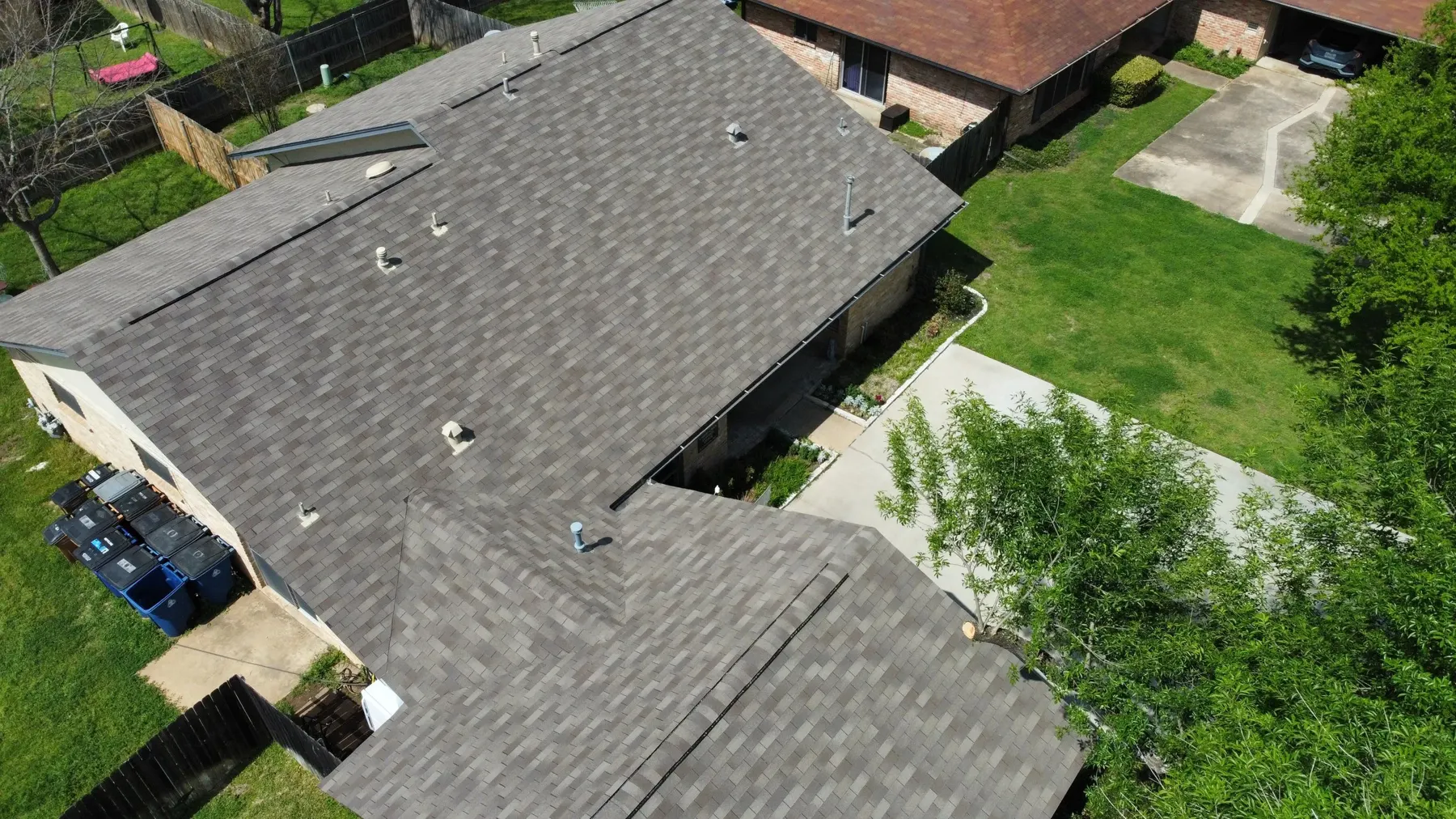
Lancaster Commercial Roofing: Flat Roofs That Stay Dry and Drain Right
On a commercial building, the roof protects inventory, equipment and the people inside. A little planning keeps a small problem from turning into a shutdown.
Schedule Your Roofing Inspection Today
Fill out the information below and we’ll reach out to complete your estimate as soon as possible!


Problems that show up on low-slope roofs
Ponding water that stays more than a day or two after rain.
Open or lifting seams in the membrane.
Blisters, splits or wrinkles in the roof surface.
Flashing pulling away from parapet walls or rooftop units.
Clogged drains, scuppers or gutters.
Stained ceiling tiles or drips inside, often far from the actual entry point.
Why flat roofs behave differently
A low-slope roof moves water slowly toward drains and edges. Anything that blocks that path, from leaves to a sagging deck, leaves water sitting on the membrane. Standing water works into seams and speeds up wear. Our guide on flat roof drainage systems explains how drains, scuppers and crickets keep water moving.
Commercial roofs also carry more equipment. Every HVAC curb, pipe and support is a joint in the membrane that needs proper flashing, and foot traffic from service visits wears the surface around it.
The real cost of a flat roof leak is often below the membrane. Once water gets into the insulation boards, it spreads sideways and stays, adding weight and cutting their insulating value. A puncture left for one wet season can turn a small patch into a section replacement. Catching it early is the cheapest fix there is.
Common low-slope systems
TPO
A single-ply membrane with welded seams and a light, reflective surface. Compare it in TPO vs EPDM roofing.
EPDM
A rubber membrane known for flexibility. Seams and edges need periodic checks.
Modified bitumen
Layered asphalt sheets. Durable, with laps and flashing as the points to watch.
Metal
Long lasting when fasteners and seams are maintained. Can dent in large hail.
Built-up roofs
Layers of felt and asphalt under gravel. Heavy and durable, though leaks can be hard to trace.
A yearly routine for owners and managers
Spring check
Clear drains and scuppers before storm season and look at seams and flashing.
After each storm
Walk the roof or have it surveyed, and photograph anything that changed.
Fall check
Remove leaves and debris, and fix small openings before winter rain. Our commercial roof maintenance plan has a full checklist.
Lancaster, Dallas County: hail on commercial roofs
NOAA's Storm Prediction Center logged 49 hail reports within 10 miles of Lancaster from 2015 through 2024. Eight were 1.75 inches or larger, in 2021, 2023 and 2024, and the largest was 2.5 inches on June 13, 2023. Hail like that can fracture the cover board under a membrane or puncture an aging surface without leaving an obvious mark.
Because large hail has been more frequent in recent years, a roof survey after every significant storm is a sensible habit. Photos and a map of damaged areas make repairs faster and give you a record. Coverage depends on the policy and the insurer. GemSco inspects, documents and gives a written estimate.
When leaks become frequent, it is time to plan the next roof. Our post on signs a commercial roof needs replacement helps you judge. GemSco handles residential and commercial roofing, including low-slope and flat roofs, and estimates are free. See our commercial roofing service.
Frequently Asked Questions
How often should a flat roof be inspected?
Twice a year is common practice, usually in spring and fall, plus after any major hail or wind event. Regular checks catch clogged drains and open seams before water reaches the insulation, which is where repair costs climb quickly.
Can ponding water damage a commercial roof?
Yes. Water that sits for days speeds up membrane wear, stresses seams and adds weight to the deck. It often points to clogged drains or a low spot in the structure. Fixing the drainage usually costs far less than repairing the damage ponding causes over time.
Can my business stay open during roof work?
Usually yes. Work can be phased by section, with clear access routes and noisy tasks set for quieter hours. Staff and tenants are told in advance which areas are affected and when. Our post on reducing business disruption during roof repairs covers how to plan it.
More Roofing Help in Lancaster
Roofing in Lancaster, TX
City overviewRoof Repair in Lancaster
Learn MoreRoof Replacement in Lancaster
Learn MoreStorm & Hail Damage in Lancaster
Learn MoreRoof Inspection in Lancaster
Learn MoreGutters in Lancaster
Learn MoreSolar Panel Installation in Lancaster
Learn MoreSolar Removal & Reinstall in Lancaster
Learn MoreCommercial Roofing Near Lancaster
We’re Here to Help!
GemSco Roofing & Solar serves Houston, DFW, Austin, San Antonio and surrounding areas. We’re family owned and fully licensed and insured.