

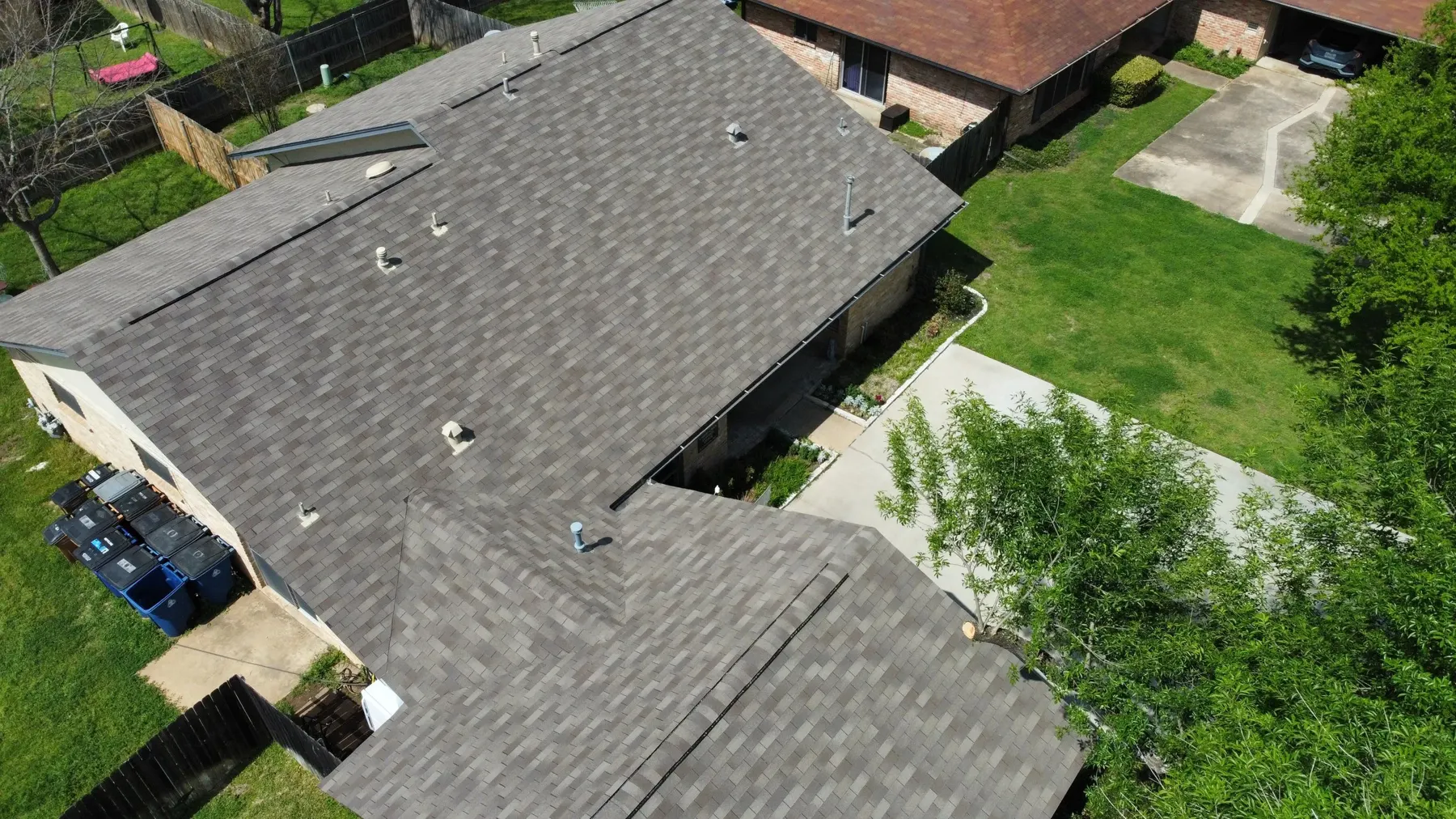
Flat and Low-Slope Roofing for Duncanville Businesses
Leaks on a commercial roof cost more than repairs. They can stop work, ruin stock and drive tenants away. Here is how to keep the roof ahead of them.
Schedule Your Roofing Inspection Today
Fill out the information below and we’ll reach out to complete your estimate as soon as possible!


Warning signs on a commercial roof
Water standing in the same spot two or three days after rain.
Blisters, wrinkles or open seams in the membrane.
Stains on ceiling tiles or drips near rooftop units.
Rust or loose metal at edges, curbs and parapets.
Clogged drains and scuppers.
Higher cooling bills that could point to wet insulation.
For more, read the signs a commercial roof needs replacement.
Storms and the Duncanville area
NOAA's Storm Prediction Center logged 69 hail reports within 10 miles of Duncanville from 2015 through 2024. Of those, 13 were 1.75 inches or larger, and the largest, 4 inches, was reported on June 12, 2023.
On a low-slope roof, hail can bruise or puncture the membrane and crush the insulation board underneath. Dents on HVAC housings, vents and coping are the easiest way to see that a storm hit. The membrane itself often needs a close look and sometimes a test cut to confirm damage. Duncanville is in Dallas County, where spring storms can also bring wind that lifts loose edges.
Building age plays a part as well. Many commercial roofs in older parts of the metro have been patched over and over, sometimes with a mix of materials. Each patch is a seam, and each seam is a place where water can find a way in. After a hailstorm, a roof like that needs a careful walk to separate new damage from old repairs. Photos and notes from that walk give owners and property managers a clear record for decisions and for any conversation with an insurer.
Common commercial roof systems
TPO
A white single-ply membrane with heat-welded seams, common on newer commercial buildings.
EPDM
A rubber membrane with long service history. See TPO vs. EPDM roofing.
Modified bitumen
Layered asphalt-based sheets, often on older low-slope roofs.
Metal
Panels and standing seam roofs, which need attention at fasteners and seams.
Coatings and repairs
Targeted fixes to seams, flashing and penetrations to extend roof life when the base is sound.
How we handle a commercial job
Roof walk and core check
We inspect the surface, drains, edges and penetrations and document everything with photos.
Written scope
A clear estimate of what needs repair or replacement, and why.
Schedule around operations
We plan the work in phases where possible. See how to reduce business disruption during roof repairs.
Close out
Final walk with photos, so you have a record for the building file.
Follow-up checks
After the next major storm, a short roof walk confirms the repairs held and the drains are clear.
Keep it maintained
Most commercial roof failures start with something small: a clogged drain, a loose flashing, a seam that opened in the heat. A maintenance plan catches those early. Our guide to a commercial roof maintenance plan has a simple schedule, and our flat roof drainage systems article explains why water management matters so much on a flat roof. See our commercial roofing services or roofing in Duncanville.
Frequently Asked Questions
How long can water pond on a flat roof before it is a problem?
A little water after rain is normal, but standing water that stays for more than a couple of days usually points to clogged drains, sagging insulation or a low spot. Ponding adds weight and speeds up wear on the membrane. It is worth having it checked before it turns into a leak.
Can you work on the roof while my business is open?
In many cases, yes. Commercial roof work can often be phased by section so part of the building stays in use. We talk through access, noise and safety before work starts so there are no surprises for staff, tenants or customers.
What records should I keep for my commercial roof?
Keep inspection reports, photos, repair invoices and the roof system details if you have them. A dated history shows how the roof has been maintained and helps after a storm, when you need to show what changed. We give you photos and a written scope with every inspection.
More Roofing Help in Duncanville
Roofing in Duncanville, TX
City overviewRoof Repair in Duncanville
Learn MoreRoof Replacement in Duncanville
Learn MoreStorm & Hail Damage in Duncanville
Learn MoreRoof Inspection in Duncanville
Learn MoreGutters in Duncanville
Learn MoreSolar Panel Installation in Duncanville
Learn MoreSolar Removal & Reinstall in Duncanville
Learn MoreCommercial Roofing Near Duncanville
We’re Here to Help!
GemSco Roofing & Solar serves Houston, DFW, Austin, San Antonio and surrounding areas. We’re family owned and fully licensed and insured.