

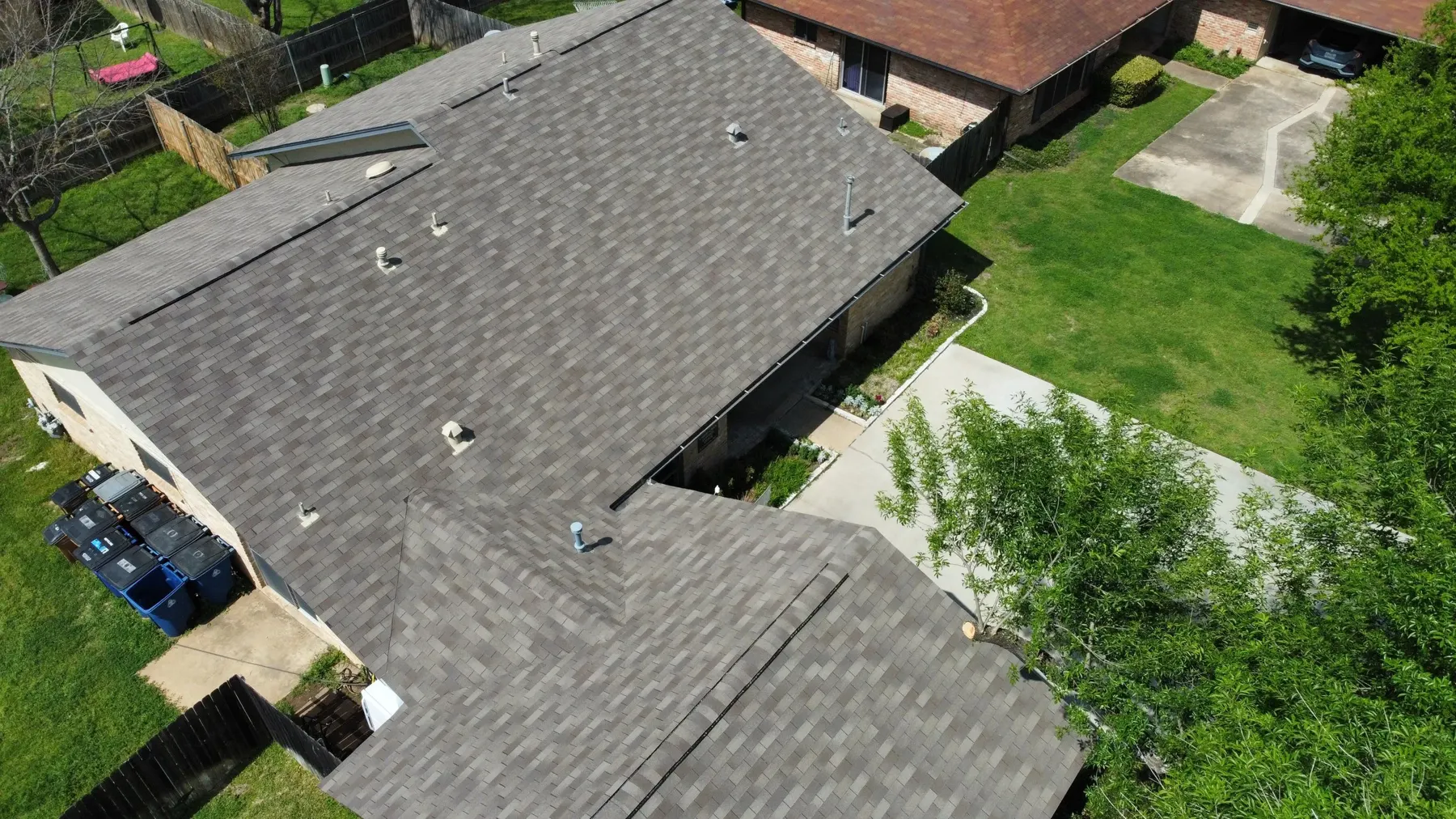
Commercial Roofing in Nassau Bay: Flat Roofs After a Big Hail Year
Low-slope roofs on commercial buildings take hail, sun and heavy rain differently than homes do. After recent storms, many need a closer look.
Schedule Your Roofing Inspection Today
Fill out the information below and we’ll reach out to complete your estimate as soon as possible!


Storm exposure for Nassau Bay businesses
NOAA's Storm Prediction Center logged 31 hail reports within 10 miles of Nassau Bay from 2015 through 2024. Eight were 1.75 inches or larger, and the largest measured 2.75 inches on May 31, 2024. On a flat roof, hail that size can puncture or crack membranes, crush the insulation boards underneath and dent rooftop units and flashing. Much of that damage cannot be seen from the parking lot.
Nassau Bay sits in Harris County, where heavy rain is a regular test for any low-slope roof. Water on a flat roof moves slowly toward drains, so any crack or open seam has time to let water in. If your building's roof has not been walked since 2024, a check now can catch damage before the next rainy season.
Edges and openings need the most care. Parapet walls, metal coping, rooftop units and pipe penetrations all move as the building heats and cools. Many commercial leaks start at those details rather than in the middle of the membrane, so a good inspection spends time there.
Warning signs on a commercial roof
Water stains on ceiling tiles or walls, especially after hard rain.
Ponding that stays two or more days after a storm.
Blisters, bubbles or wrinkles in the membrane.
Open seams or flashing pulling away at walls and edges.
Dents on rooftop units, vents and metal coping.
Higher cooling bills, which can point to wet insulation under the membrane.
Common roof systems on low-slope buildings
TPO and EPDM
Single-ply membranes, each with its own strengths. Compare them in TPO vs. EPDM roofing.
Modified bitumen
Layered asphalt sheets that stand up well to foot traffic.
Metal
Panels that shed water quickly where the pitch allows.
Coatings
A general market option applied over some existing roofs to seal the surface. Only a fit for roofs with a sound base.
A practical plan for property owners
Inspect after storms
Walk the roof or have it walked after any hail or high wind, and photograph what you find. Our guide on signs a commercial roof needs replacement shows what to look for.
Keep drains clear
Clean drains and scuppers before the rainy months. Read flat roof drainage systems.
Repair early
Seal open seams and fix flashing while the insulation below is still dry.
Plan replacement
If wet insulation or failing membrane covers large areas, budget for replacement instead of chasing leaks.
Keep records
Log every repair and inspection so you can track the roof's condition over time.
Why the insulation matters
On most low-slope roofs, a layer of insulation board sits under the membrane. When water gets through a crack or seam, that board soaks it up and spreads it far from the opening. The roof may look dry on top while a large area below has lost its strength. Finding a leak early keeps that wet area small, and the repair stays far cheaper than replacing the insulation across a whole section.
Commercial work with GemSco
GemSco handles residential and commercial roofing, including flat and low-slope roofs, with 20+ years of experience and free estimates. We plan work to limit disruption to tenants and customers; see reducing business disruption during roof repairs. Learn more on our commercial roofing page or our Nassau Bay roofing page.
Frequently Asked Questions
Can hail damage a flat roof without leaving visible marks?
Yes. Hail can crush insulation boards under the membrane or crack the surface in ways that are hard to see without walking the roof. Damage may only show later as leaks or soft spots. A close inspection with photos is the best way to know what a storm did.
What causes water to pond on a flat roof?
Ponding often comes from clogged drains, a deck that has sagged over time, or insulation that was crushed or soaked. Water that stays for days adds weight and wears out the membrane faster. Clearing drains may help, but repeated ponding should be checked by a roofer.
Is it better to repair or replace a damaged commercial roof?
If the damage is limited to seams, flashing or small areas, repair is usually the better value. If water has soaked large sections of insulation, or the membrane is failing across the roof, replacement may cost less over time than repeated repairs. An inspection helps you compare both paths.
More Roofing Help in Nassau Bay
Roofing in Nassau Bay, TX
City overviewRoof Repair in Nassau Bay
Learn MoreRoof Replacement in Nassau Bay
Learn MoreStorm & Hail Damage in Nassau Bay
Learn MoreRoof Inspection in Nassau Bay
Learn MoreGutters in Nassau Bay
Learn MoreSolar Panel Installation in Nassau Bay
Learn MoreSolar Removal & Reinstall in Nassau Bay
Learn MoreCommercial Roofing Near Nassau Bay
We’re Here to Help!
GemSco Roofing & Solar serves Houston, DFW, Austin, San Antonio and surrounding areas. We’re family owned and fully licensed and insured.