

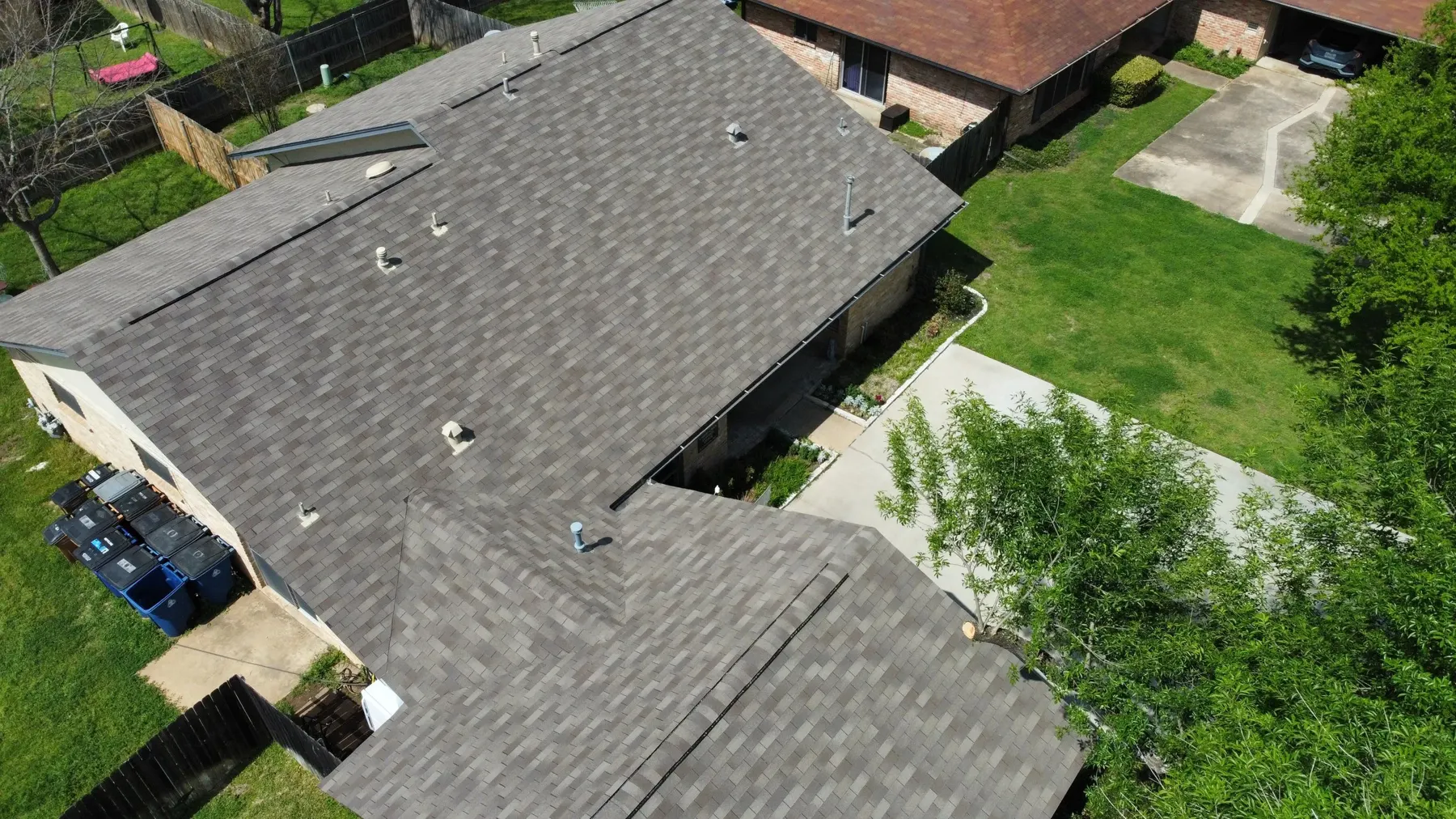
Commercial Roofing for Deer Park, TX Buildings
Low-slope commercial roofs fail quietly. Water finds a seam, soaks the insulation and shows up inside long after the damage started.
Schedule Your Roofing Inspection Today
Fill out the information below and we’ll reach out to complete your estimate as soon as possible!


Storms and the commercial roof
Deer Park is in Harris County, in the Houston metro area. NOAA's Storm Prediction Center logged 26 hail reports within 10 miles of Deer Park from 2015 through 2024. 7 of them were 1.75 inches or larger, with the largest at 1.75 inches on May 9, 2019.
Flat roofs take hail differently than shingled roofs. A stone can bruise a membrane, crack an older coating or crush the insulation board under the surface. The top may look intact while the board underneath has lost its strength. Rooftop units, vents and metal edges dent as well. After a storm, a walk with a camera, not a look from the ground, is the only way to know.
The same storms bring heavy rain. Water that cannot drain sits on the roof, adds weight and works into seams. Most commercial leaks trace back to seams, flashing at walls and curbs, or clogged drains.
Wet insulation is the costly part. Once boards under a membrane are soaked, they stop insulating, add weight and can stay wet for a long time. Catching a puncture early keeps the damage to a patch instead of a section of new roof.
A maintenance cycle that works
Spring check
Before storm season, clear drains, inspect seams and reseal flashing that has opened.
Post-storm walk
After hail or high wind, photograph any punctures, loose edges and debris.
Fall check
Clear leaves from drains and gutters, and look at areas worn by foot traffic.
Track repairs
Keep a log of every leak and repair with dates and locations. Patterns tell you when a section is wearing out.
Budget ahead
A roof survey every few years helps you plan replacement instead of reacting to it. See commercial roof maintenance plan.
Common low-slope systems
TPO
A white single-ply membrane with heat-welded seams. Compare it with EPDM in our article on TPO vs EPDM roofing.
EPDM
A rubber membrane with glued or taped seams, used on many older buildings.
Modified bitumen
Layered asphalt sheets, often with a granular top.
Metal
Panels used on many shops and warehouses, with fasteners and seams that need checks over time.
Shingled sections
Pitched areas over entries or offices that are repaired and replaced like a home roof.
When repair stops being enough
Leaks return to the same area after more than one repair.
Large areas of insulation are wet.
The membrane is brittle, shrinking or pulling away from the edges.
Water ponds for days after each rain.
Blisters, cracks or open laps show up across the field of the roof, not only at the edges.
Read more in signs a commercial roof needs replacement.
Working with GemSco
GemSco works on residential and commercial roofs, including low-slope and flat roofs, metal and shingle sections. The company is family owned, fully licensed and insured, with 20+ years of experience. Estimates are free and financing is available.
For tenants and customers, work can be planned in phases. Our article on how to reduce business disruption during roof repairs covers access, noise and timing. Learn more on our commercial roofing page.
Frequently Asked Questions
How often should a commercial roof be inspected?
At least twice a year, in spring and fall, plus after any storm with hail or high wind. Roofs with heavy foot traffic or lots of rooftop equipment benefit from more frequent checks. Each visit should end with photos and a short list of items to fix.
What causes ponding on a flat roof?
Clogged drains, sagging deck, crushed insulation or a roof built with too little slope. Ponding that stays more than a couple of days after rain stresses seams and can shorten roof life. The fix depends on the cause, from clearing drains to adding tapered insulation during a re-roof.
Can a new membrane go over the old one?
Sometimes. If the existing roof and insulation are dry and the structure can carry the weight, a recover may be allowed. If the insulation is wet, it has to come out, because trapped moisture will damage the new roof. A moisture survey helps answer the question.
More Roofing Help in Deer Park
Roofing in Deer Park, TX
City overviewRoof Repair in Deer Park
Learn MoreRoof Replacement in Deer Park
Learn MoreStorm & Hail Damage in Deer Park
Learn MoreRoof Inspection in Deer Park
Learn MoreGutters in Deer Park
Learn MoreSolar Panel Installation in Deer Park
Learn MoreSolar Removal & Reinstall in Deer Park
Learn MoreCommercial Roofing Near Deer Park
We’re Here to Help!
GemSco Roofing & Solar serves Houston, DFW, Austin, San Antonio and surrounding areas. We’re family owned and fully licensed and insured.