

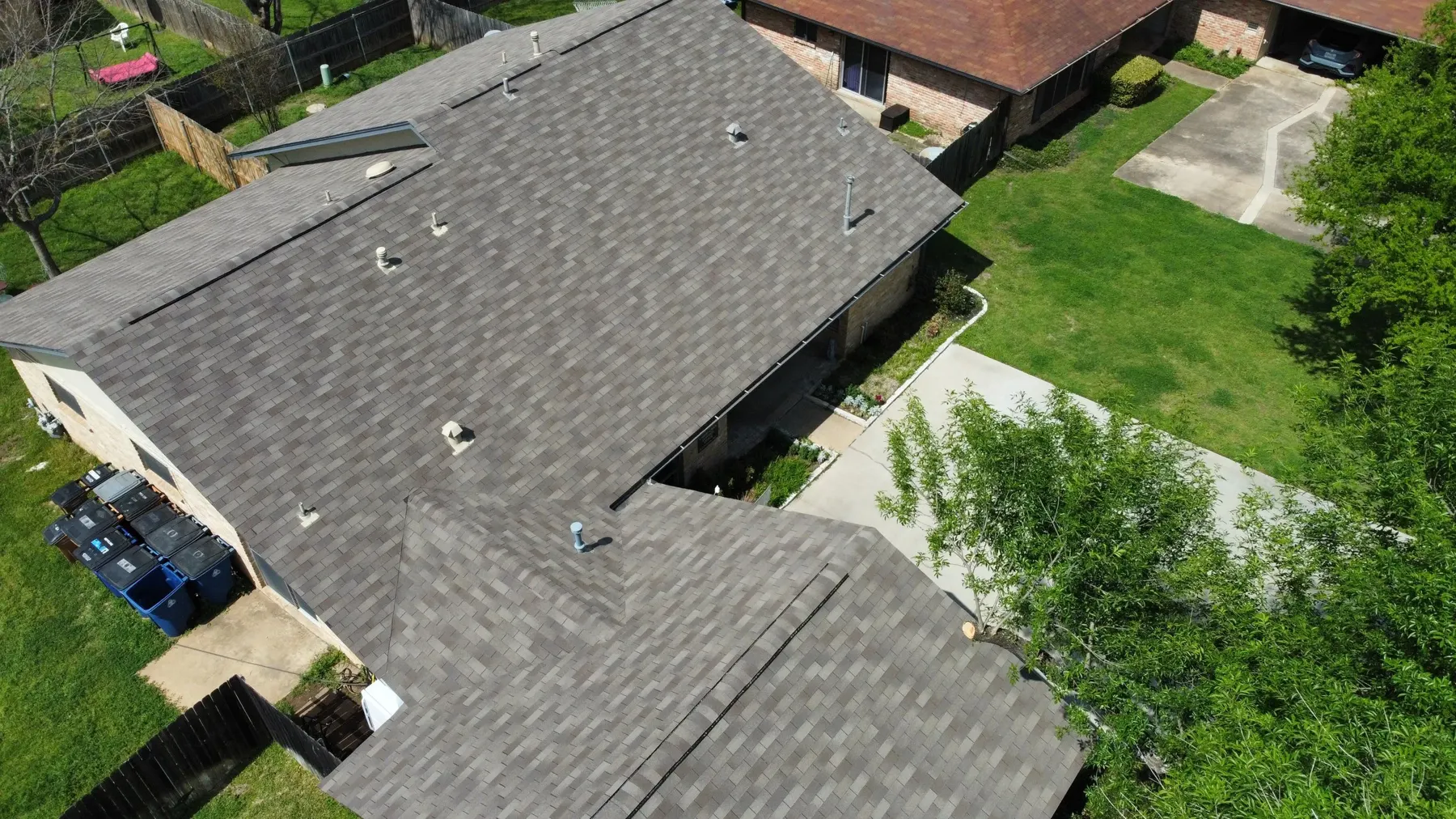
Commercial Roofs in Cypress, TX: Flat, Low-Slope and Storm-Ready
A commercial roof in Cypress has to shed heavy rain off a nearly flat surface and survive hail. Here is what owners and property managers should know.
Schedule Your Roofing Inspection Today
Fill out the information below and we’ll reach out to complete your estimate as soon as possible!


Common commercial roof types
Single-ply membranes
Sheets such as TPO or EPDM laid over insulation and sealed at the seams. Our comparison of TPO vs EPDM roofing covers the differences.
Modified bitumen
Asphalt-based rolls in layers, common on older low-slope buildings. Its multiple plies add some thickness against foot traffic.
Metal
Panels on low-slope or pitched commercial roofs, often on warehouses and shops. Fasteners and seams need periodic checks as the metal expands and contracts in the heat.
Shingles on steeper sections
Many mixed-use buildings pair a flat main roof with shingled mansards or entries.
Storm exposure in the Cypress area
Cypress sits in unincorporated Harris County. NOAA's Storm Prediction Center logged 31 hail reports within 10 miles of central Cypress from 2015 through 2024, and 7 of them were 1.75 inches or larger. The largest, 2.75 inches, fell on April 19, 2015.
On a flat roof, hail can puncture or bruise a membrane, crush insulation boards below it and dent rooftop units. Those marks are easy to miss because nobody looks at the roof from the parking lot, and a puncture the size of a pencil can let in water for months before a ceiling tile stains. A walk-through after a hailstorm, with photos, gives you a record before small punctures let water into the building.
Water is the daily enemy
Low-slope roofs depend on drains, scuppers and gutters to move water off. Clogged drains leave ponds that stress seams and add weight. A heavy Gulf Coast downpour can overwhelm a drain that is half blocked with leaves. Our article on flat roof drainage systems explains the options.
Rooftop equipment adds risk. Every HVAC curb, pipe and conduit that passes through the roof is a seam that has to stay sealed. Service crews walking to those units also wear paths in the membrane over time. Walk pads and regular checks around each curb prevent many of the leaks that show up over offices and storage rooms.
A simple maintenance routine
Twice a year
Walk the roof in spring and fall. Clear drains and look at seams and flashing.
After every major storm
Check for punctures, loose edges and debris. Note dents on HVAC units and on any metal coping along the parapet walls.
Keep a log
Dated photos help with budgeting and with any insurance discussion later.
Repair early
Small seam and flashing repairs cost far less than wet insulation. See a sample commercial roof maintenance plan.
Signs it is time to talk replacement
Wet insulation found in several areas.
Ponding that stays for days after rain.
Seams that keep opening after repairs.
Leaks over occupied space that return each season.
Read more in signs a commercial roof needs replacement.
Working with GemSco
GemSco handles residential and commercial roofing, including low-slope and flat roofs, and is fully licensed and insured with 20+ years of experience. Estimates are free and financing is available. Learn more about our commercial roofing service, and see our article on how to reduce business disruption during roof repairs.
Frequently Asked Questions
Can a flat roof be repaired instead of replaced?
Often, yes. Punctures, open seams and failed flashing can be patched or rebuilt in place if the insulation under them is dry. Once large areas of insulation are wet, repairs stop holding and replacement becomes the better option. A survey with photos shows how far the water has spread.
How does hail affect a commercial roof?
Hail can bruise or puncture membranes, crack older modified bitumen, crush insulation and dent metal panels and rooftop equipment. Some damage is clear at once, and some shows up later as leaks. A walk-through after each large storm keeps a record and catches the punctures early.
Can roof work happen while my business stays open?
In most cases, yes. Crews can plan the work in sections, keep entrances clear and schedule noisy steps around your hours. Talk through access, parking and safety before the job starts so your staff and customers know what to expect each day.
More Roofing Help in Cypress
Roofing in Cypress, TX
City overviewRoof Repair in Cypress
Learn MoreRoof Replacement in Cypress
Learn MoreStorm & Hail Damage in Cypress
Learn MoreRoof Inspection in Cypress
Learn MoreGutters in Cypress
Learn MoreSolar Panel Installation in Cypress
Learn MoreSolar Removal & Reinstall in Cypress
Learn MoreCommercial Roofing Near Cypress
We’re Here to Help!
GemSco Roofing & Solar serves Houston, DFW, Austin, San Antonio and surrounding areas. We’re family owned and fully licensed and insured.