

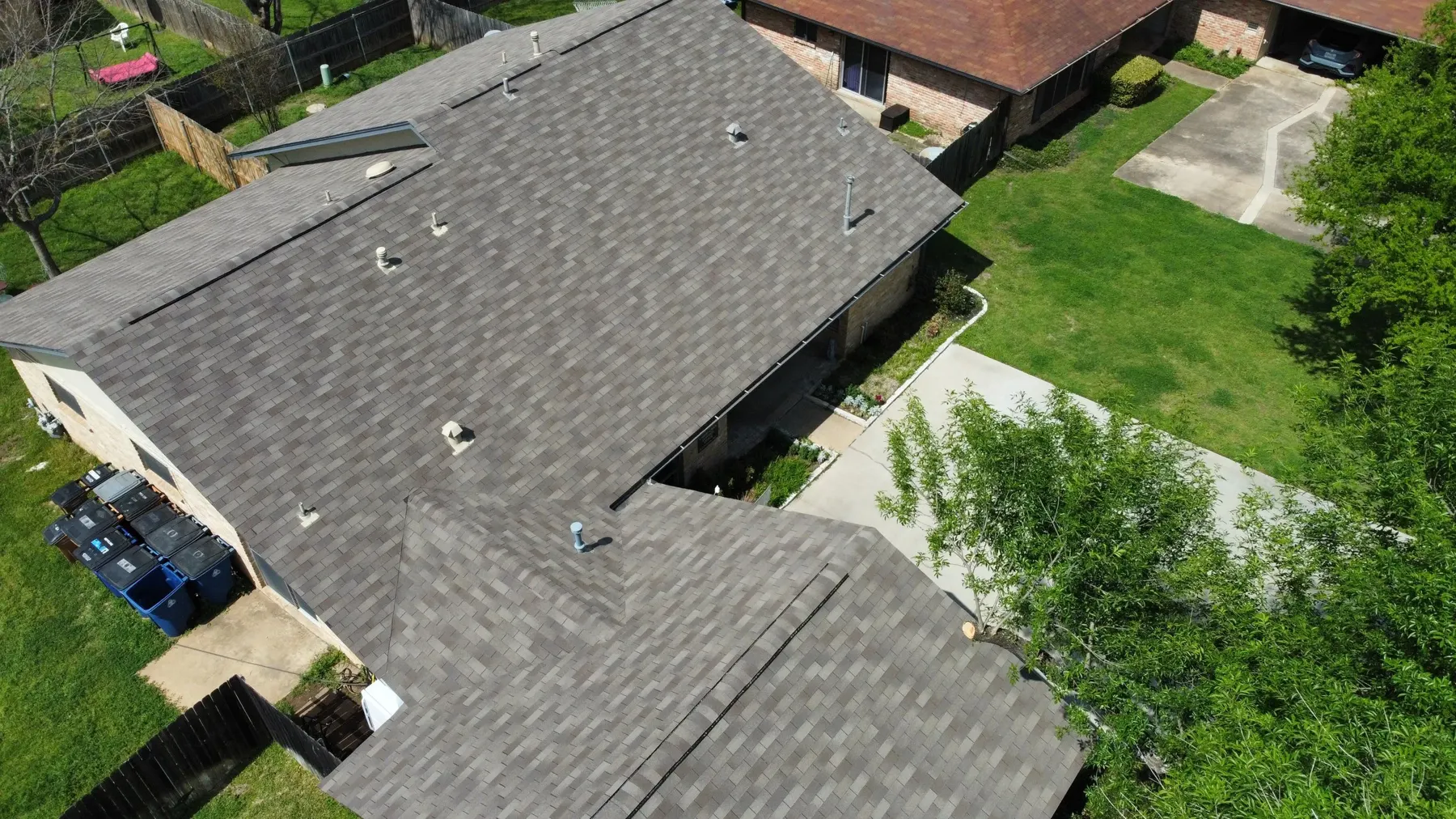
Commercial and Flat Roofing in Coppell: Membranes, Drainage and Storms
A commercial roof protects inventory, equipment and the people working under it. Here is how to keep a low-slope roof watertight through North Texas storms.
Schedule Your Roofing Inspection Today
Fill out the information below and we’ll reach out to complete your estimate as soon as possible!


Storm exposure for Coppell buildings
Coppell sits across Denton County and Dallas County, inside the Dallas-Fort Worth metro area. NOAA's Storm Prediction Center logged 105 hail reports within 10 miles of the city from 2015 through 2024. Of those, 24 were 1.75 inches or larger, and the biggest reached 4 inches on June 11, 2023.
Flat and low-slope roofs take hail differently from homes. The membrane may look intact while the insulation board under it is crushed. Older membranes lose flexibility and crack on impact. Seams and flashings at curbs and walls take the hardest hits. Water then sits in those low or damaged spots and works its way down slowly. A building can go a full season before staff notice ceiling stains.
Because damage on a low-slope roof hides below the surface, the best tool is a regular schedule. A walk in spring and fall, plus one after any large storm, finds open seams and punctures while repairs are still small. Each visit should end with photos and a short written note on what changed since the last one.
Roof systems we see on commercial buildings
TPO membrane
Single-ply, usually white, with heat-welded seams. Reflects sunlight and is common on newer buildings.
EPDM rubber
Durable and flexible, with seams that need regular checks. See TPO vs. EPDM roofing.
Modified bitumen
Multi-layer asphalt sheets that handle foot traffic around rooftop units.
Metal roofs
Standing seam or panels. Fasteners, seams and trim need attention after storms.
A practical plan for building owners
Baseline survey
Document membrane condition, seams, drains and flashing with photos.
Drainage check
Clear drains and scuppers, and note any areas where water stays after rain. Read flat roof drainage systems.
Post-storm checks
Inspect after hail or high wind, even without leaks.
Repair early
Fix open seams and punctures before water reaches the insulation.
Plan replacement
When repairs stop holding, schedule replacement around business hours and seasons.
Signs it is time to call
Ceiling stains or drips inside the building.
Blisters, cracks or splits in the membrane.
Ponding water that lasts more than a couple of days.
Loose metal edges or coping after wind.
Rooftop unit curbs with cracked sealant.
Repeated repairs on the same area. See signs a commercial roof needs replacement.
Commercial roofing with GemSco
Good records make every roof decision easier. Keep the system type, install year, warranty papers from the manufacturer, every repair invoice and photos after each storm in one file. Property managers change, tenants move and insurers ask questions. A roof file answers them without guesswork.
Rooftop equipment deserves attention too. HVAC units, vents and pipes all pass through the membrane, and each penetration is a place for water to enter. Service crews walking to those units can also damage the roof. Walk pads and clear paths reduce that wear.
GemSco works on residential and commercial roofs, including low-slope and flat systems. We are fully licensed and insured with 20+ years of experience. Estimates are free. Learn more about our commercial roofing service. For storm damage, see hail damage roof repair in Coppell.
Frequently Asked Questions
Can work be done without closing the business?
In most cases, yes. Work can be phased by roof section, with crews and materials kept away from entrances. Noise and smell from some materials should be planned for. Our guide on reducing business disruption during roof repairs has practical steps.
What is a roof recover?
A recover installs a new membrane over the existing roof, often with a new insulation layer. It works when the existing insulation is dry and the deck is sound. If moisture surveys show wide wet areas, a full tear-off is usually needed instead.
Does hail always damage a flat roof?
No. Newer, flexible membranes often handle moderate hail well. Older or brittle membranes, and roofs with thin insulation, are more likely to crack or bruise. A walk of the roof after a large storm, with photos, tells you whether damage happened.
More Roofing Help in Coppell
Roofing in Coppell, TX
City overviewRoof Repair in Coppell
Learn MoreRoof Replacement in Coppell
Learn MoreStorm & Hail Damage in Coppell
Learn MoreRoof Inspection in Coppell
Learn MoreGutters in Coppell
Learn MoreSolar Panel Installation in Coppell
Learn MoreSolar Removal & Reinstall in Coppell
Learn MoreCommercial Roofing Near Coppell
We’re Here to Help!
GemSco Roofing & Solar serves Houston, DFW, Austin, San Antonio and surrounding areas. We’re family owned and fully licensed and insured.